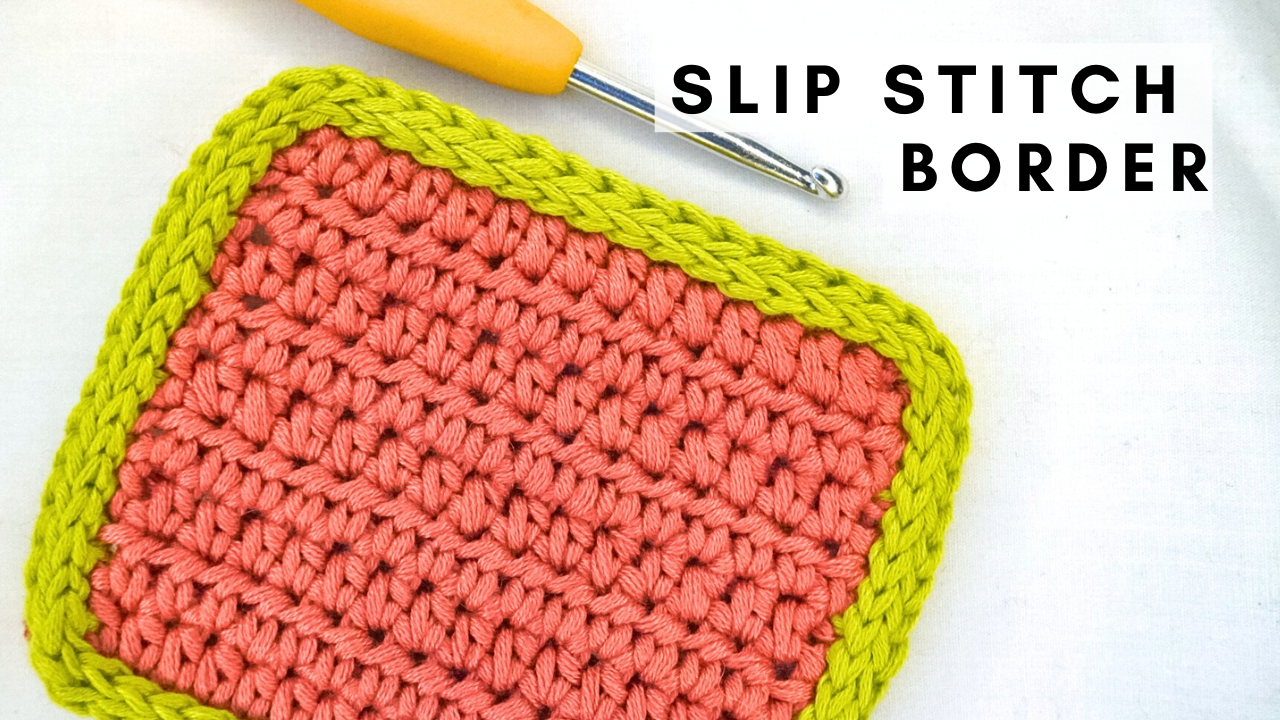
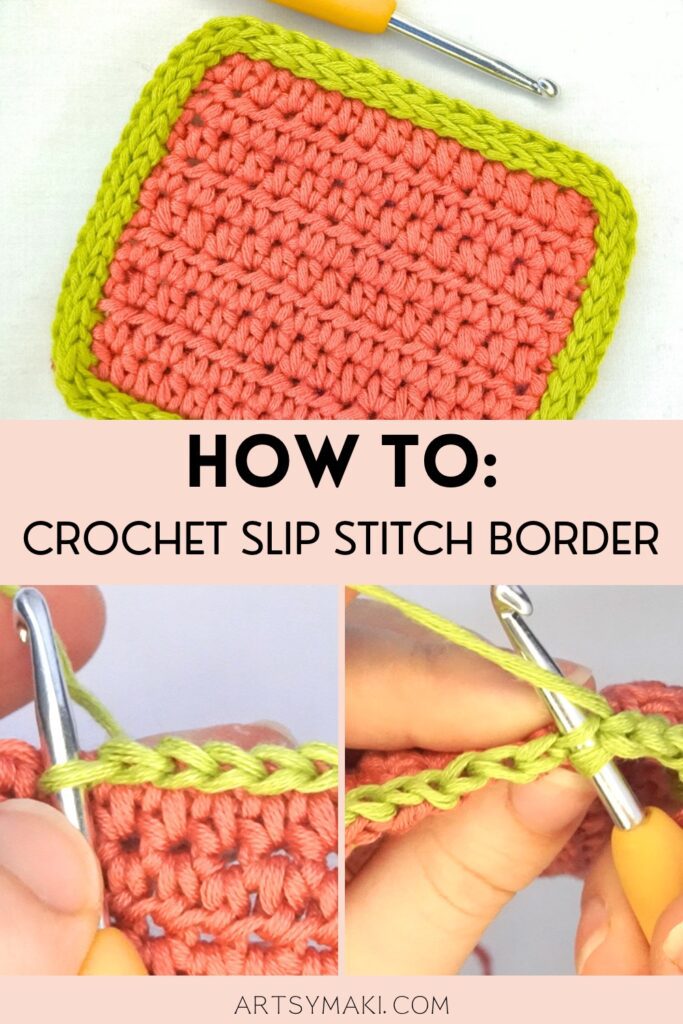
If you have ever finished a beautiful blanket, cardigan, or washcloth only to feel like the edge looks a little unfinished or wavy, you are in the right place. Today, we are focusing on my absolute favorite finishing technique: the crochet slip stitch border.
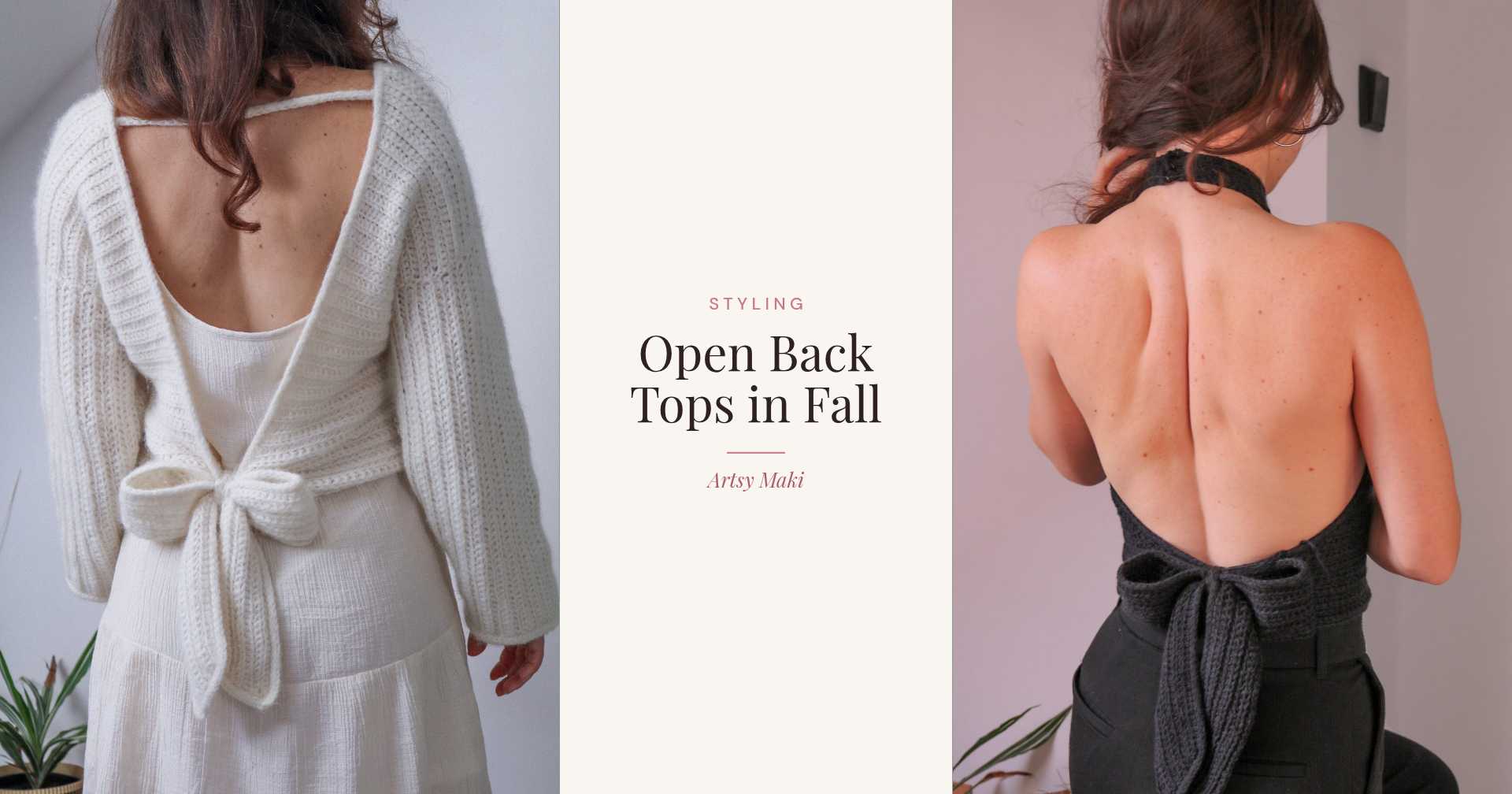
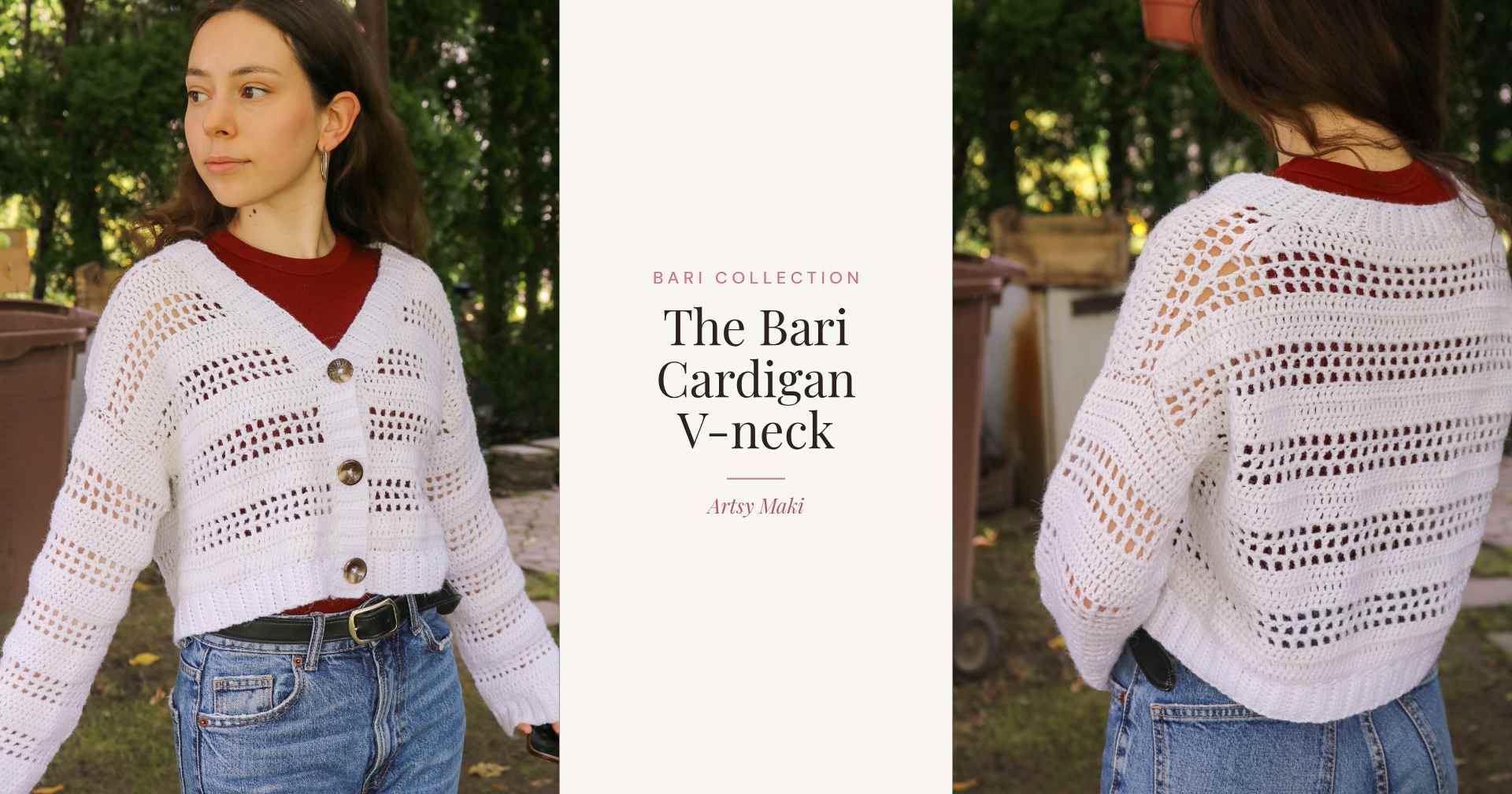
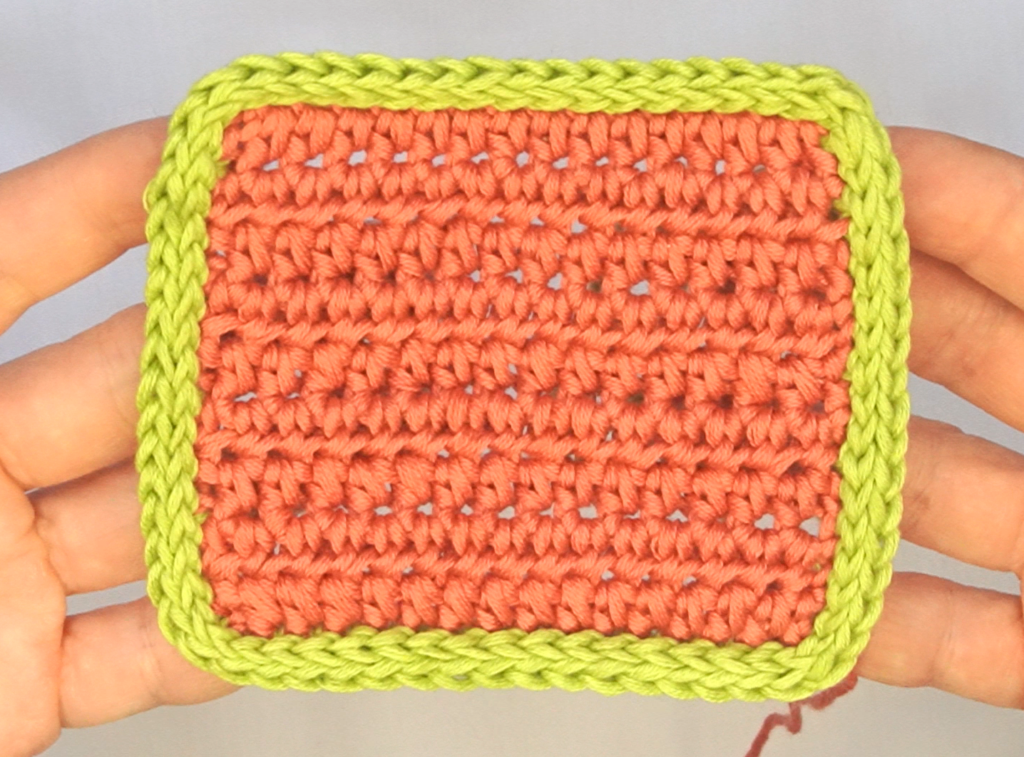
I use this technique on almost all of my patterns – it is the edge on my Bows, Claire patterns and I also used it as a button band on my Basic Mesh Cardigan. This border elevates a project so it almost looks like store bought piece. It creates a clean, structured edge that doesn’t distract from your main stitch work plus it is an easy crochet border that looks like knitting!
Many beginners are intimidated by borders, worrying about stitch counts or complex corners. But this method is worked flat in simple rows. It’s incredibly forgiving and works on virtually any shape. Whether you are edging a simple granny square or a complex garment, this border is the answer.
Why You’ll Love This Border
- It’s a crochet border that looks like knitting: Because we work into the back loops, this border mimics the “V” structure of knit ribbing.
- Structure & Stability: Unlike a simple single crochet border which can sometimes flare, slip stitches create a denser fabric.
- Beginner Friendly: If you know how to do slip stitches and crochet into back loop, you can do this!
Materials & Tools
- Yarn: You can use the same yarn used for your main project, or a contrasting color for a pop.
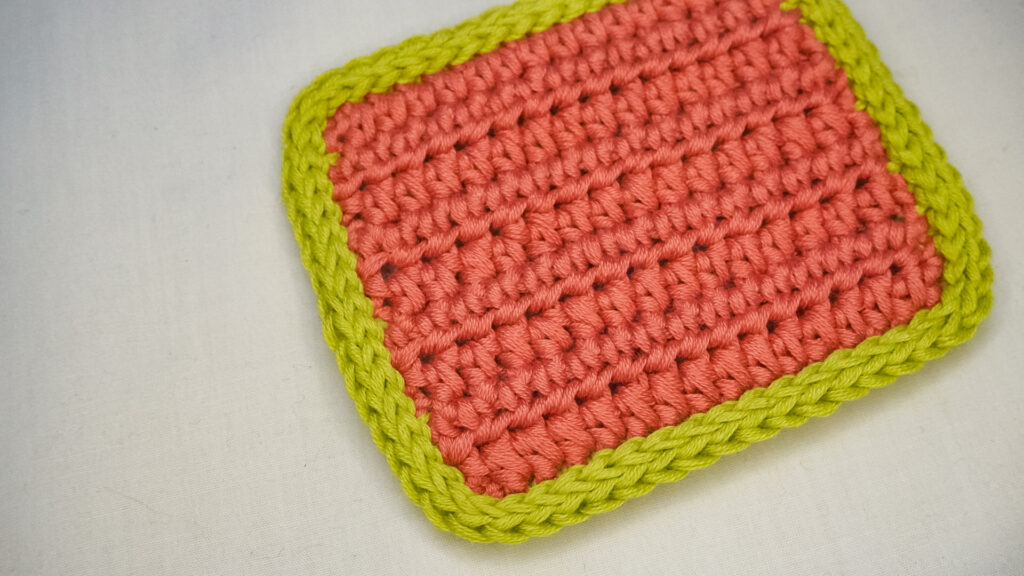
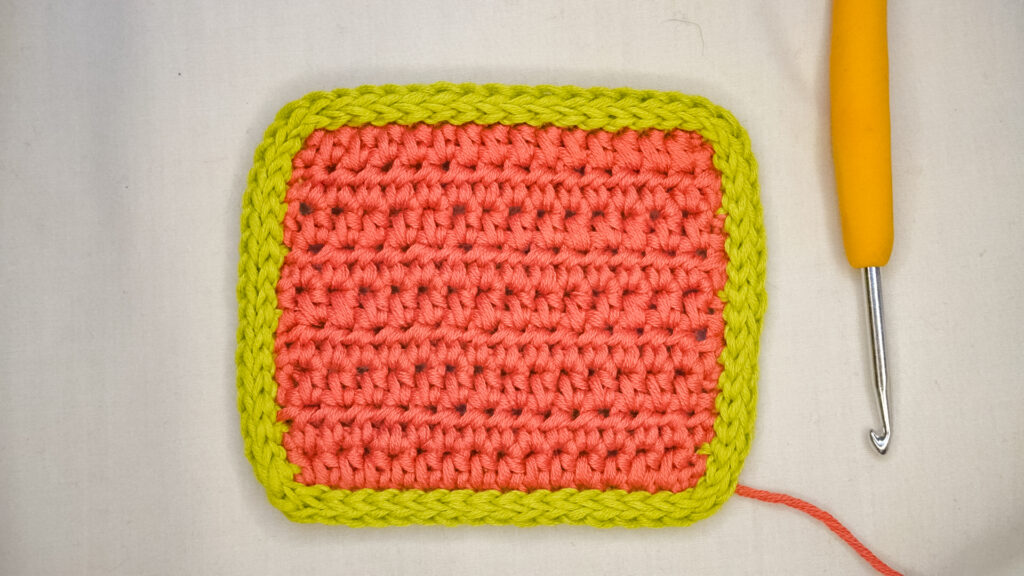
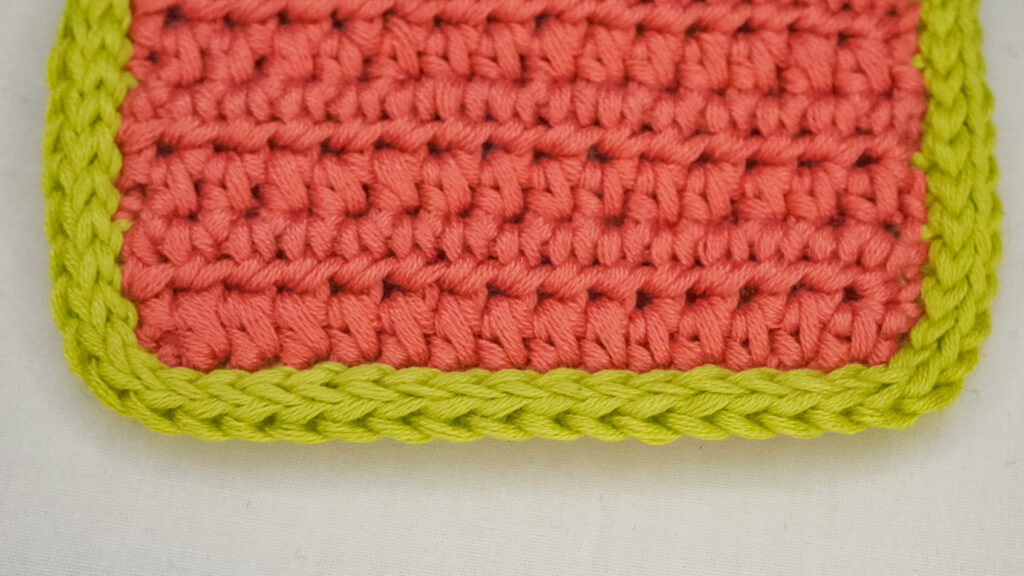
- I’m using Drops Muskat (a lovely cotton) in pink for the main fabric and a contrasting green for the border so you can see the stitches clearly.
- Hook: Use the size recommended for your yarn (I am using a 4mm hook).
- Pro Tip: If you want a stiffer, more structured band (like for a cardigan button band), go down a hook size. For example, on my mesh cardigan, I used a 2.5mm hook. Just remember, if you use a smaller hook, you may need to place your stitches closer together to prevent bunching.
- Scissors
- Yarn Needle: Optional for the invisible join finish.
Pattern Notes & Abbreviations
- Pattern Style: This border is worked back and forth in rows. You will turn your work after every row.
- Right Side/Wrong Side: This borde has a Right Side and Wrong Side and is nor reversible.
- Tension Check: Slip stitches have a tendency to get tight. Keep your hands relaxed. If you find your edge is pulling the fabric in too much, try going up a hook size.
Abbreviations (US Terms):
- st(s): Stitch(es)
- sl st: Slip Stitch
- BLO: Back Loop Only (working under the leg of the stitch furthest from you)
How To Crochet The Slip Stitch Border
Here is the quick, standard pattern for those who want to jump right in. If you need more help with stitch placement or the specific technique, scroll down for the step-by-step breakdown!
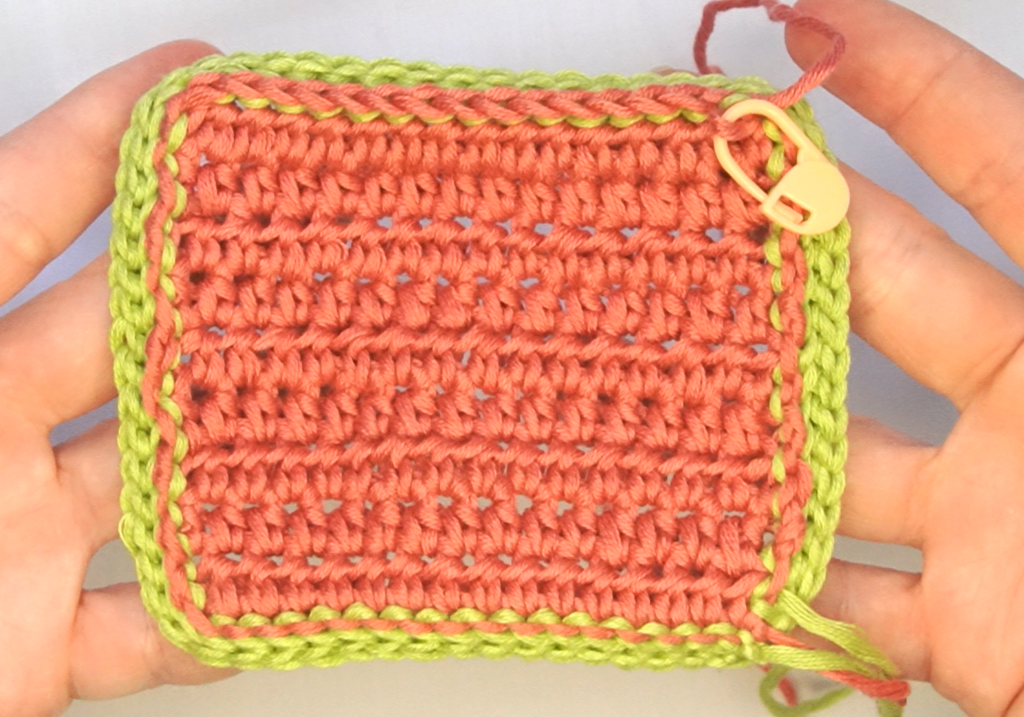
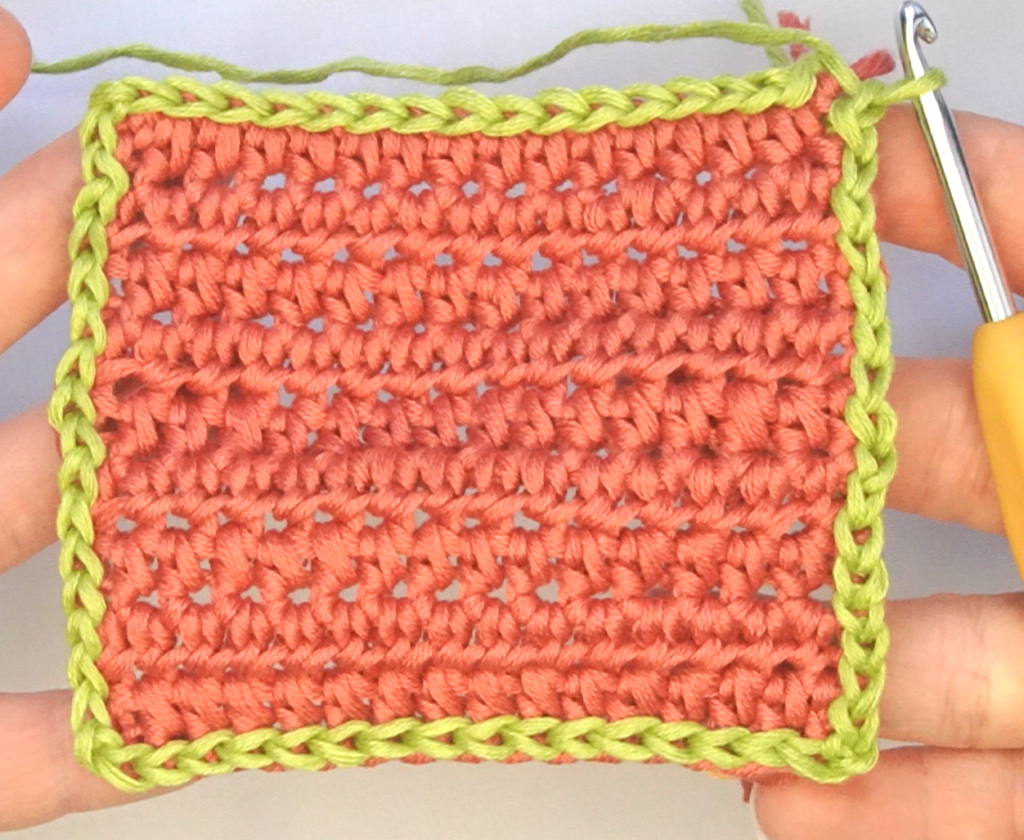
Row 1 (RS): Join yarn on the RS of your work. Sl st in every st (or row end) around the entire piece. Work 2 sl st in each corner. Ch 1, turn.
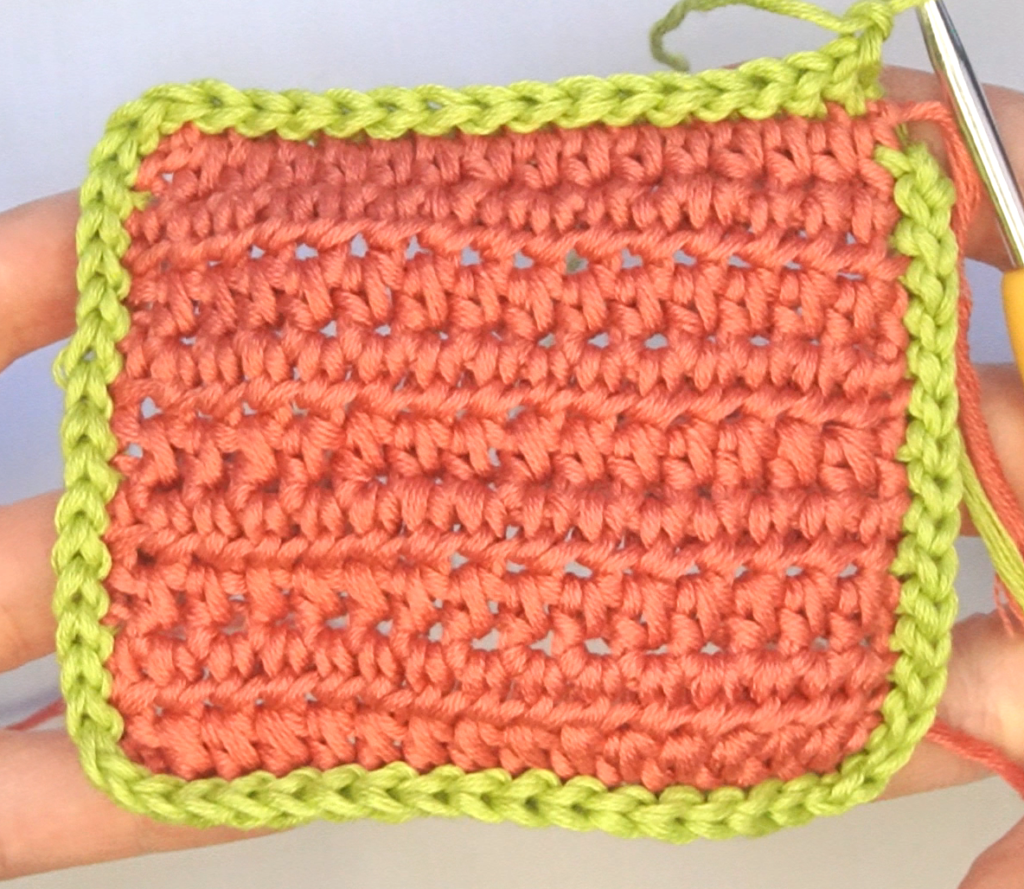
Row 2 (WS): Sl st in the Back Loop Only (BLO) of every st around. Ch 1, turn.
Row 3 (RS): Repeat Row 2.
Keep repeating Row 2 until the border is as wide as you want it. I recommend ending when you have an odd number of rows (e.g., 3, 5, or 7 rows) for the best looking finish.
Step-by-Step Breakdown
Let’s slow things down and look at exactly how to work this crochet slip stitch border so you get that perfect, professional knit-look.
Row 1 (RS): The Foundation We start by establishing our edge. Join your yarn (I usually start on the bottom edge).
Sl st in every st. Remember to keep your tension loose.
- The Sides: When working up the sides of your rows, you need to space your stitches evenly so the fabric doesn’t bunch. Since I am working on a Half Double Crochet square, I am placing 2 slip stitches per side of the row. If you work into sides of Single Crochet rows, you might need to place just one stitch per row. Try to keep your frequency of stitches the same as your regular stitches.
- The Corners: To keep the corners rounded and flat, place 2 slip stitches into the same corner space. You can place 3 sl sts for more square corners.
- To Finish: Work your way all the way around. When you finish the row, Chain 1 and Turn your work.
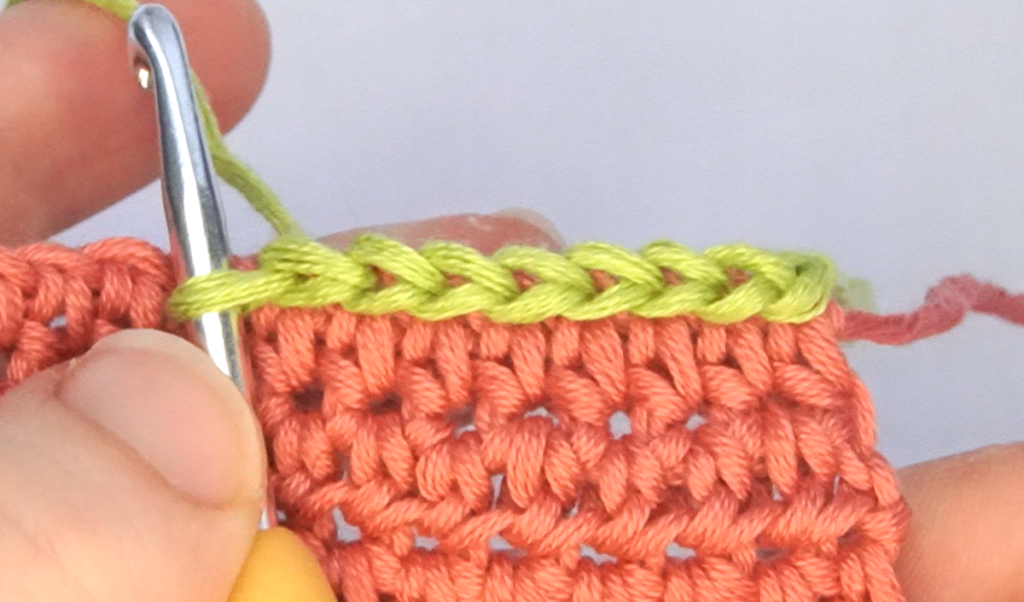
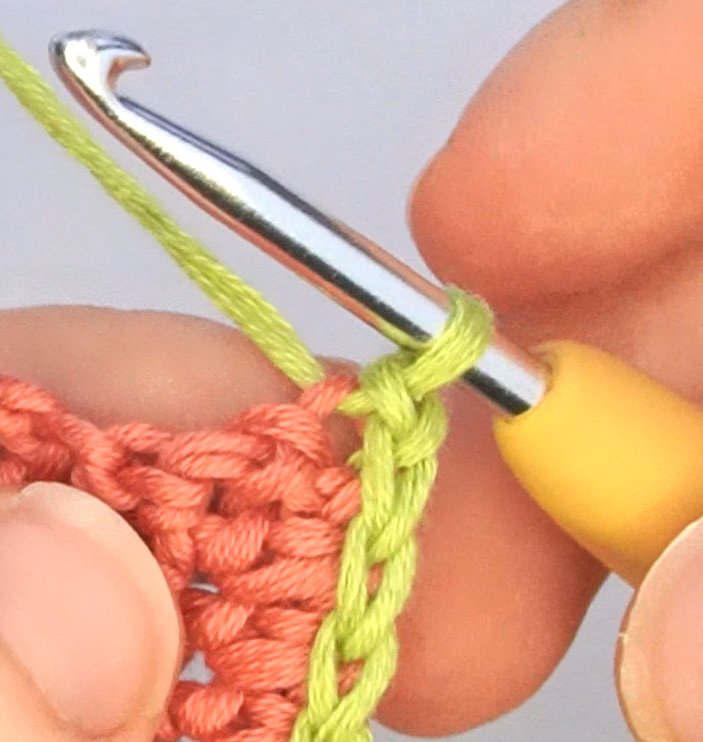
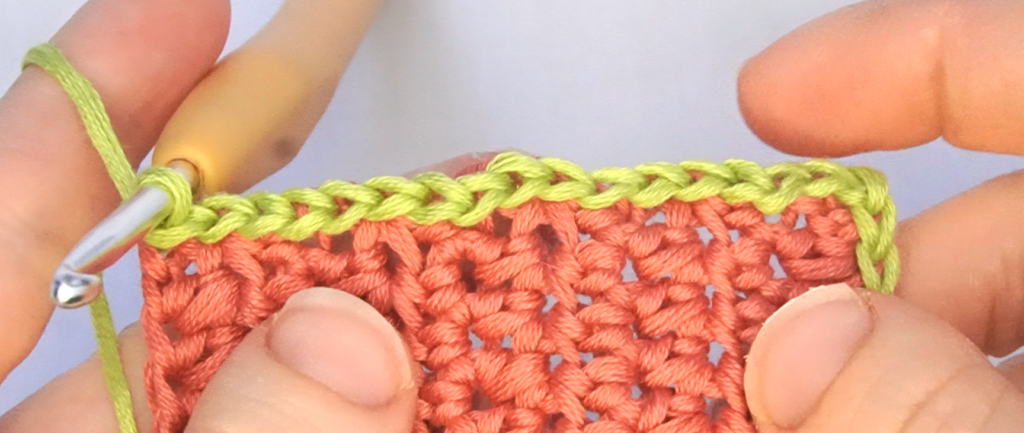
Row 2 (WS): We are now working into the stitches we just made.
- The Back Loop Only (BLO): Look at the top of your stitches. You will see a “V” shape. There is a front loop (closest to you) and a back loop (furthest from you).
- Insert your hook into the center of the V and catch only the back loop.
- Yarn over and complete your slip stitch.
- Continue this all the way around.
- Chain 1 and Turn.
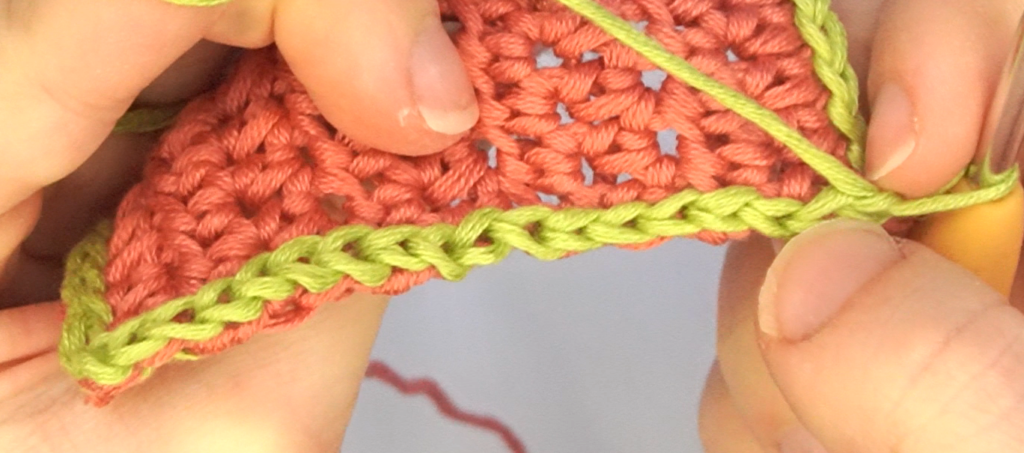
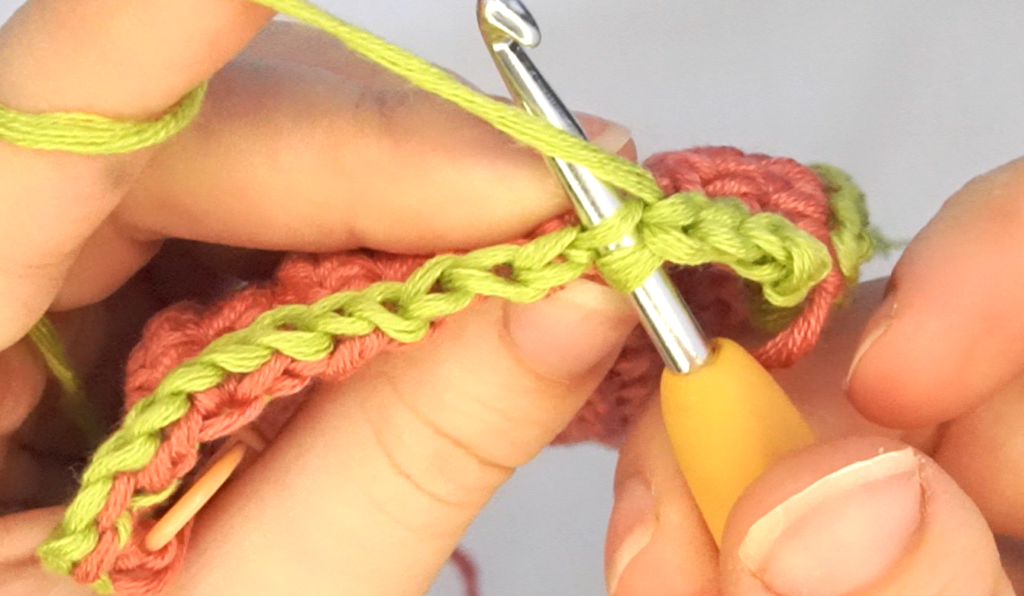
Row 3 (RS) & Beyond Simply repeat the steps from Row 2 until the border is as wide as you want it. I recommend ending when you have an odd number of rows (e.g., 3, 5, or 7 rows) for the best looking finish.
Finishing
To keep that professional, knit-like appearance, we will skip the standard knot and use an Invisible Join.
- Cut your yarn, leaving a 6-inch (15 cm) tail.
- Pull your hook straight up so the yarn tail comes all the way out of the last stitch.
- Thread the tail onto a yarn needle.
- The Duplicate Stitch: Find the very first “V” of the row on the other side of the gap. Insert your needle under both legs of that V, going from the outside in towards the fabric. Pull through gently.
- Bring the needle back to the last stitch you made (where the tail came from). Insert the needle down into the center of that V.
- Pull through and adjust the tension until this “fake” stitch matches the size of your other stitches.
- Repeat for the second V.
- Weave in all ends on the wrong side.
Frequently Asked Questions
Why is my crochet border puckering or curling? This usually happens because your tension is too tight. Slip stitches have very little stretch. Try to relax your grip, pull your loops up a bit higher, or switch to a hook that is 0,5 mm or 1 mm larger than what you used for the main project.
Can I make this border wider? Absolutely! This pattern calls for 3 rows for a delicate finish, but you can repeat Row 2 as many times as you like. The more rows you add, the more it will resemble a thick knit ribbing.
Does this work on curved edges? Yes! Because the slip stitch is small and flexible, it handles curves beautifully. Just omit the “2 stitches in the corner” instruction and maintain an even 1 stitch per space around the curve.
Conclusion
I hope you love this technique as much as I do! It really is the perfect crochet border for when you want a minimalist, modern finish. It proves that sometimes the simplest stitches have the most stunning results.
Happy Crocheting!