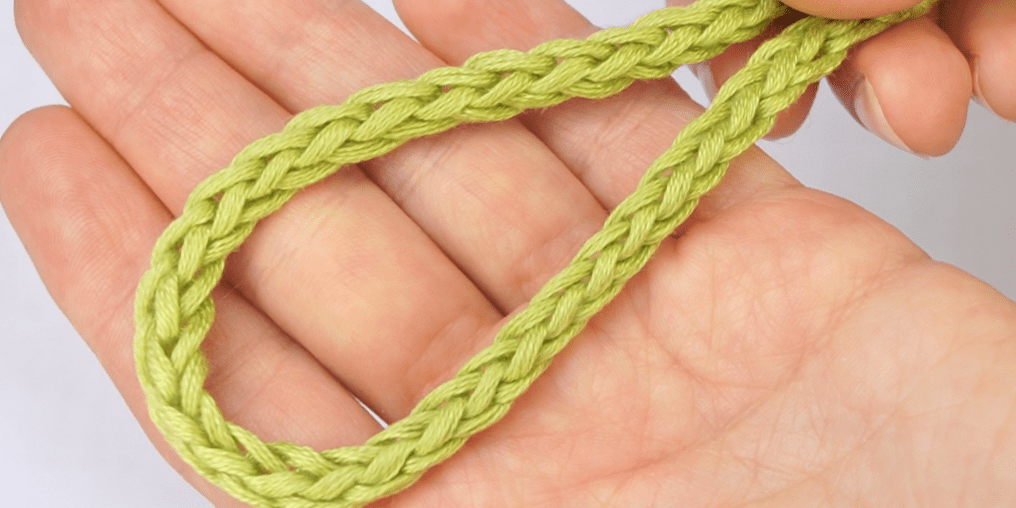
Let’s be honest: finishing a beautiful garment or accessory with a simple chain often feels a little underwhelming. Chains can be flimsy, they stretch out easily, and they don’t exactly look polished.
If you have been crocheting for a while, you have probably heard of an I-Cord. The name actually comes from the knitting world—Elizabeth Zimmermann coined it “Idiot Cord” because she thought it was simple enough for anyone to make! Essentially, it is a technique that creates a round, knitted-looking tube using just a crochet hook.
I see tutorials everywhere for the classic 3-stitch I-cord. It is gorgeous, round, and sturdy. But let’s keep it real: it can be a bit fiddly, and it takes forever to work up. I recently timed myself, and the 3-stitch version took me nearly two times longer to crochet than the method I’m showing you today.
Strangely, I rarely see tutorials for the crochet 2-stitch I-cord.
This version is the absolute “Goldilocks” solution for straps, ties, and drawstrings. It is much cleaner and more polished than a chain, but significantly faster, thinner, and lighter than the traditional 3-stitch cord. If you want something that looks professional but whips up in a fraction of the time, this is going to be your new favorite trick.
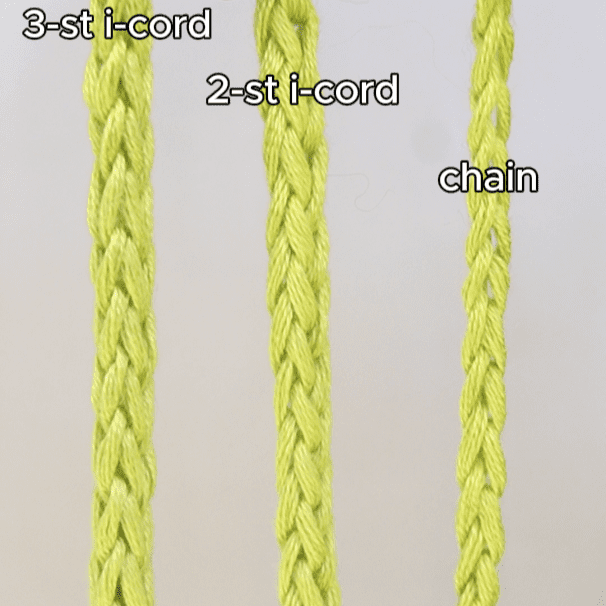
The 2-Stitch I-Cord vs. The 3-Stitch I-Cord
I often get asked why I don’t just use the standard 3-stitch cord.
There is a time and place for both! Here is how they stack up:
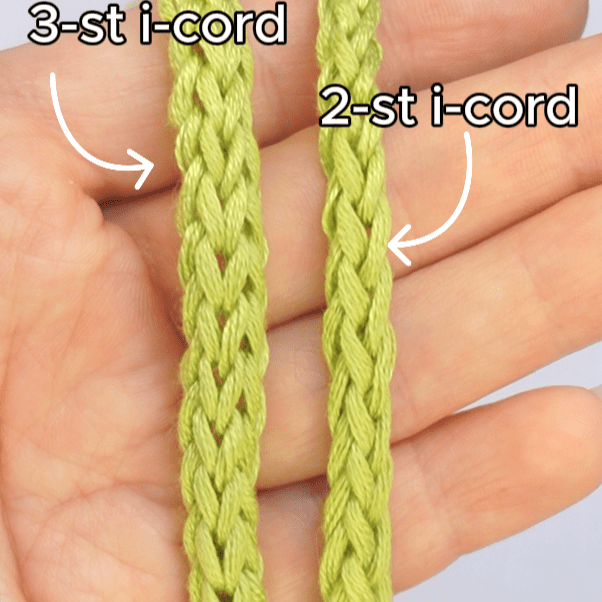
- The 3-Stitch I-Cord: Creates a round, tubular rope. It is thick and very sturdy. However, it is bulky and slow. Working three stitches requires more hook maneuvering.
- The 2-Stitch I-Cord: Creates a slightly flattened, oval cord. It uses less yarn and is significantly faster (literally half the time).
My Verdict: Use the 3-stitch for heavy bag handles. Use the 2-stitch (this pattern) for everything else—drawstrings, bikini ties, tank top straps, and headbands.
Why You Will Love This Technique
- Speed: It works up almost as fast as a chain but looks infinitely better.
- Polished Finish: It mimics the look of a knit cord, giving your work a high-end look.
- Less Bulk: Because it only uses two stitches, it creates a flat, oval shape rather than a thick tube. This makes it perfect for delicate drawstrings or lightweight tank top straps.
- No Twisting: Unlike a flat ribbon or chain, this cord looks beautiful from both sides.
Materials & Tools
The beauty of this technique is that it works with any yarn and hook combination you have on hand.
- Yarn: Any weight. (Cotton is excellent for bag handles and straps because it has less stretch). I used Drops – Muskat.
- Hook: Use the hook size recommended on your yarn label (or go down one size for a tighter, stiffer cord).
Sizing
Simply crochet until the cord reaches your desired length.
- Tip: Remember that crochet cords can stretch slightly with wear, so crochet it to the exact length you need (or slightly shorter).
Pattern Notes & Abbreviations
Before we dive in, let’s go over the logic. This cord works by pulling loops through stitches without turning your work. It sounds like magic, but once you get the rhythm, you can do it with your eyes closed.
Abbreviations (US Terms):
- Ch: Chain
- Sc: Single Crochet
- St(s): Stitch(es)
- YO: Yarn Over
The 2-Stitch I-Cord Instructions
Foundation: Start by Chaining 2.
Row 1: Insert your hook into the 2nd chain from the hook. YO and pull up a loop. You now have 2 loops on your hook. YO and pull through the first loop only (creating a chain-like base). YO and pull through both loops to complete the stitch.
Now begins the repeat pattern. DO NOT TURN YOUR WORK.
Step 1: You currently have one loop on your hook. Insert your hook into the other stitch from the previous row (the one on the left). YO and pull up a loop. You now have 2 loops on your hook.
Step 2 (The Crucial Pinch): This is the most important part to prevent your work from unraveling. Take your thumb and index finger and firmly pinch the base of the first stitch (the one closest to the hook tip). Why? This secures the yarn so the stitch doesn’t unravel when you take the hook out.
Step 3: Carefully pull your hook out of that first loop. You now have one loose loop hanging in the air (held by your pinch) and one loop remaining on your hook.
Step 4: YO and pull up a loop through the stitch currently on your hook.
Step 5: Insert your hook back into that loose loop you dropped (the one you are pinching). YO and pull up a loop.
Step 6: YO and pull through both loops to complete the Single Crochet.
Repeat Steps 1 through 6.
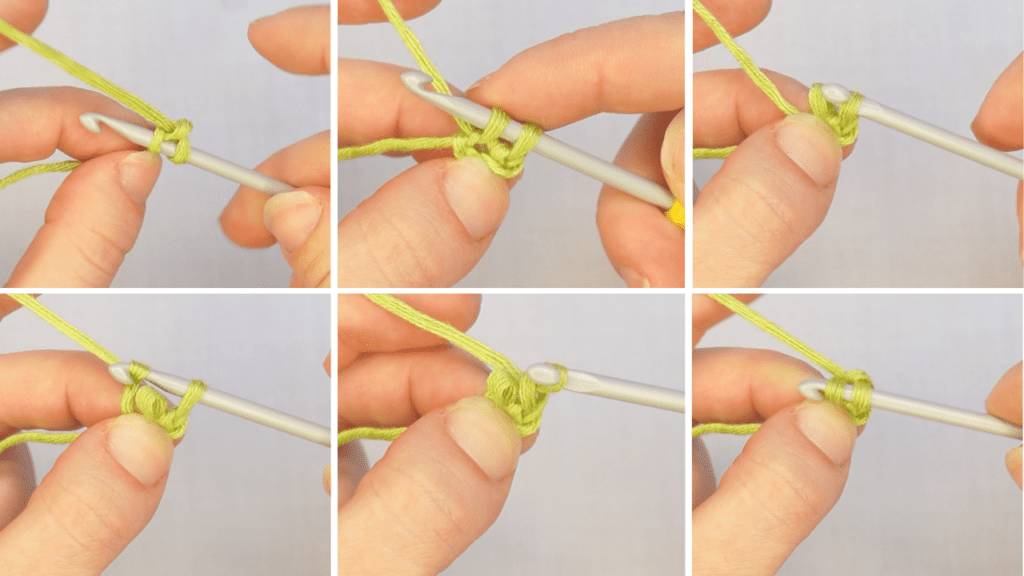
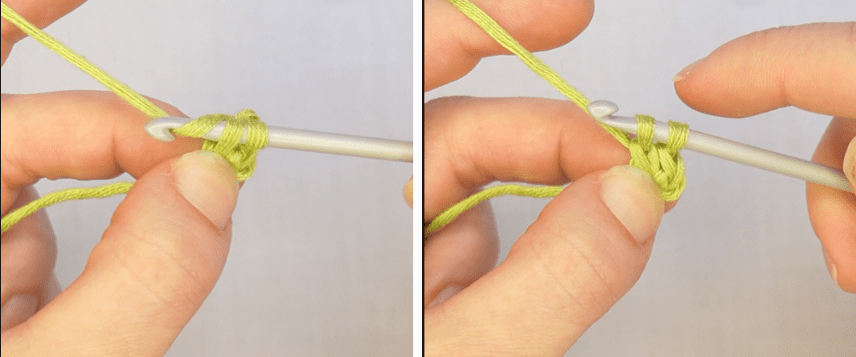
Summary of the Rhythm:
- Pinch the base of the stitch tight.
- Remove hook from the first loop.
- Chain/Pull up a loop on the remaining stitch.
- Re-insert hook into the dropped loop.
- Pull up a loop to finish.
Keep repeating this until the cord is as long as you need! You will see the cord forming automatically after about 4 or 5 rounds.
Finishing & Assembly
To Fasten Off: When you have reached your desired length, you will have two loops on your hook. Simply YO and pull through both loops at the same time to close the round. Ch 1 to lock it, cut your yarn, and pull tight.
Frequently Asked Questions
Q: My dropped stitch keeps disappearing! What am I doing wrong? A: You likely aren’t pinching the base of the stitch tight enough. Hold that fabric right below the loop with your thumb and pointer finger to freeze it in place.
Q: Can I use this for a heavy tote bag? A: You can, but it might be a bit thin. If you need a heavy-duty handle, try holding two strands of yarn together while making this cord, or opt for the 3-stitch version for extra bulk.
Q: Why does mine look twisted? A: Ensure you are always keeping the “front” of the work facing you. Never turn the work like you would in normal crochet rows.