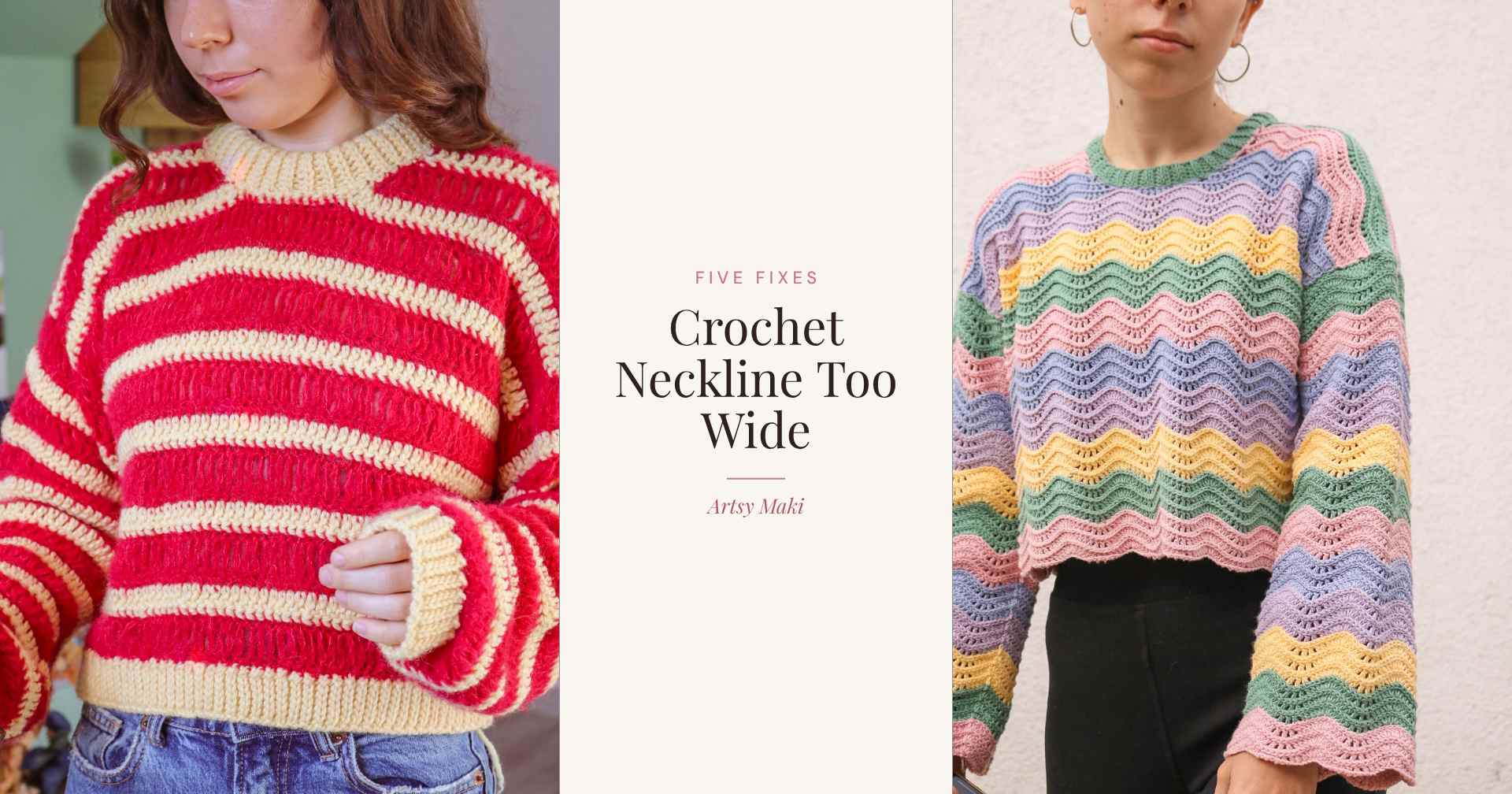
If your crochet sweater keeps slipping at the neckline, your crochet neckline might be too wide. First check whether the opening was too large from the start or has stretched with wear. A loose neckband may only need a little support. A neckline with too many stitches may need a new edging.
Start with the smallest change, and try the sweater on before fastening off. The aim is a neckline that sits comfortably and still passes over your head.
Check the fit before changing anything
- Let the sweater rest, and wash and dry it according to the care instructions if it has not been washed yet.
- Lay it flat without stretching and compare it with the pattern measurements or a sweater that fits you well.
- Measure the opening width if you are comparing widths. To measure the full neckline edge, follow its actual curve with a flexible tape; doubling a straight width is not an accurate circumference for a curved opening.
- Try it on and check the shoulders too. A wide body or shoulder line can make a sweater slip even when the neckband itself is fine.
Why crochet necklines stretch
Loose gauge, a heavy garment and an unsupported edge can all make a neckline spread. Fibre and construction matter too. Some fabrics relax more after washing or under their own weight, while a boat neck may simply be designed to sit wide.
Do not choose a target opening from a standard head-size chart alone. A firm opening and a stretchy ribbed opening need different relaxed measurements. The practical test is whether your finished edge goes comfortably over your head and sits where you want it.
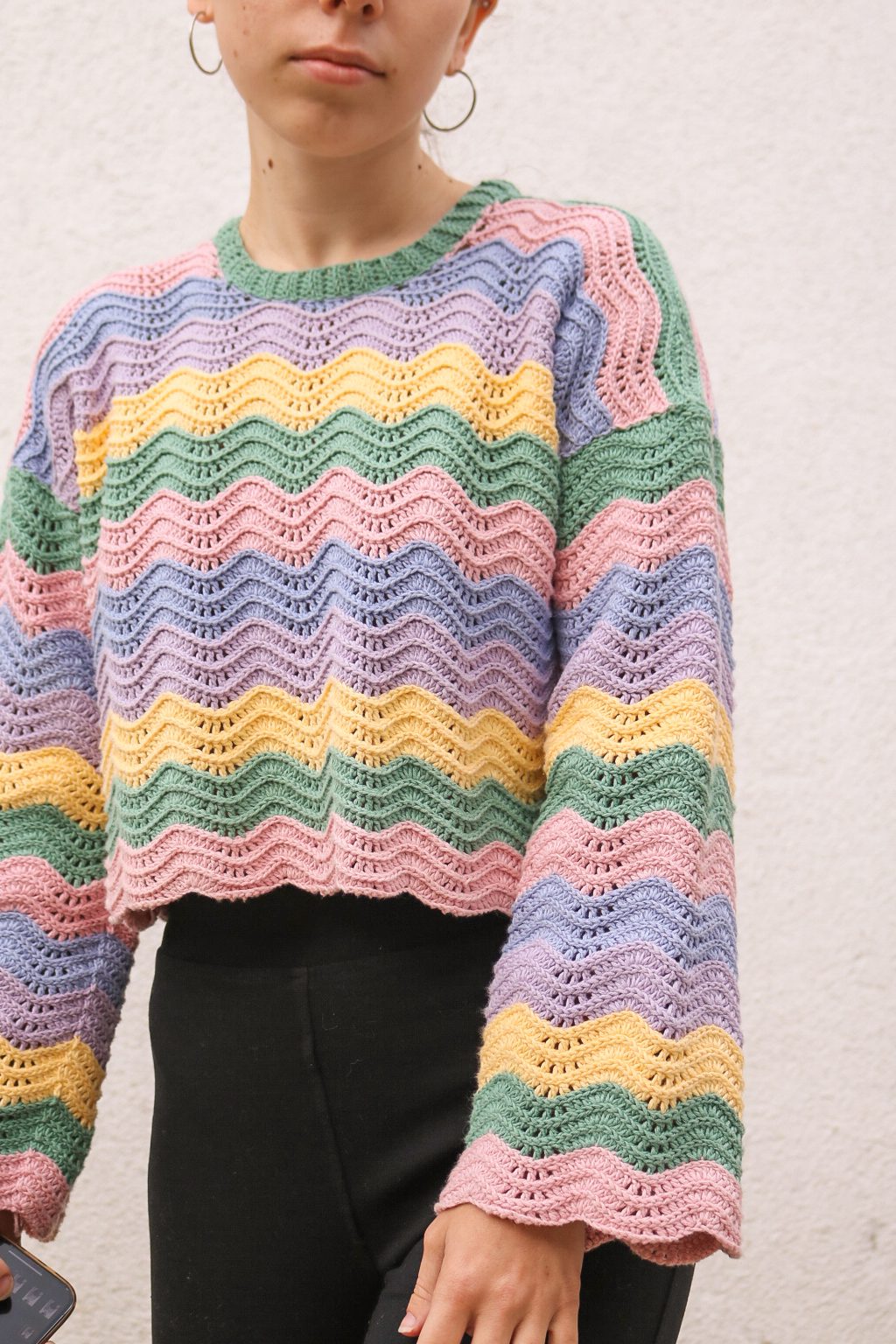
1. Add a stabilising slip-stitch line
For a slightly stretched edge, try a line of slip stitches on the inside where the band meets the body. Surface slip stitches can add support without changing the outside much. Work evenly and start with a short section across the back neck if that is where the extra width is.
Insert the hook through the chosen fabric point, yarn over and pull through the fabric and the loop on the hook. Keep checking the tension. Slip stitches can become very tight, so do not assume you need to skip a fixed proportion of the original stitches.
Try the sweater on while the repair is still easy to undo. If the edge puckers or will not pass your head, loosen or remove the line. A small test on a swatch helps you see how your yarn behaves.

2. Rework a separately added neckband
If the band was added after the body, you may be able to unravel that band and work a new one with fewer stitches or a different hook. Check where the band ends before undoing anything.
For a top-down sweater, the foundation edge supports the rest of the garment. Do not cut or try to unravel that foundation as though it were a removable finishing round. An edging added onto it is a separate matter.
Spread any decreases around the neckline and check that they suit the shape. Removing a large amount at one point makes a gather or pleat rather than a smooth edge.
3. Add or replace a ribbed band
A ribbed band can draw an opening in while retaining some stretch. Sideways back-loop ribbing and post-stitch ribbing behave differently, so test the version you plan to use.
Mark the neckline and the band into matching sections to distribute the attachment evenly. Check the relaxed fit and the stretch over your head before joining the band permanently. If the fabric below gathers heavily, the band is probably pulling in too much.
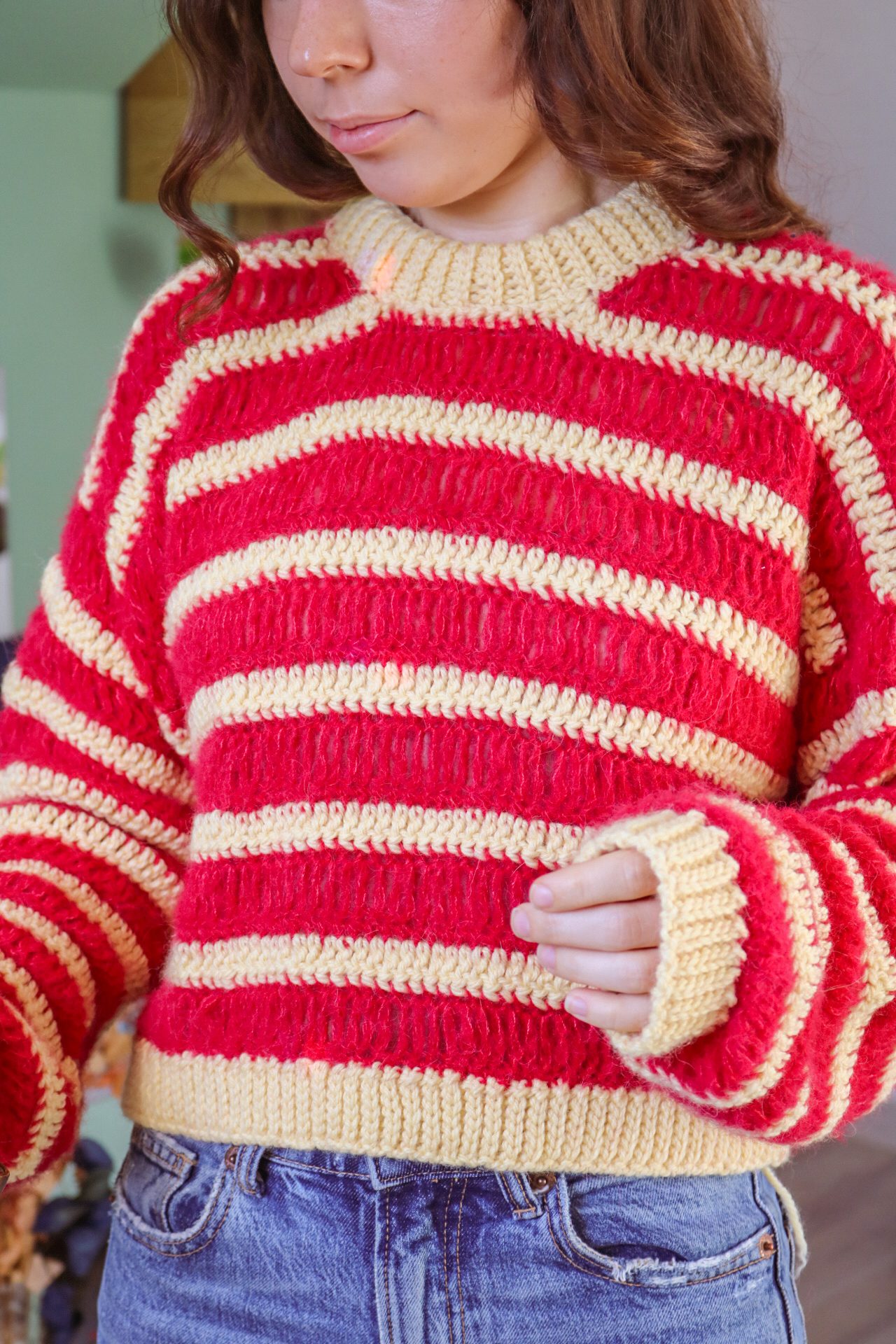
4. Add an adjustable cord or ribbon
A cord through an existing eyelet band can make the opening adjustable. It also changes the look: the small gathers and tie become part of the design.
Use a smooth cord that moves easily through the openings, and make sure the neckline is comfortable when loosened and tied. A narrow crocheted cord or ribbon may work better than a bulky one. If the band has no suitable openings, test an added eyelet edging rather than forcing a cord through dense stitches.
5. Add elastic inside the band
Narrow elastic can support a stretched band if there is a suitable channel or enough fabric to hide it. Test the elastic length before joining the ends, and check that it still stretches comfortably over your head.
Keep it smooth against the skin and avoid gathering the neckline more than you want. A firm stay tape can also support a short section such as the back neck, but a non-stretch tape around the whole opening may stop a pullover from going on.
How many stitches should you remove?
For an estimate, multiply the edge length you want to remove by the number of stitches per centimetre along that edge. At 20 stitches per 10 cm, reducing the edge by 4 cm suggests about 8 fewer stitches. This is a starting calculation, not a guarantee of the finished fit.
A simple evenly spaced decrease example: if you have 110 stitches and want 100, remove 10 stitches. Working 9 single crochets followed by sc2tog uses 11 original stitches and leaves 10. Repeat that ten times. Use the stitch and shaping that suit your particular band.
The body gauge may differ from a ribbed or slip-stitch band, so measure the relevant fabric. Begin conservatively; a small reduction is easier to refine than a neckline pulled tightly into gathers.
Can blocking fix it?
Blocking may help an edge settle if it was stretched out of shape, but there is no reliable percentage by which every neckline can be shrunk. The fibre, stitch and care method determine what will hold after wear.
Dry the garment to its intended measurements without forcing it smaller. If it opens out again, a supported edge or a reworked band is more useful than repeatedly trying to shrink it.
Before you weave in the ends
- Can the opening still pass over your head comfortably?
- Does the fabric lie flat below the band?
- Are the shoulders sitting where you want them?
- Does the edge feel comfortable when you move?
- Is the repair still secure when the weight of the sweater hangs from it?
Keeping the neckline in shape
Use the neckband gauge and hook specified in the pattern, check your washed swatch and support a heavy sweater while it dries. Store it folded rather than hanging it from the shoulders. These small habits help protect the fit you worked for.
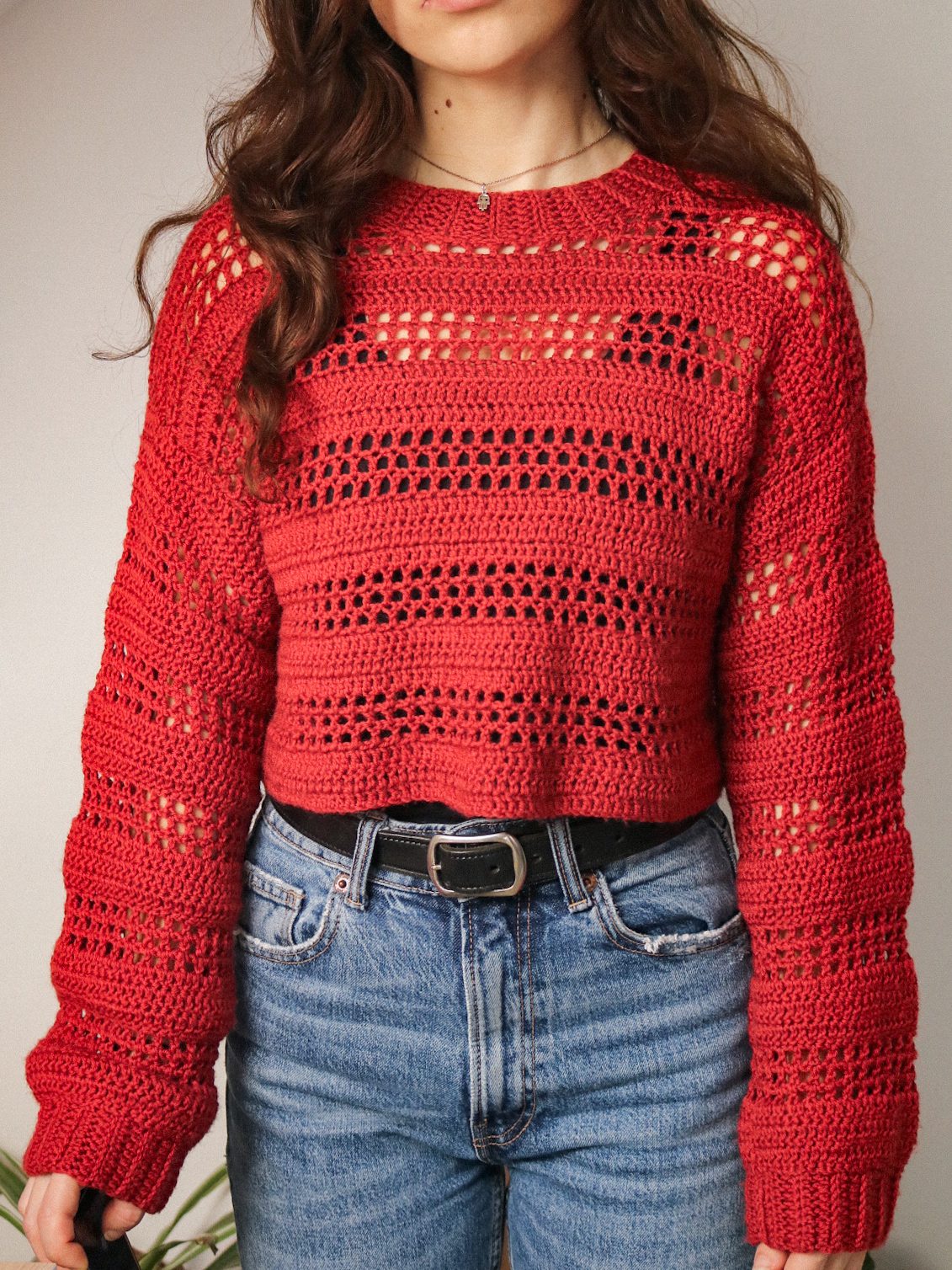
A crewneck with the numbers written down
The Bari Sweater is a relaxed crewneck in eight sizes, XS to 4XL, with its gauge given both in double crochet and in mesh squares so you can check yours before the neck round. Instant PDF download.