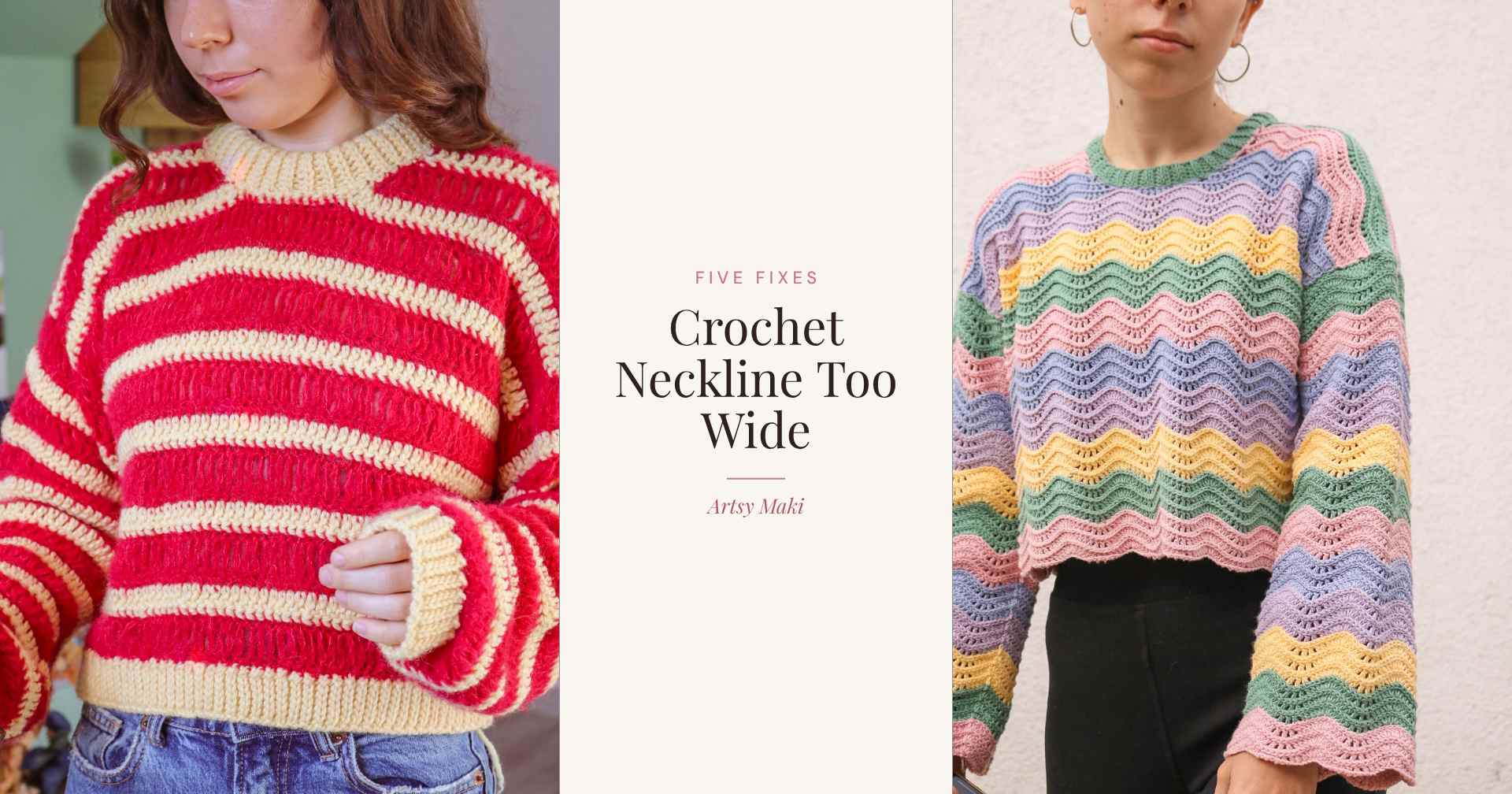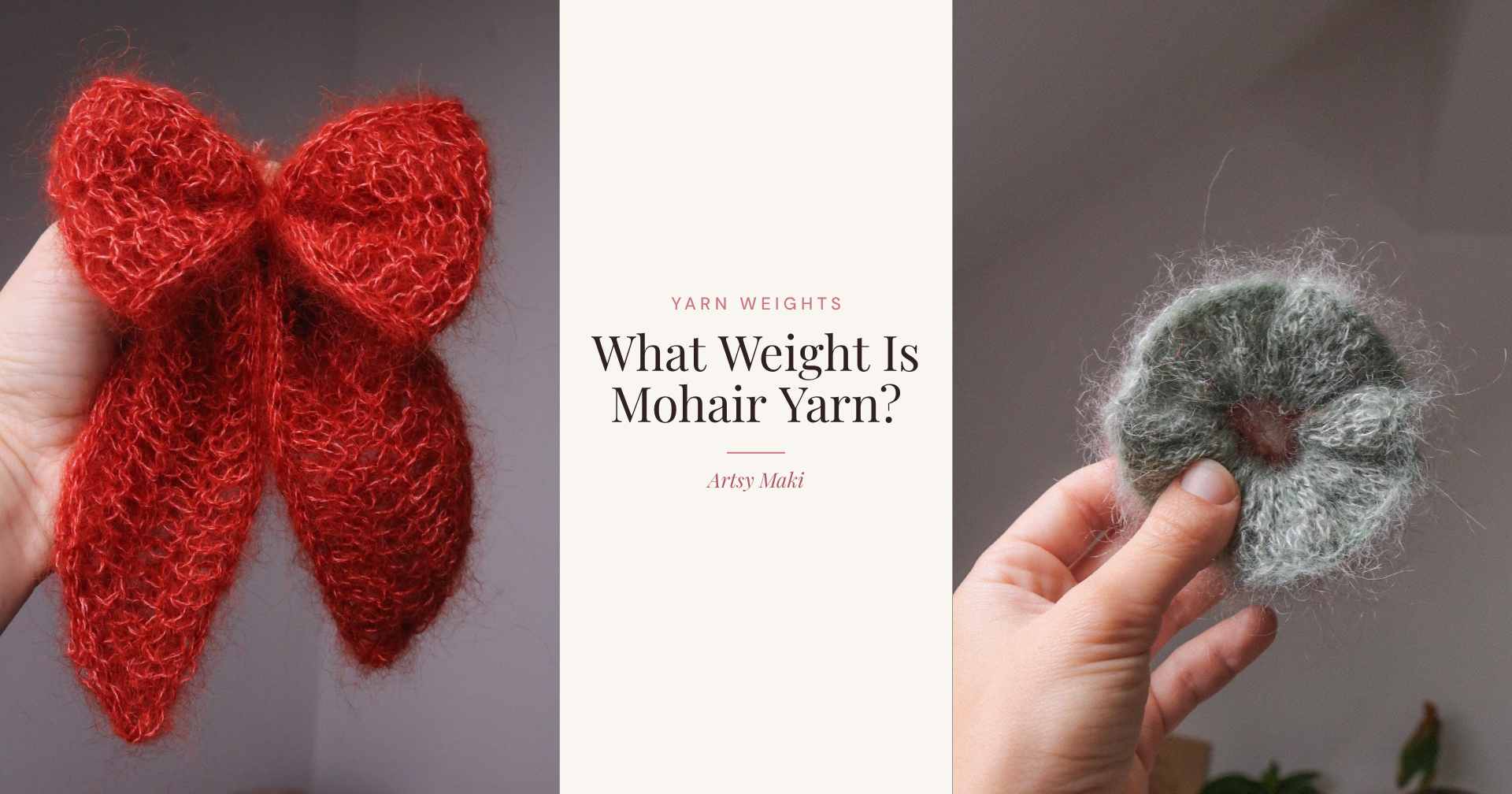
What weight is mohair yarn? Mohair is a fibre, not a yarn weight. You can buy it as a fine lace-weight strand or as a much thicker fluffy yarn. The word “mohair” on its own does not tell you which hook to use or whether it will suit a pattern.
The confusing part is the fluff. A fine strand can make a fabric that looks much fuller than you expect, so the yarn label and a washed swatch are more useful than judging the thickness by eye.
Why mohair looks thicker when you work with it
The soft fibres standing out from the strand are called the halo. They soften the outline of the stitches and occupy some of the space between them. That is why an open mohair fabric can look airy and fluffy at the same time.
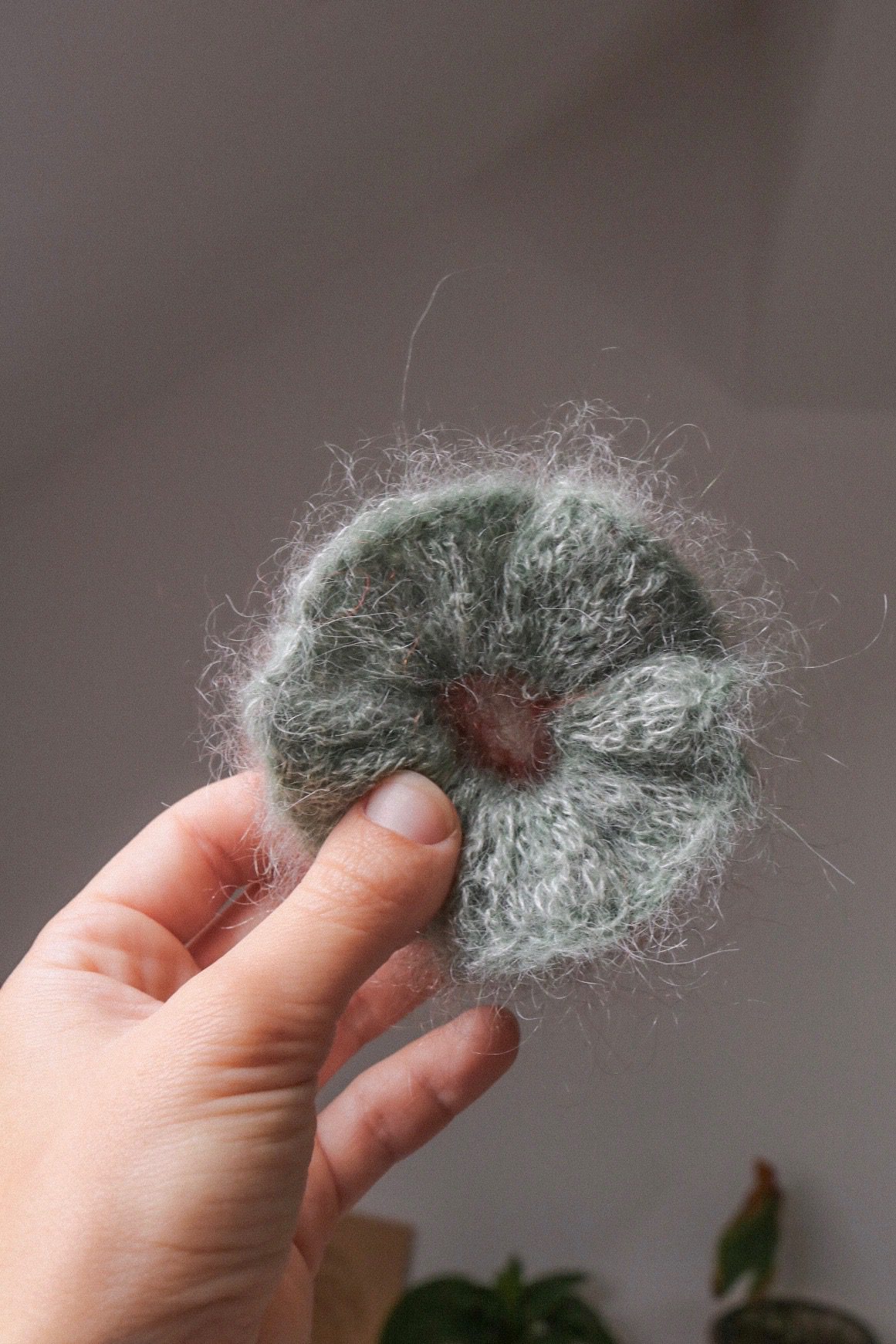
This does not turn every mohair yarn into a heavier weight by a fixed number of categories. The core, fibre blend, brushing and hook size all affect the result. Two balls with similar metres per gram can still make noticeably different fabrics.
What to check on the label
- Yarn weight: lace, fingering, DK or another category gives a starting point.
- Length and ball weight: compare metres or yards, rather than the size of the fluffy ball.
- Fibre content: mohair may be blended with silk, wool or synthetic fibres, which changes its feel and behaviour.
- Suggested gauge and tools: check whether the stated gauge is for knitting or crochet. They are not interchangeable.
- Care instructions: use these when washing the swatch as well as the finished project.
What hook size should you use?
If you are following a pattern, start with its hook size and the specified yarn combination. Then make a swatch in the pattern stitch. The hook on the ball band is a suggestion, while the pattern gauge is what determines the finished size.
For a loose accessory, you have more freedom. A larger hook opens up the stitches and gives a lighter fabric; a smaller hook makes a closer one. Neither is automatically right for every mohair project.
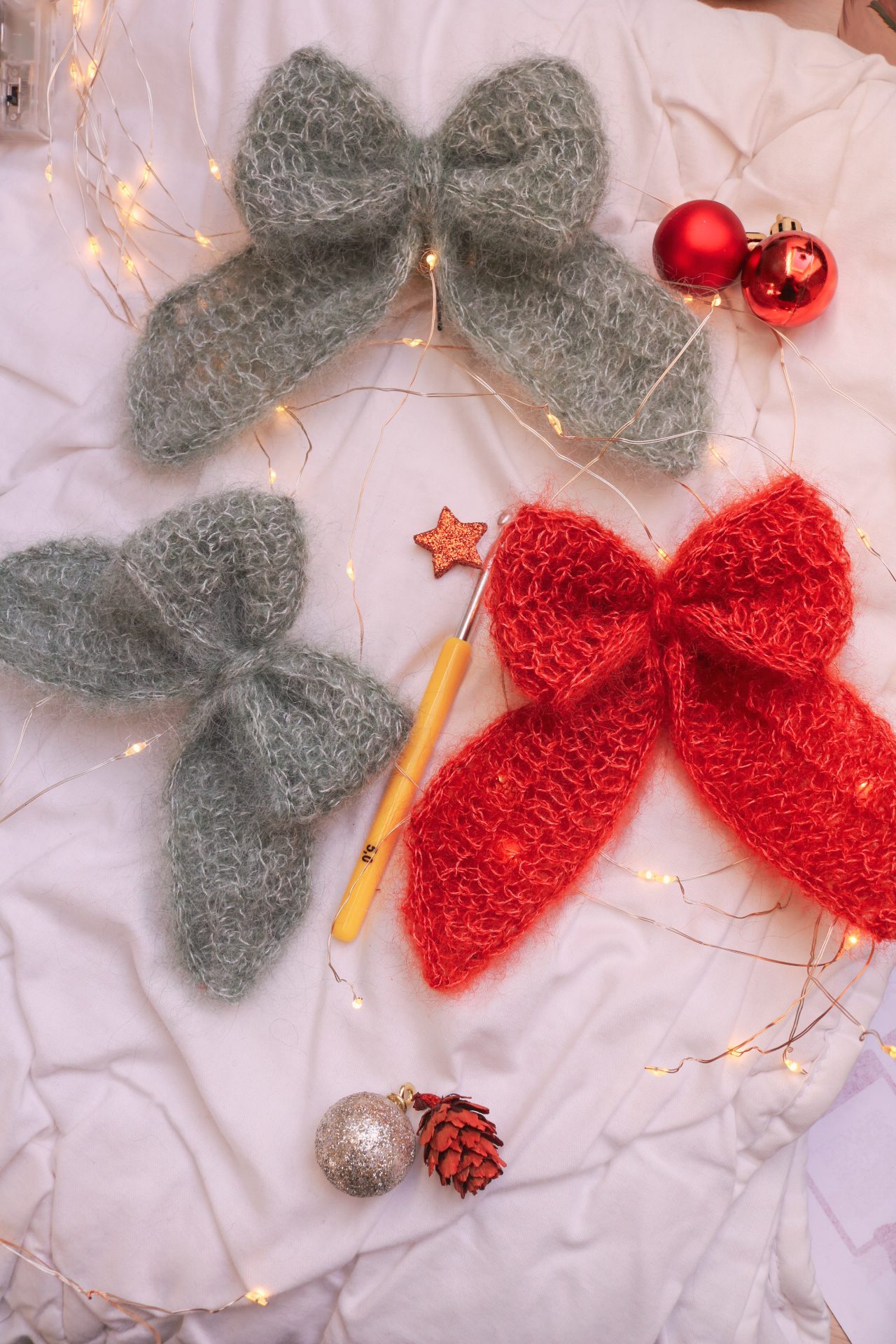
The Mohair Bow is a small way to try this type of yarn. Its 5 mm hook is a choice for that particular fabric, rather than a rule for all lace mohair.
Make a swatch before choosing a garment size
- Crochet a piece large enough to measure away from the edges, using the actual stitch and yarn combination.
- Check whether the fabric feels comfortable, flexible and suitable for the project.
- Wash and dry it following the yarn care instructions. Let it dry fully before measuring.
- Count stitches and rows over the distance requested in the pattern. Use good light and markers if the halo makes the stitches hard to see.
- If the gauge is wrong, change the hook and try again before starting the garment.
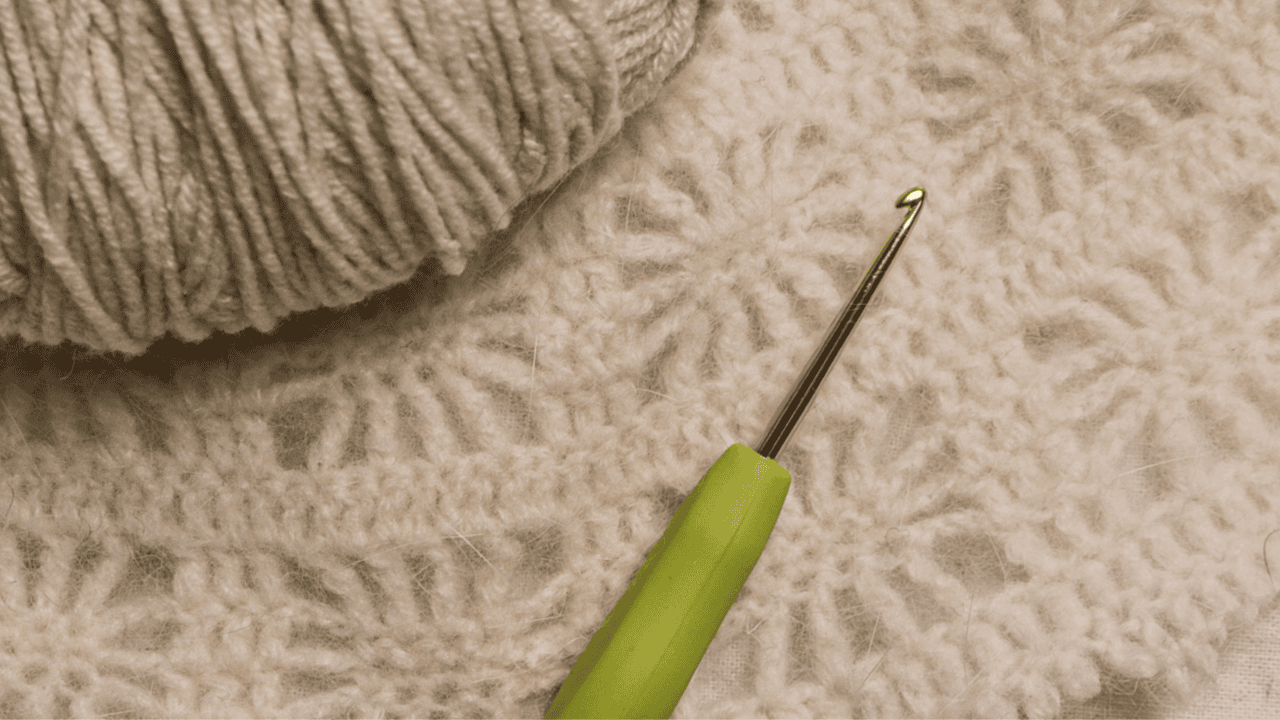
Some brushed yarns become fuller after washing, while others change less. A washed swatch lets you see what your own yarn does instead of relying on a promise that all mohair will bloom in the same way.
Holding mohair with another yarn
A fine mohair strand is often held alongside a smoother yarn. The smooth strand gives a clearer base, while the mohair adds softness, colour and texture. The combined fabric can be fuller than either strand on its own.
There is no universal rule that one strand of mohair adds exactly one yarn-weight category. Swatch both strands together and compare the result with the pattern gauge.
Remember that both strands need to run the full length of the work. If a pattern calls for 800 m with two yarns held together throughout, you usually need 800 m of each yarn, not 400 m of each. Check the wording of the pattern carefully.
For help planning a combination, see holding yarn strands together and the yarn weight calculator. Treat the calculated weight as an estimate, then check the fabric.
What if the label is missing?
You can estimate the length per gram by measuring a sample and weighing it on a sensitive scale. For example, if 10 m weighs 2 g, the yarn contains about 500 m per 100 g. A very small sample can give a large error, especially with fine yarn.
That estimate helps with yardage, but it cannot tell you how the halo will behave. Wraps per inch can also be difficult to judge because the fluff compresses differently each time. Use a swatch to decide whether the yarn suits the project.
Working with mohair without the frustration
A common difficulty is unravelling: loose fibres can catch around neighbouring stitches. Check your work regularly, and undo mistakes slowly by hand. Stop and loosen a snag rather than pulling harder.
Markers help with long rows, and a contrasting background behind your work can make the stitch tops easier to find. Keep a note of the hook size and washed gauge, especially if you put the project aside for a while.
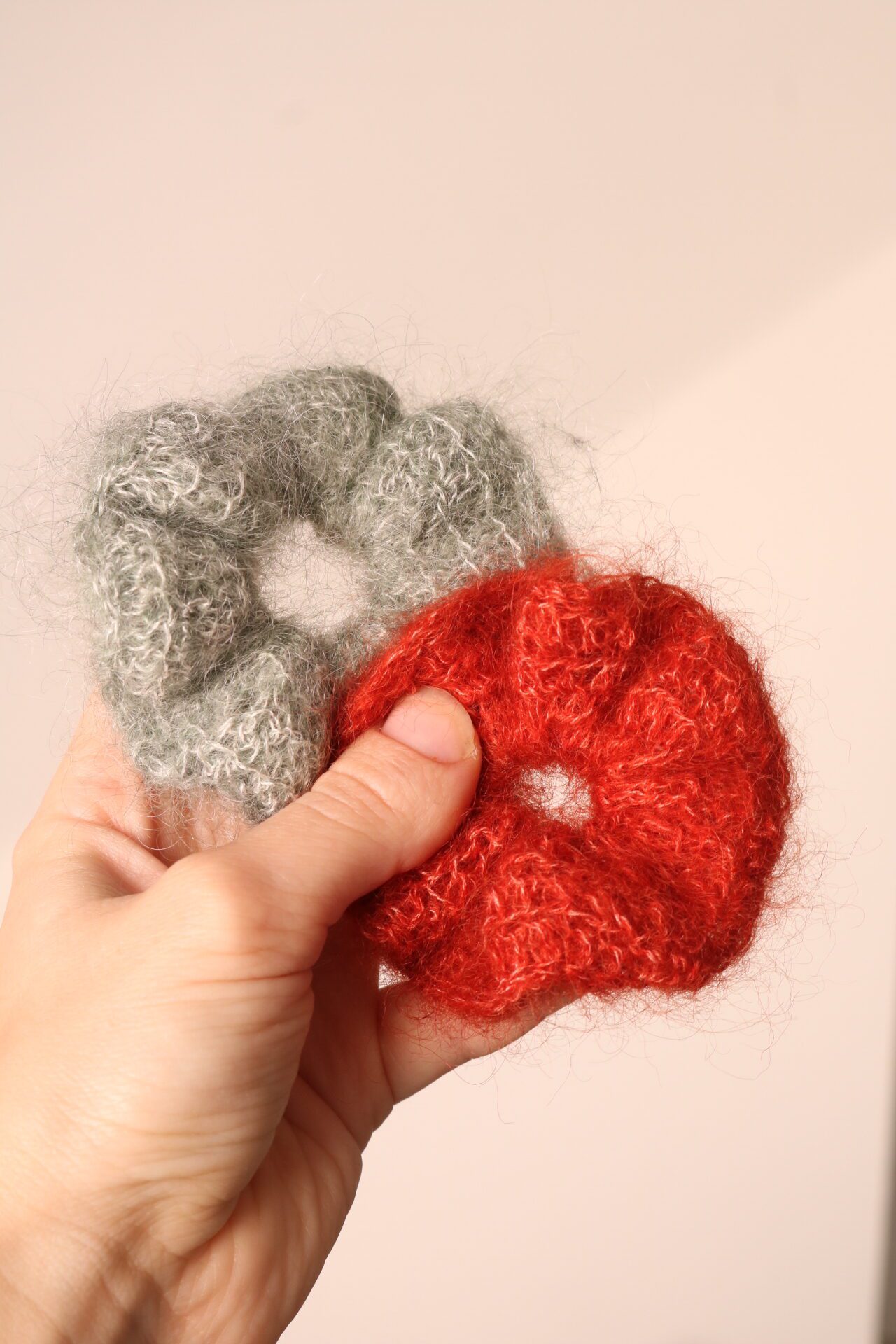
Can mohair replace DK yarn?
Sometimes a mohair blend or a combination of strands will suit a DK pattern, but the name of the fibre cannot answer that on its own. Match the washed gauge and consider the drape, opacity and weight of the fabric. Fine mohair worked alone may look much more open than the original design.
If the swatch matches the stitch count but feels wrong for the garment, keep looking. A good substitute needs to make a fabric you want to wear as well as fit the measurements.
Ten grams of mohair, start to finish
Ten grams is enough to find out how a mohair behaves on a big hook. One size, adjustable, 5 mm hook, instant PDF download.