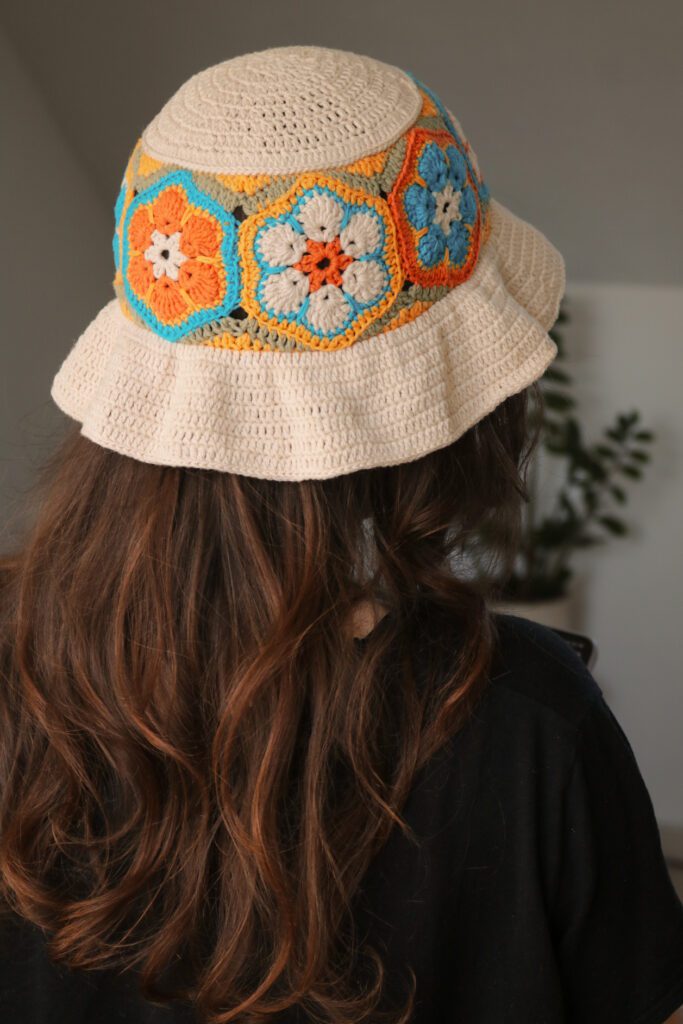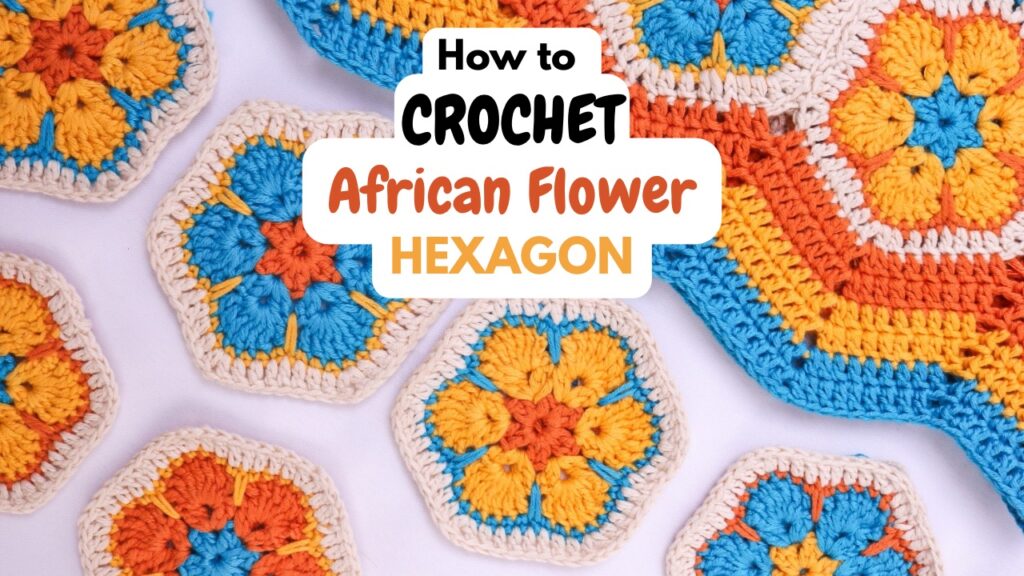
The African flower hexagon is one of those timeless crochet motifs that never gets old. It’s beautiful, versatile, and surprisingly satisfying to make once you get the hang of it. I’ve been working with this motif a lot lately because I’m using it in two upcoming designs: a bucket hat that’s currently in testing and a top that I’m in the middle of designing. Both are turning out gorgeous, and it all starts with this hexagon.
So whether you’re planning to join hexagons into a garment, make a bag, or just want to practice a new motif, this tutorial will walk you through it step by step.
What You’ll Need
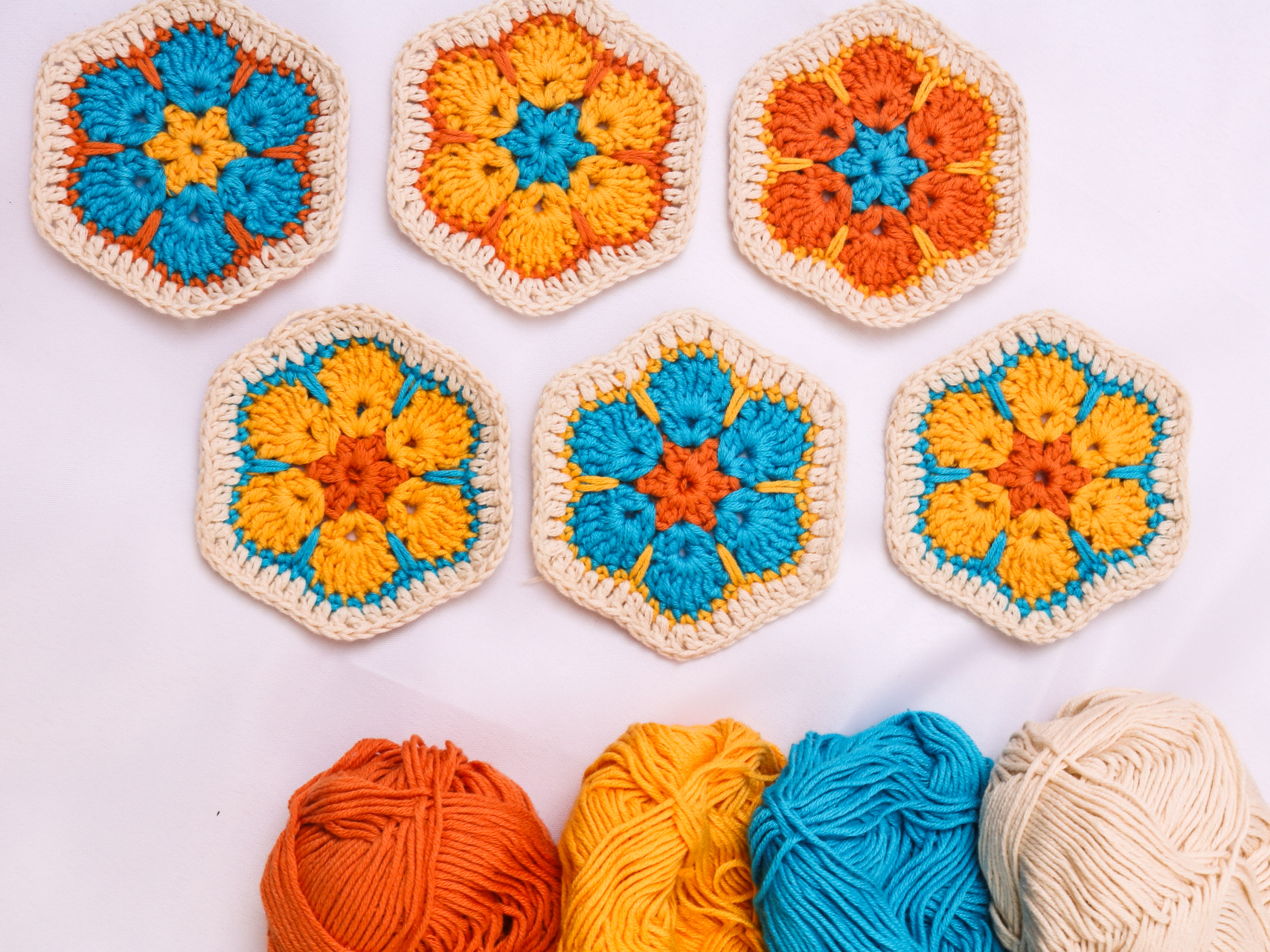
- Yarn: You can use any yarn you want. I am using Drops Safran (50 g = 160 m) in 4 colors
- Hook: 0,5 mm smaller than what’s recommended for your yarn. I am using 3 mm hook
- Scissors and a tapestry needle
For this tutorial, I’m using four colors:
- Color A – center
- Color B – petals
- Color C – background
- Color D – border
A Note on Yarn Weight and Hook Size
You don’t have to use the exact yarn and hook I’m using here – this motif works with pretty much any yarn weight, from fingering to aran. The one thing I’d really recommend is going for a tight gauge. Use a hook that’s a size or even two smaller than what the yarn label suggests. The tighter your stitches, the better the petals will pop and the cleaner your hexagon will look overall. With a loose gauge you lose that crisp flower definition that makes this motif so beautiful.
How to crochet African flower hexagon
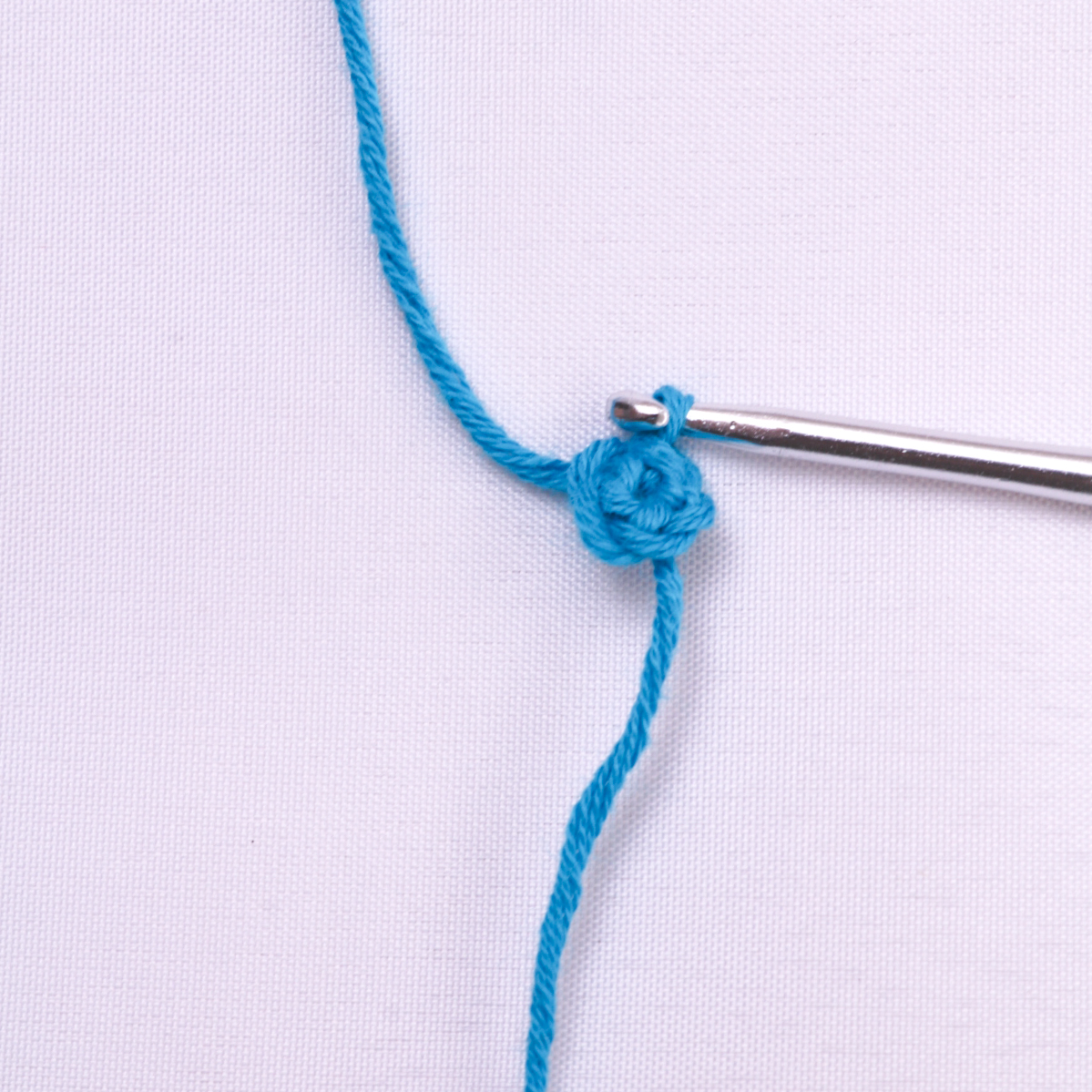
Starting Ring
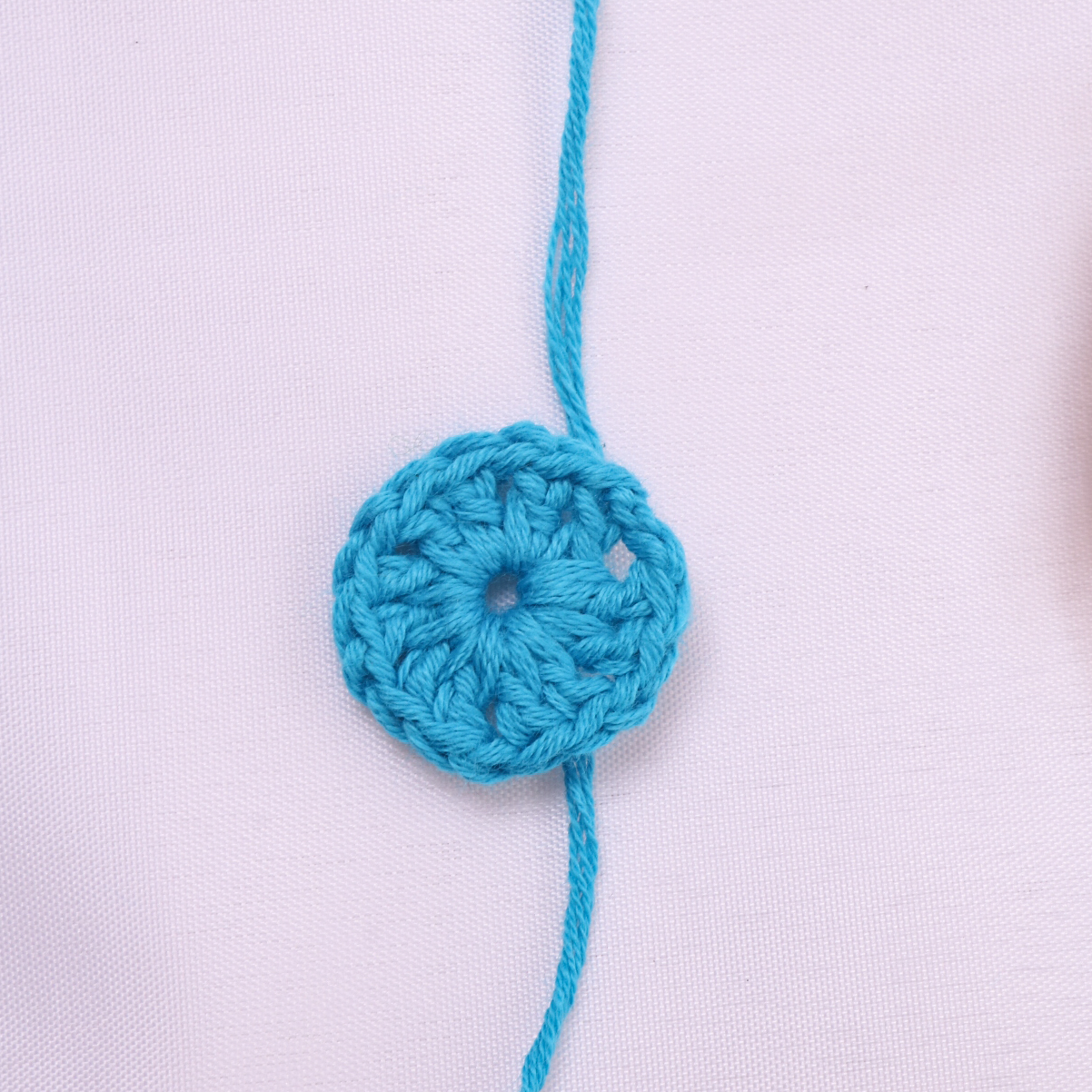
Using Color A, chain 5. Slip stitch into the first stitch to join in a round.
Round 1 (Color A)
Ch 3 (counts as dc here and throughout), dc in ring, ch 1. *Work 2 dc in ring, ch 1. Rep from * 4 more times. Sl st to top of ch-3.
You should have 12 dc and 6 ch-1 spaces.
Round 2 (Color B)
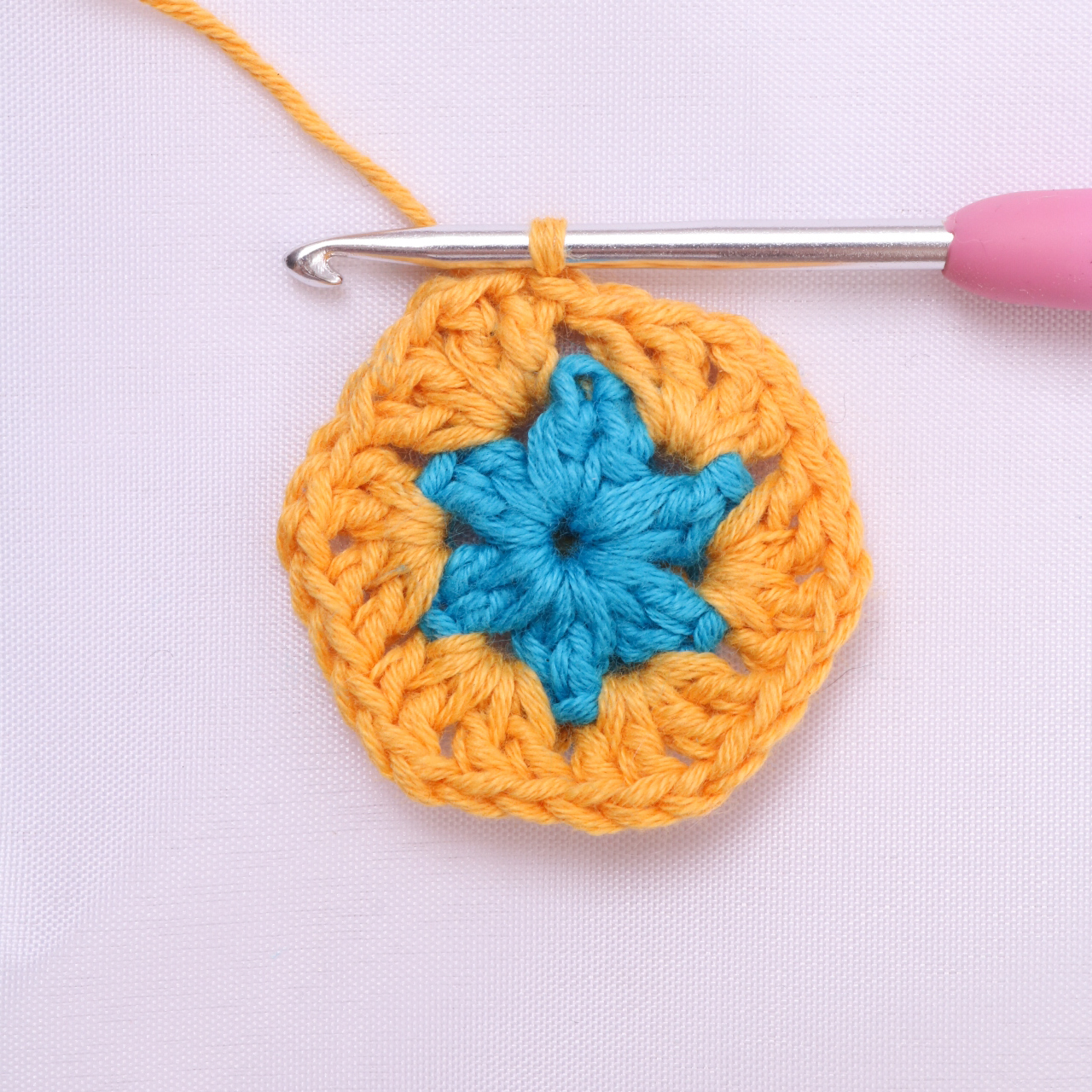
Join Color B with sl st in the nearest ch-1 sp. Ch 3, dc in the same sp, ch 1, 2 dc in the same sp. *2 dc in next ch-1 sp, ch 1, 2 dc in the same ch-1 sp. Rep from * 4 more times. Sl st to top of ch-3. Fasten off.
You should have 24 dc and 6 ch-1 spaces – that’s 6 shells.
Round 3 – The Petals (Color B)
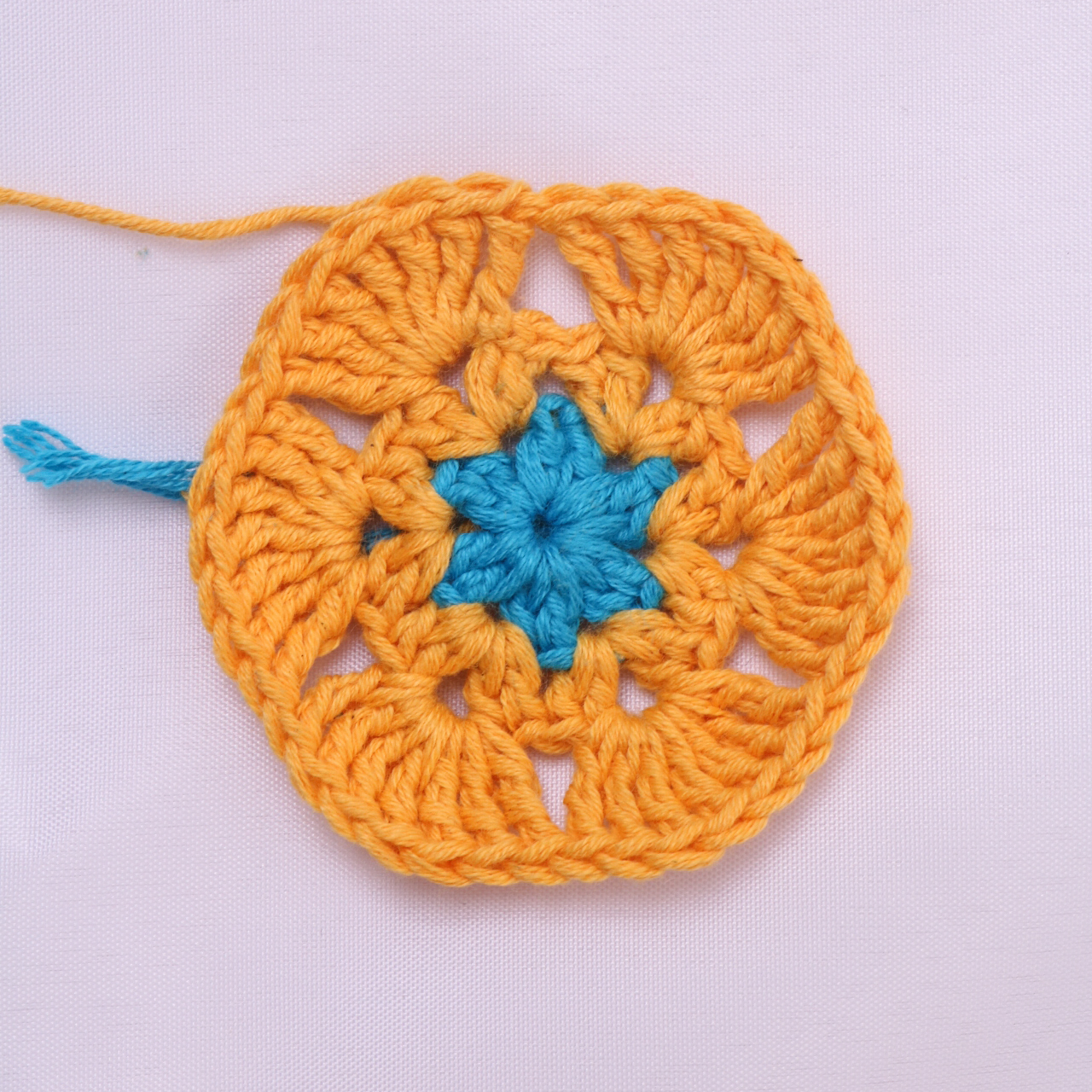
Join Color B. Ch 4, 6 trc in the same sp. *7 trc in next ch-1 sp. Rep from * 4 more times. Sl st to top of ch-4.
You should have 42 trc – 6 petals of 7 trc each.
Round 4 (Color C)
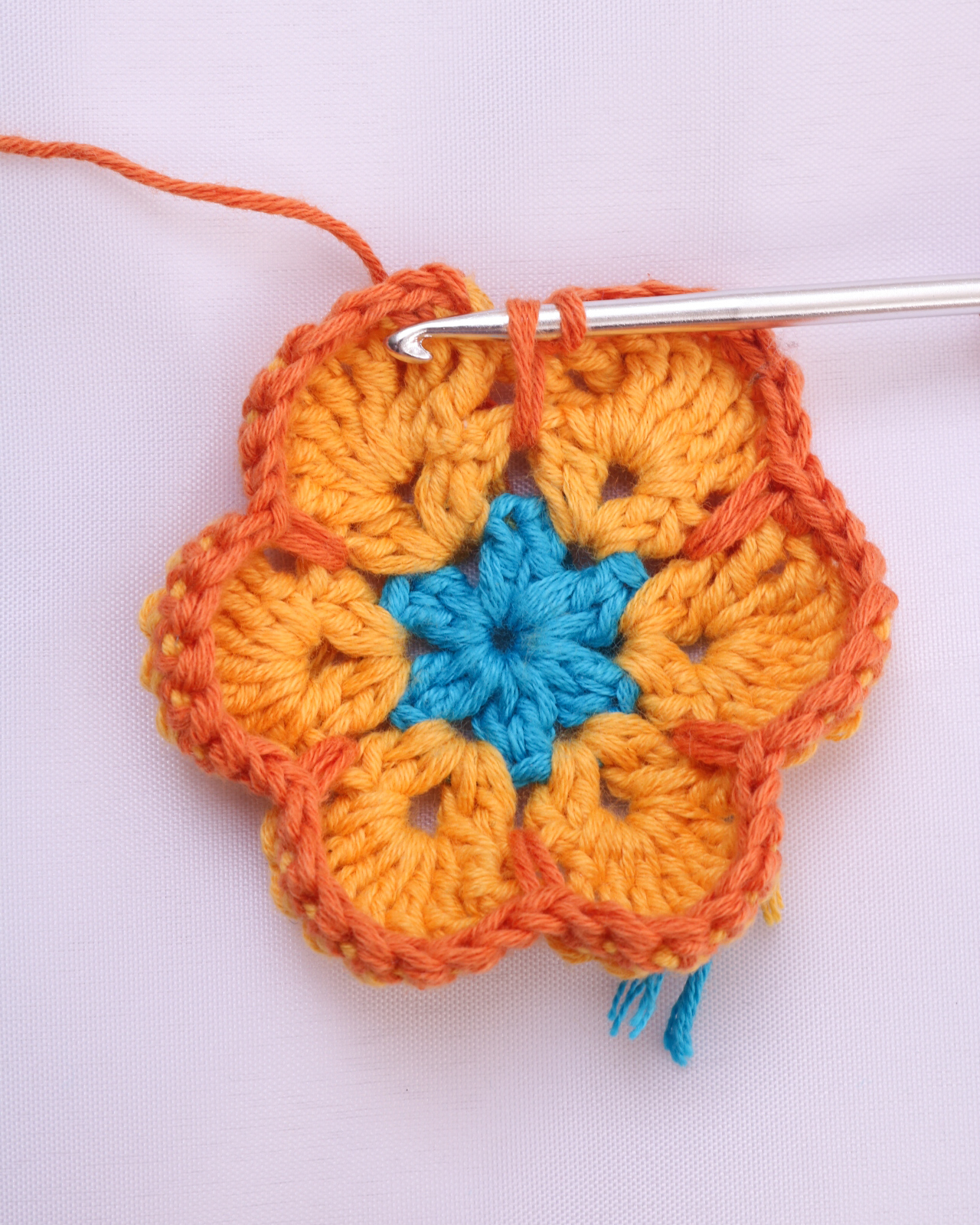
Join Color C. Ch 1 (counts as sc). Sc in next 6 sts. Esc between 2 dc two rows down. *Sc in next 7 sts, esc between 2 dc two rows down. Rep from * 4 more times. Sl st to first sc.
You should have 42 sc and 6 esc – 48 stitches total.
Round 5: The Border (Color D)
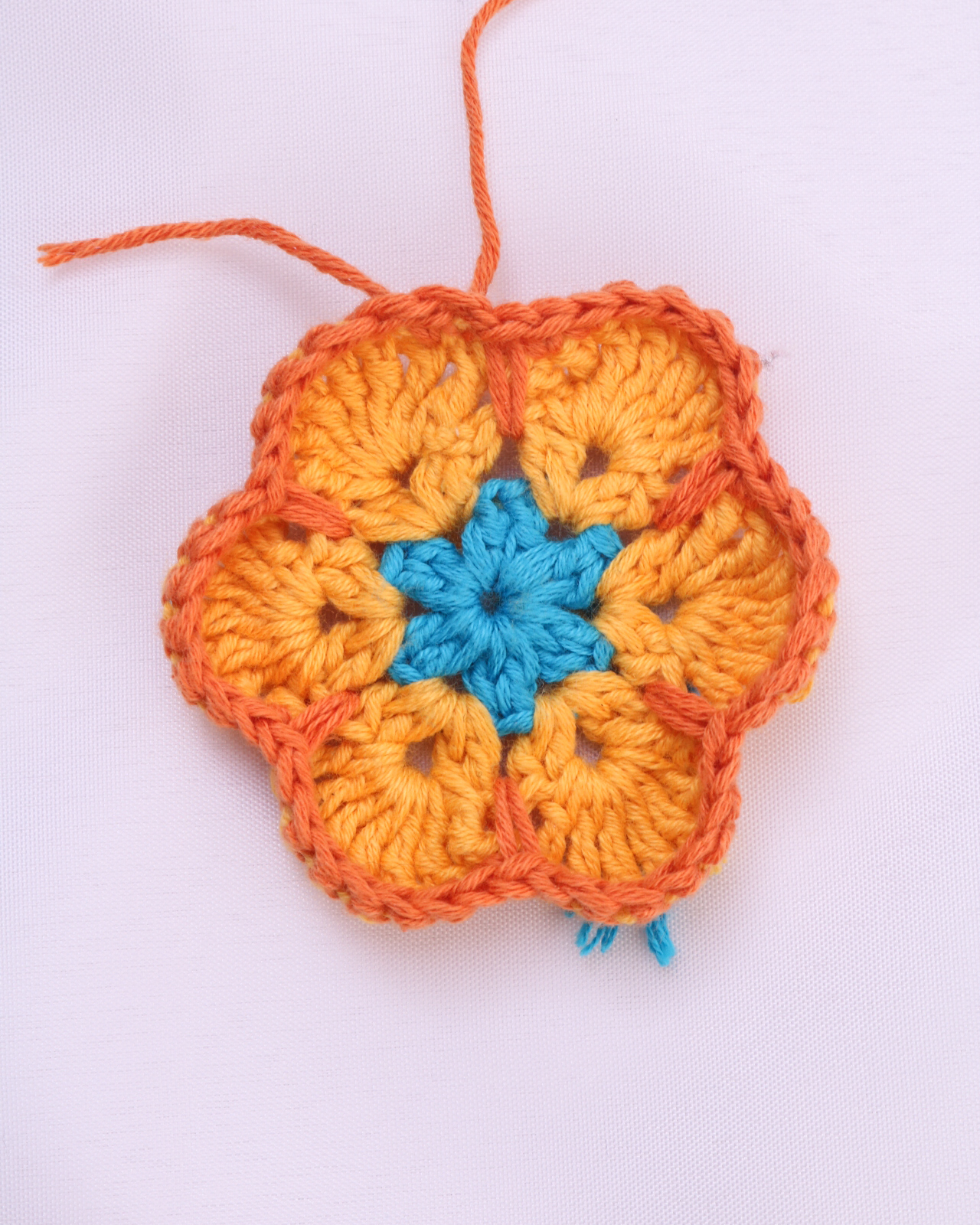
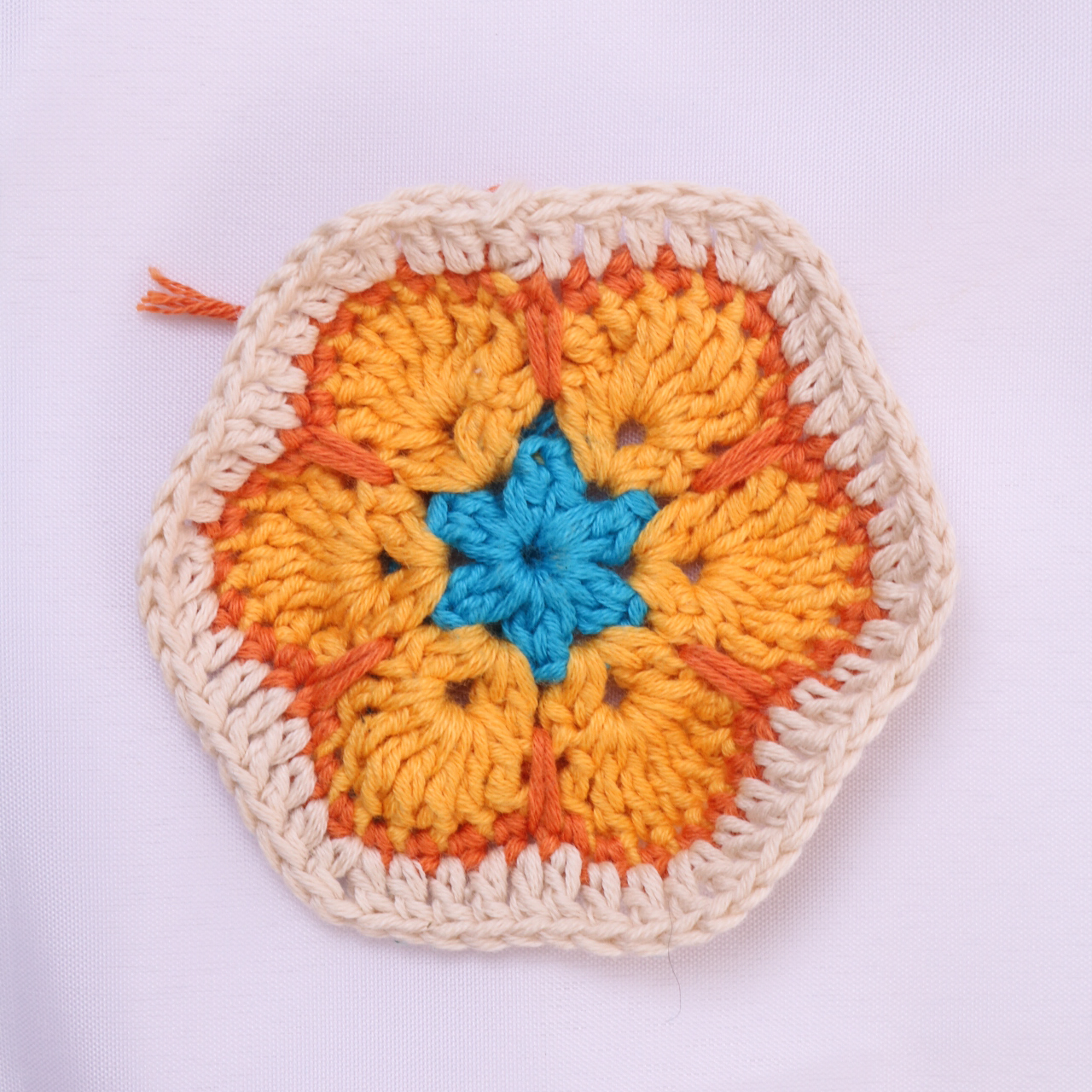
Join Color D. Ch 2, hdc in next 2 sts. Hdc in next st, ch 1, hdc in same st. *Hdc in next 7 sts. Hdc in next st, ch 1, hdc in same st. Rep from * 4 more times. Hdc in next 4 sts. Sl st to top of ch-2. Fasten off.
You should have 54 hdc and 6 ch-1 corner spaces – that’s 9 stitches per side.
Cut your yarn and fasten off.
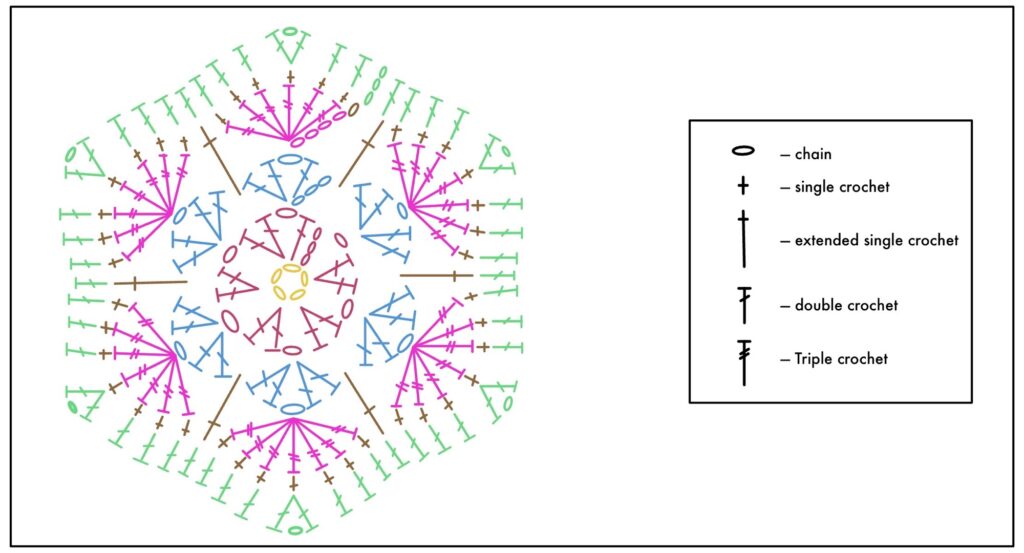
African flower hexagon chart
How to change the size
You have a couple of easy ways to change the size of your hexagon without altering the overall structure.
The biggest impact comes from Round 3 – if you swap the treble crochets (trc) for double crochets (dc), your petals will be shorter and the whole hexagon will come out noticeably smaller. You can also experiment with changing the stitch used in the last round to tweak the final dimensions.
And of course, switching your yarn weight and hook size will change the size too. A bulkier yarn with a larger hook gives you bigger hexagons, while a thinner yarn with a smaller hook gives you smaller ones. Just remember to keep that gauge tight no matter what combination you choose.
Blocking
I’d recommend blocking your hexagons before joining them, especially if you’re making a garment. Blocking evens out your stitches, helps the hexagons lay flat, and makes it much easier to sew the hexagons together because all the edges will be consistent.
For cotton yarn like Drops Safran, wet blocking works great. Soak your hexagons in lukewarm water for about 15 minutes, gently squeeze out the excess water (don’t wring them), then pin them to shape on a blocking mat or towel. Let them dry completely before unpinning. If you’re making a lot of hexagons, you can block them in batches – lay them out side by side and pin them to the same measurements so they’ll all match up.
Joining Your Hexagons
Once your hexagons are blocked and ready, the best method I’ve found for joining them is the mattress stitch. It gives you a nearly invisible seam on the right side, which is exactly what you want when you’re making something wearable. The join lies flat, it’s flexible, and it looks clean and professional.
To do it, place two hexagons side by side with the right sides facing up. Thread your tapestry needle with the border color (Color D works well so the seam blends in) and work through the outer loops of the stitches on each hexagon, alternating from one side to the other. Pull gently every few stitches to close the seam – you’ll see the edges come together almost seamlessly. Make sure you’re matching stitch for stitch so the hexagons align properly, especially at the corners.
Tips for Working with Multiple Colors
With four colors per hexagon and potentially dozens of hexagons to make, you’re going to end up with a lot of yarn ends. Here are a few things that’ll make your life easier.
Weave in as you go. It’s tempting to leave all the ends for later, but trust me – facing a pile of hexagons each with 8+ yarn tails is not fun. I like to weave in the ends of each hexagon right after I finish it, before starting the next one. That way the task never piles up.
Crochet over your tails where you can. When you join a new color, lay the tail from the previous color along the top of your stitches and crochet over it for the first few stitches of the new round. This secures the tail and saves you from having to weave it in separately later. It won’t work for every color change, but it helps a lot.
Plan your color placement before you start. It’s worth taking a few minutes to think about how your colors will look together, especially if you’re making a garment. Lay out a few combinations before you commit. You might want all your hexagons identical, or you might want to vary the center or petal colors for a more eclectic look – either way, having a plan keeps everything cohesive instead of random.
Common Mistakes to Watch For
The hexagon isn’t flat. If it’s ruffling or doming, double-check your stitch counts at the end of each round. The extended single crochets in Round 4 are what pull everything into that hexagonal shape, so make sure you’re placing them correctly – they go between the two dc shells two rows below, not into the stitches themselves.
Uneven corners. Make sure each ch-1 corner space in Round 5 falls at the midpoint between two petals. If your corners are drifting, count your stitches per side – you should have 9 per side, including the corner.
What Can You Make with These?
The beauty of the African flower hexagon is how many ways you can use it. I’m currently turning them into a bucket hat and a top – both patterns are in the works, so stay tuned for those. But you could also use them for bags, blankets, cushion covers, or even a hexagon cardigan. Once you make a few, you’ll probably start seeing possibilities everywhere.
Happy crocheting!