Get the pattern
Instant PDF download
8 sizes
XS to 4XL · English · US terms
Craft
Crochet · US terms
Skill level
Advanced beginner
Yarn & hook
Blown aran, light · 5 mm
Sizes
XS to 4XL
About this open back crochet sweater pattern
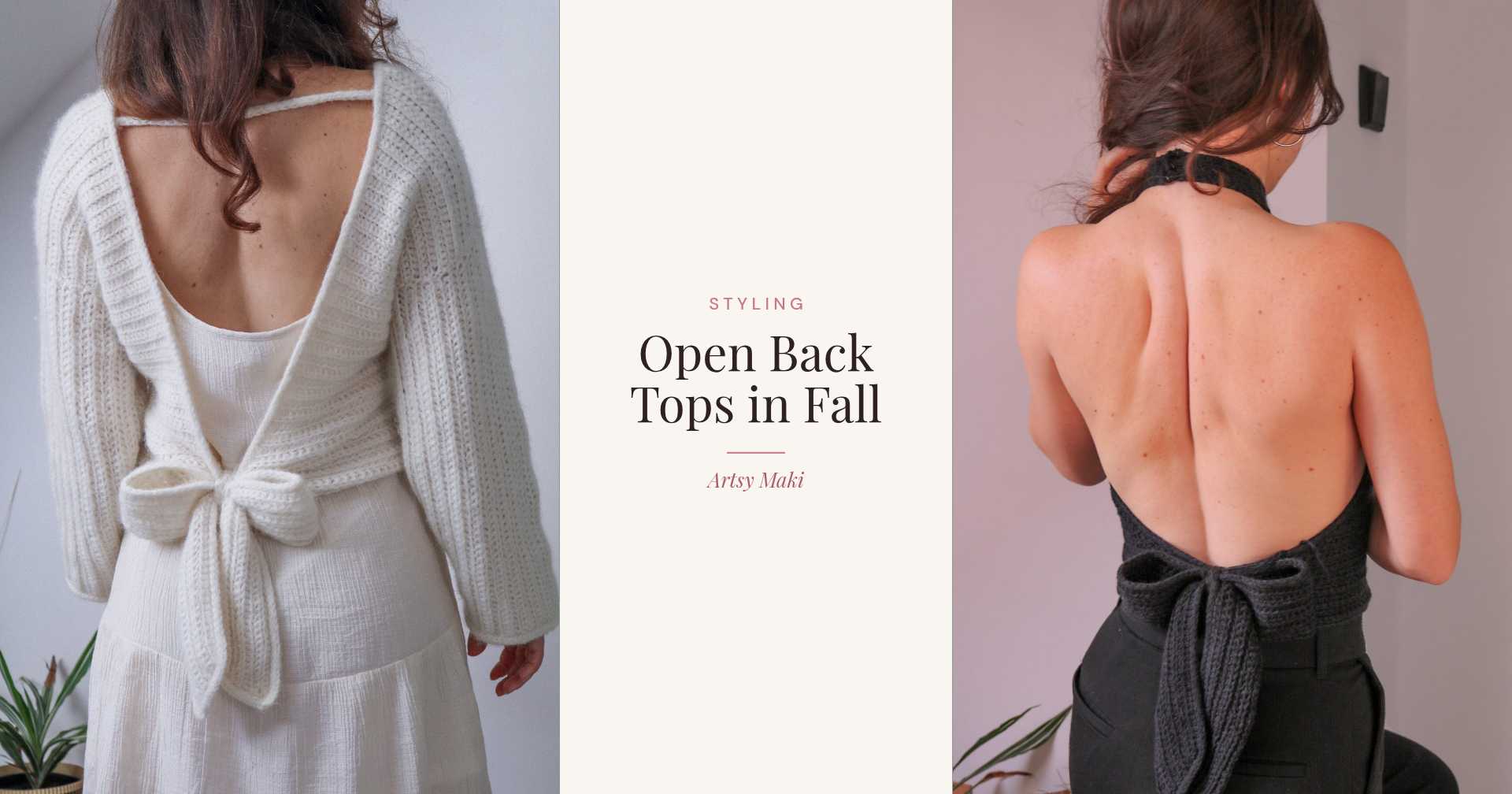
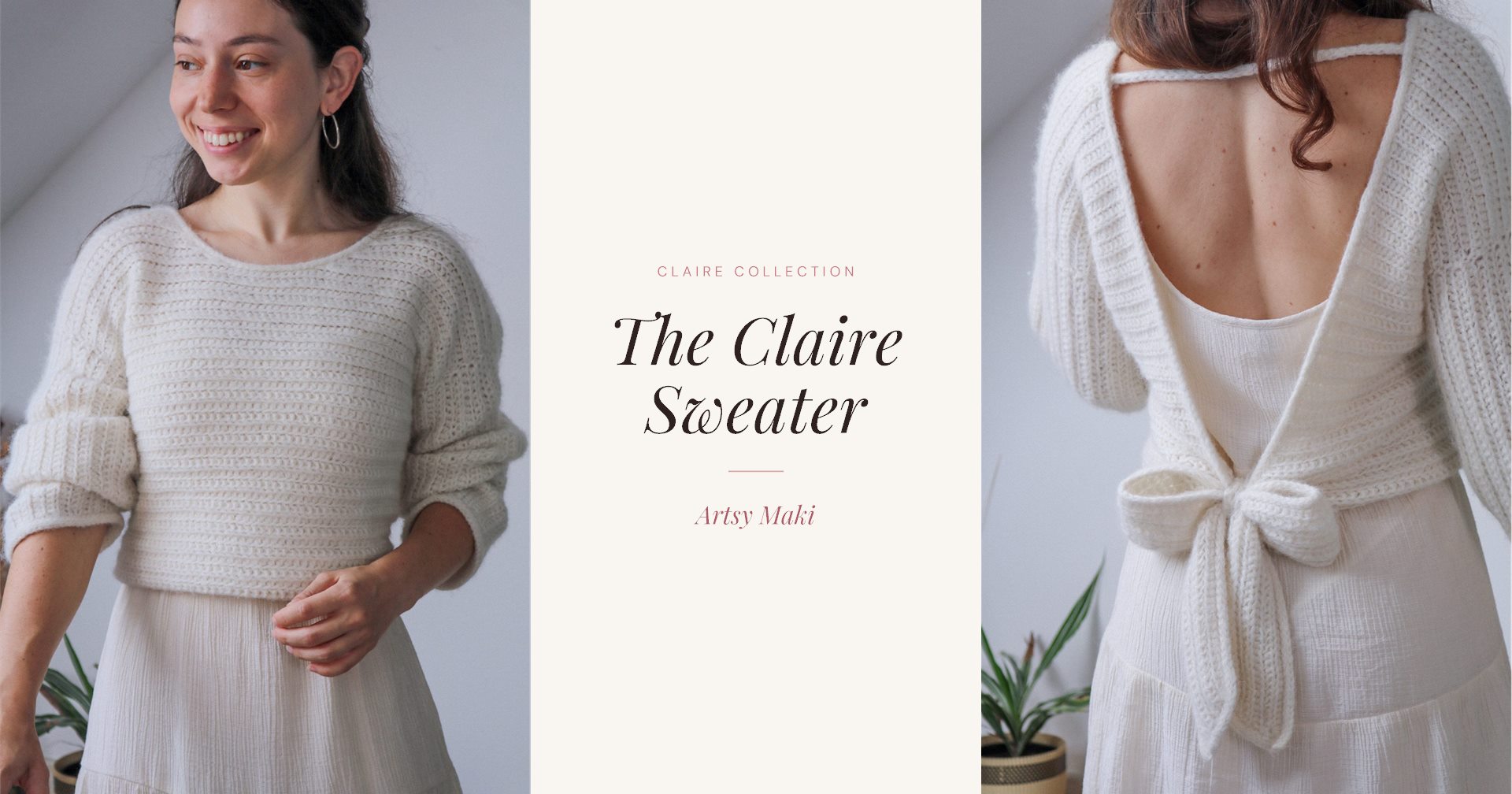
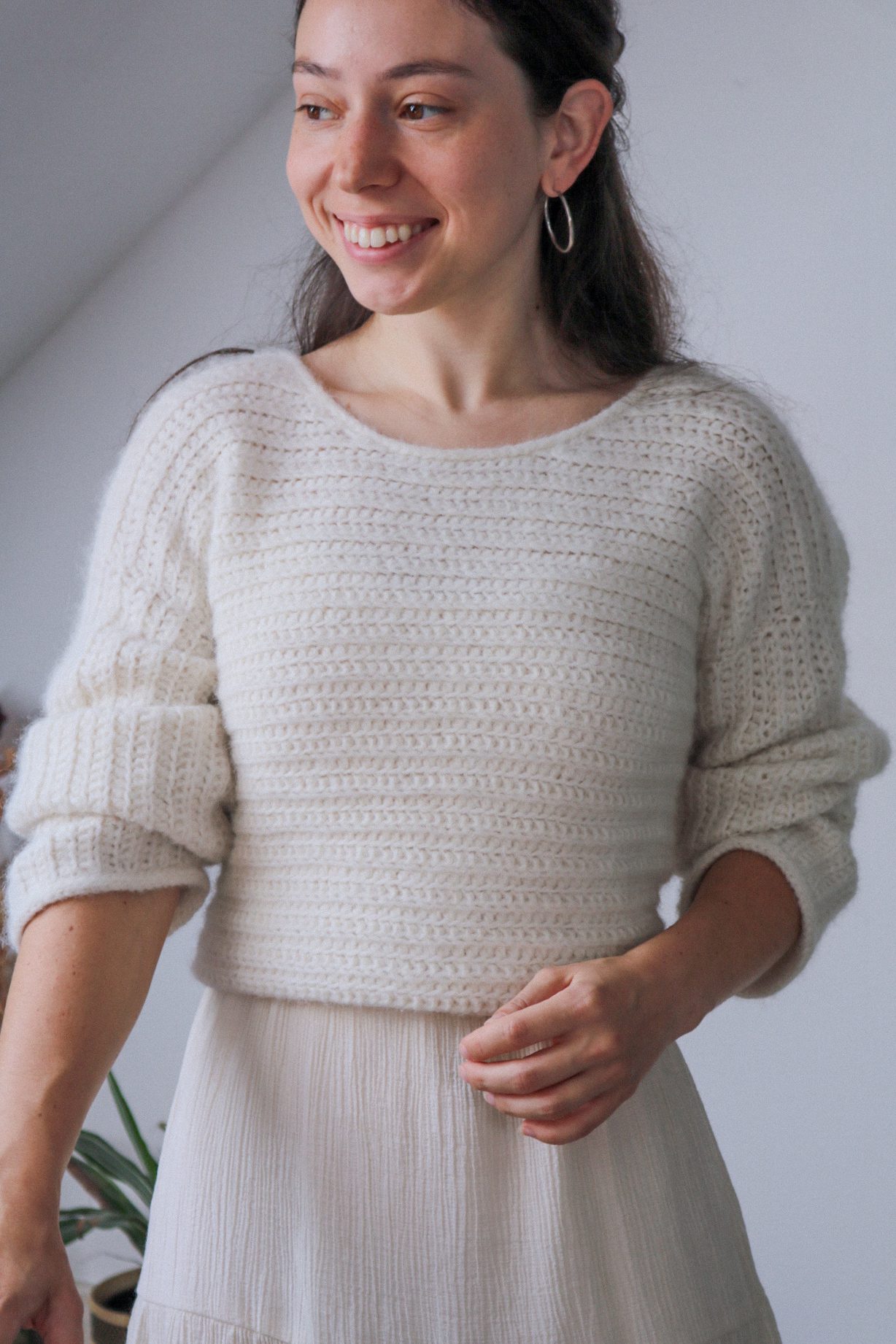
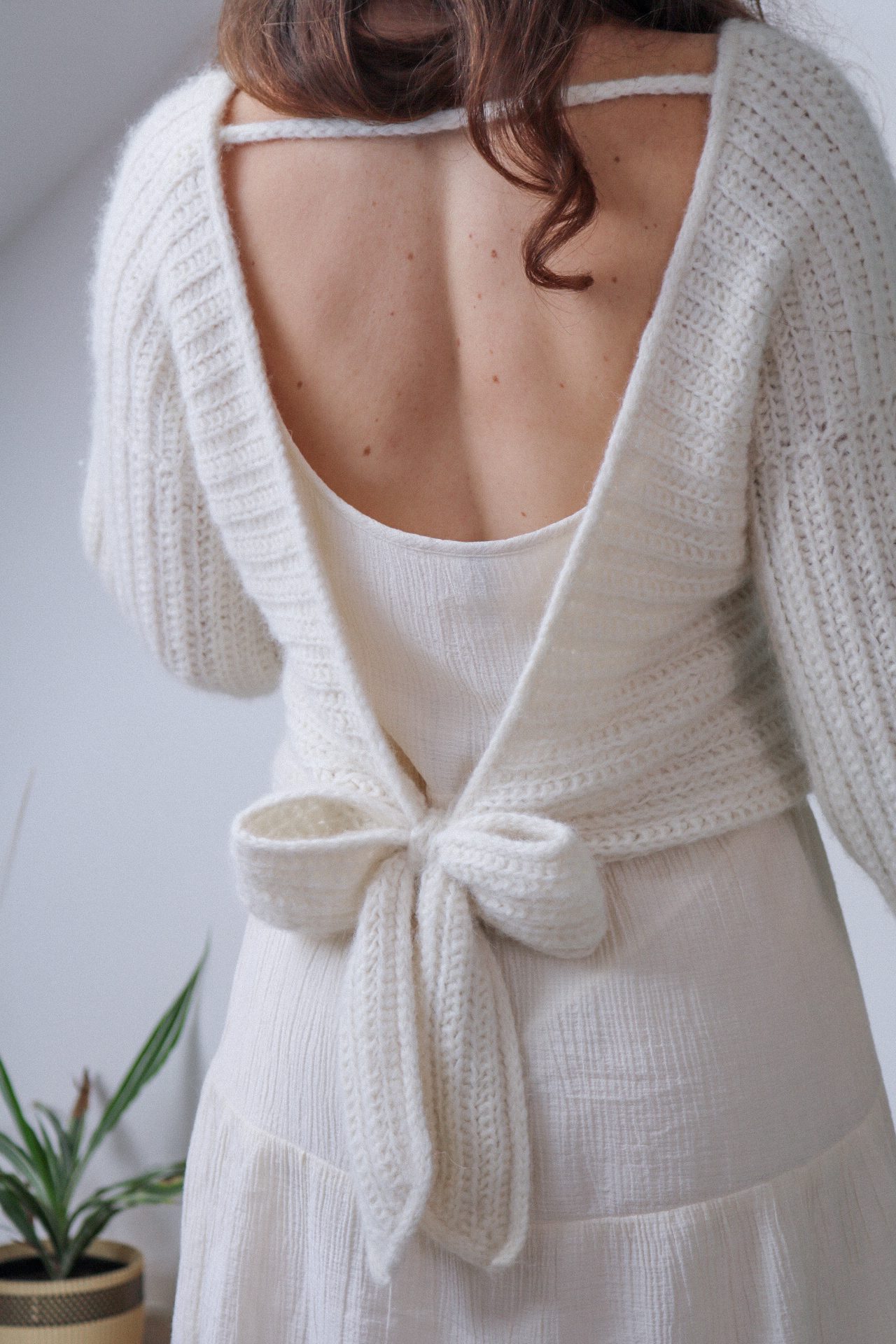
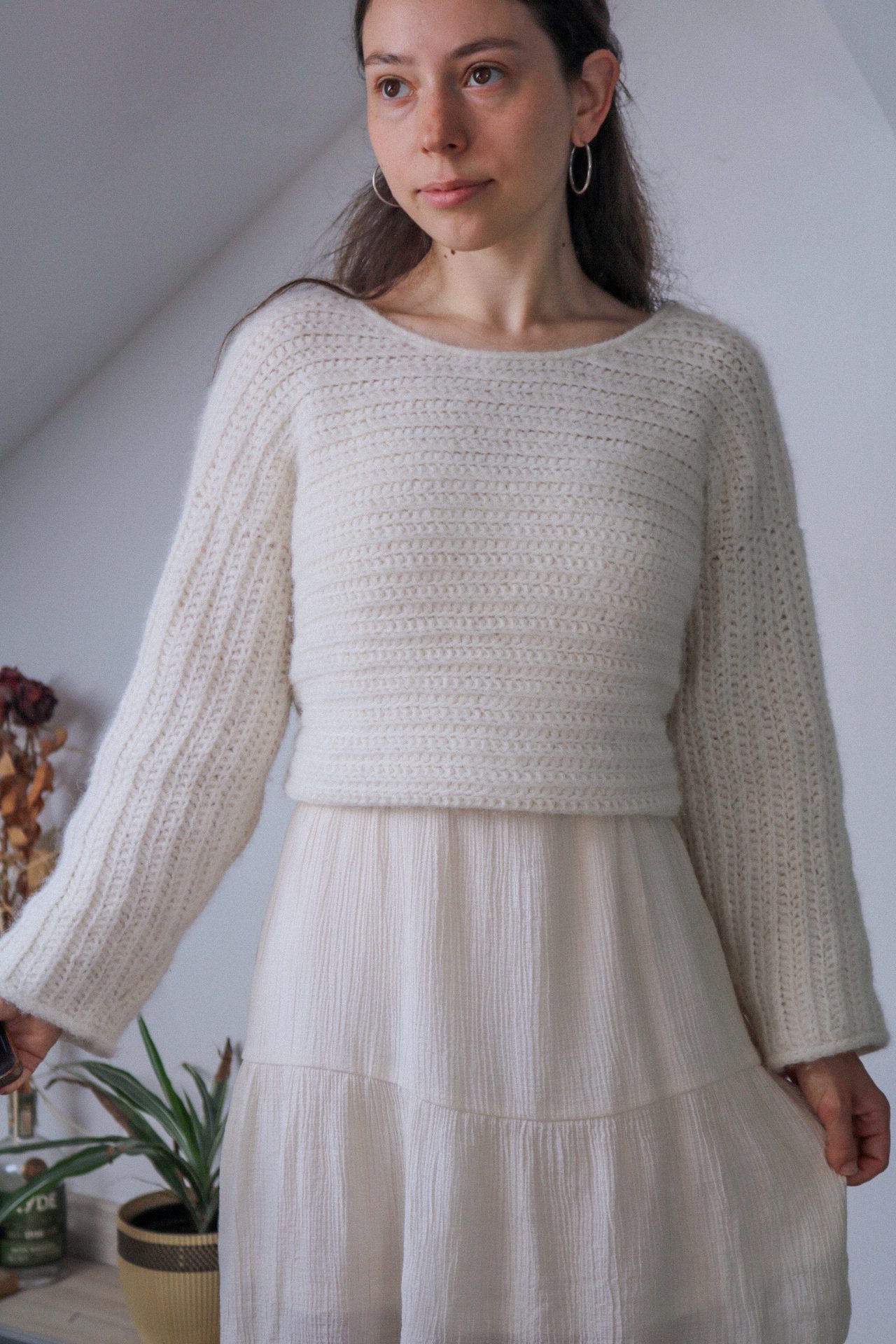
The Claire Sweater is a cropped wrap sweater with a deep open back that crosses over and ties into a bow at the waist. From the front it reads as a plain, soft, slightly cropped jumper. Then you turn around.
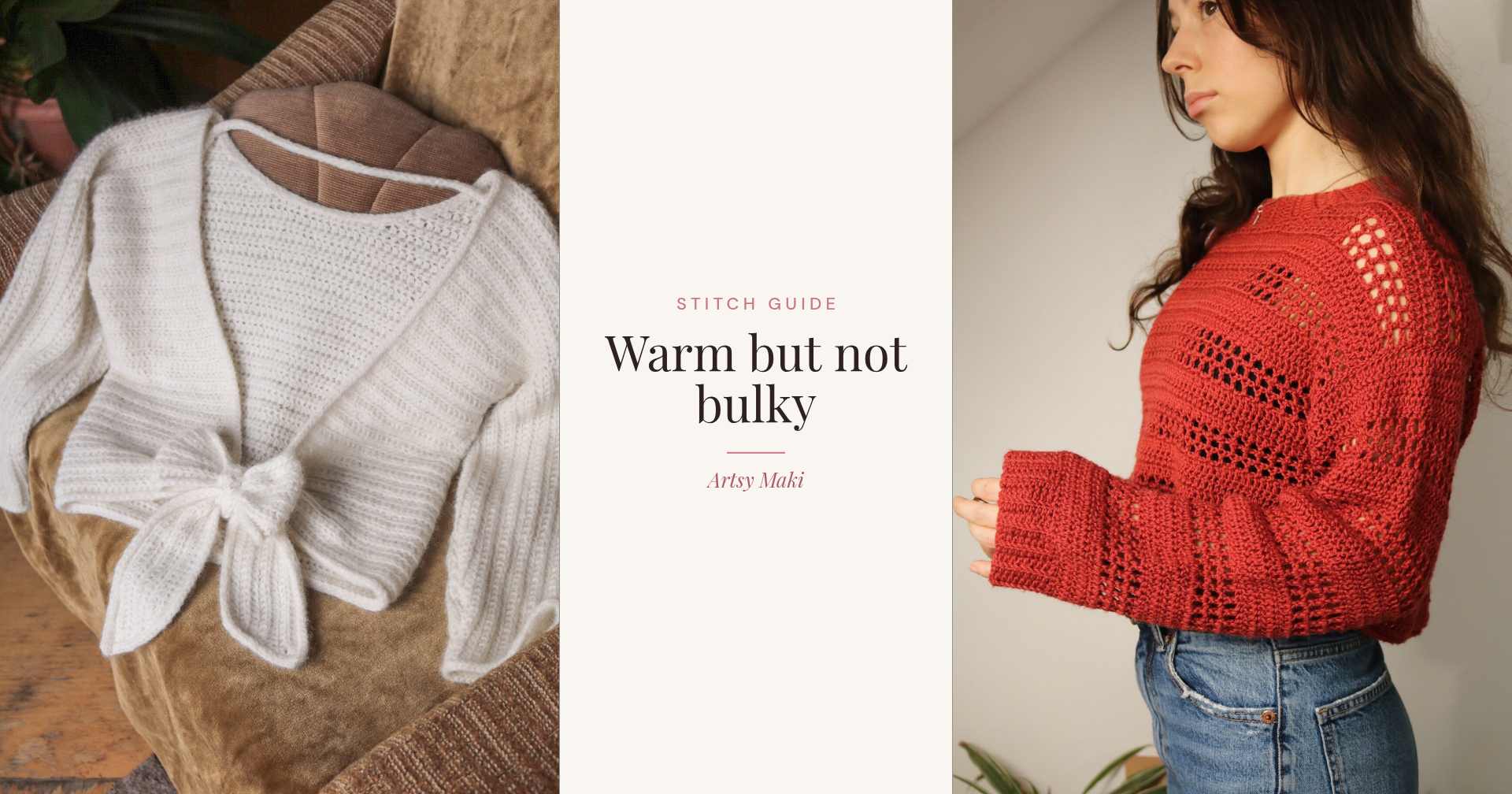
It is worked seamlessly from the top down, with decreases shaping the sleeves, so there is nothing to sew up when you finish. The fine ribbed texture comes from alternating front loop and back loop half double crochet, which looks far more complicated than it is.
It is written for an advanced beginner. If you can work half double crochet and follow a decrease, you have everything you need. The open back is the part people expect to be hard, and it is genuinely the easy bit.
In the download
What’s inside the PDF
- Graded instructions for all eight sizes, XS to 4XL, in US crochet terms.
- Photos and video links for every special technique.
- Notes for adjusting the length to suit your body.
- Your choice of tying the back bow or sewing it in place.
- A full measurement table for bust, length and circumference.
- Seamless top down construction, so there is no seaming at the end.
Materials
- Yarn: 900 to 1500 m depending on size. I used DROPS Air (50 g = 150 m), which is 6 to 10 balls. It needs to be a blown yarn, or mohair held to gauge. A standard dense aran will not give you this sweater, and the substitutions section below explains why.
- Hook: 5 mm, or whichever hook gets you the gauge below.
- Notions: stitch markers and a yarn needle.
Gauge
With a 5 mm hook, 15 hdc and 10 rows in alternating front loop and back loop half double crochet = 10 x 10 cm (4 x 4 in).
DROPS Air is a blown yarn, which means it is light and airy but it relaxes as you wear it. Work your swatch, then wash and dry it the way you intend to treat the finished sweater, and measure it after that. A swatch measured straight off the hook will tell you the wrong thing.
Size chart
| Size | To fit bust | Finished chest | Length | Yarn |
|---|---|---|---|---|
| XS | 80–85 cm / 31.5–33.5 in | 93 cm / 36½ in | 48 cm / 19 in | 900 m (6 balls) |
| S | 85–90 cm / 33.5–35.5 in | 98 cm / 38½ in | 48 cm / 19 in | 900 m (6 balls) |
| M | 90–95 cm / 35.5–37.5 in | 103 cm / 40½ in | 52 cm / 20½ in | 1050 m (7 balls) |
| L | 95–100 cm / 37.5–39.5 in | 108 cm / 42½ in | 54 cm / 21¼ in | 1050 m (7 balls) |
| XL | 100–110 cm / 39.5–43.5 in | 114 cm / 45 in | 58 cm / 23 in | 1200 m (8 balls) |
| 2XL | 110–120 cm / 43.5–47.5 in | 123 cm / 48½ in | 60 cm / 23½ in | 1350 m (9 balls) |
| 3XL | 120–130 cm / 47.5–51 in | 132 cm / 52 in | 62 cm / 24½ in | 1500 m (10 balls) |
| 4XL | 130–140 cm / 51–55 in | 141 cm / 55½ in | 62 cm / 24½ in | 1500 m (10 balls) |
Yarn substitutions for DROPS Air
The word on the ball band will mislead you here, so this section matters more than it usually does. DROPS Air is sold as an aran, but a 50 g ball holds 150 m, which is 300 m per 100 g. By metreage that is closer to a sport weight. It is a blown yarn, spun as a hollow tube, so it takes up the space of an aran while weighing almost nothing.
That is why a standard aran will not give you this sweater. A dense aran at around 180 m per 100 g can hit the same gauge, so the fabric comes out the right size, but the finished jumper weighs close to double: somewhere near 800 g instead of 500 g in a middle size. On a cropped piece with an open back that is the difference between something that floats and something that drags on your shoulders.
So look for lightness, not for the word aran. Two things work. Another blown yarn, which is the easy route and what the first four below are. Or several strands of mohair held together until you reach gauge, which gives a slightly hazier fabric and is lovely if you already have mohair in the house.
The blown alternatives are matched on YarnSub by weight, fibre and construction rather than personally tested by me. The match percentages are theirs. Whatever you pick, swatch it, and remember to wash the swatch before you measure.
Gazzal Alpaca Air
58% baby alpaca, 28% nylon, 14% merino · 50 g / 150 m · 92% match
The closest match on the list, and the same blown construction. Identical put-up, so the ball counts in the pattern carry straight over.
Laughing Hens Alpaca Cloud
58% baby alpaca, 28% nylon, 14% merino · 50 g / 150 m · 92% match
Same fibre blend again, easy to get hold of in the UK. Semi-solid shades, which give the fabric a bit of depth.
Ice Yarns Baby Alpaca Air
60% baby alpaca, 25% nylon, 15% merino · 50 g / 150 m · 92% match
The budget option of the three, with a big colour range. Ships from Turkey, so allow a little longer.
Sandnes Garn Kos
62% baby alpaca, 29% nylon, 9% wool · 50 g / 150 m · 91% match
Beautifully soft and very close to the original blend. My pick if you want the sweater to feel like a treat.
Mohair, held triple
Lace mohair at roughly 840 m / 100 g · three strands gives about 280 m / 100 g
Three strands lands very close to Air at 300 m per 100 g. Two is too light to reach gauge on a 5 mm hook. Expect more halo and softer stitch definition, and swatch before you commit.
A standard aran
Roughly 150 to 220 m / 100 g · not recommended
Listed here so you can rule it out. It will match the gauge and still be the wrong yarn, because it weighs about twice as much for the same thickness. The sweater comes out heavy and the open back sags rather than drapes.
Skills you’ll need
- Half double crochet, worked into the front loop and the back loop.
- Working in the round from the top down.
- Simple decreases to shape the sleeves.
- Reading a graded pattern, so you can follow your own size through.
The design process
I have a thing for open backs. Most of what I wear is fairly plain from the front, and then there is something happening at the back that you only notice when I turn around. That is the whole reason the Claire collection exists, and this sweater is the piece where it stopped being one top and started being a collection.
What I actually wanted was a jumper I could throw over a summer dress in the evening without hiding the dress. So the front stays quiet: cropped, soft, nothing going on. The back opens into a deep scoop, crosses over, and ties at the waist so the dress underneath still shows.
The bow took the longest. I made it as a fixed crossover first, which looked tidy on the hanger and fitted almost nobody properly. Making it tie instead meant one size covers a much wider range of bodies, and you get to decide whether it sits loose or pulled in.
Work your swatch, then wash it before you measure. Alpaca tells you the truth only after it has been wet.
Maki’s tip
Try the sweater on before you finish the sleeves. The body is worked top down, so you can slip it on at any point and see exactly where the crop is falling on you. Adding or removing a couple of rows is far easier now than it will be later.
Part of a collection
The Claire collection
The Claire Sweater is part of a collection built around one idea: a quiet front and an open back. Same thinking, different garments, so what you learn on one piece carries over to the next.
- Claire Sweater: this one. Cropped, long sleeved, ties at the waist.
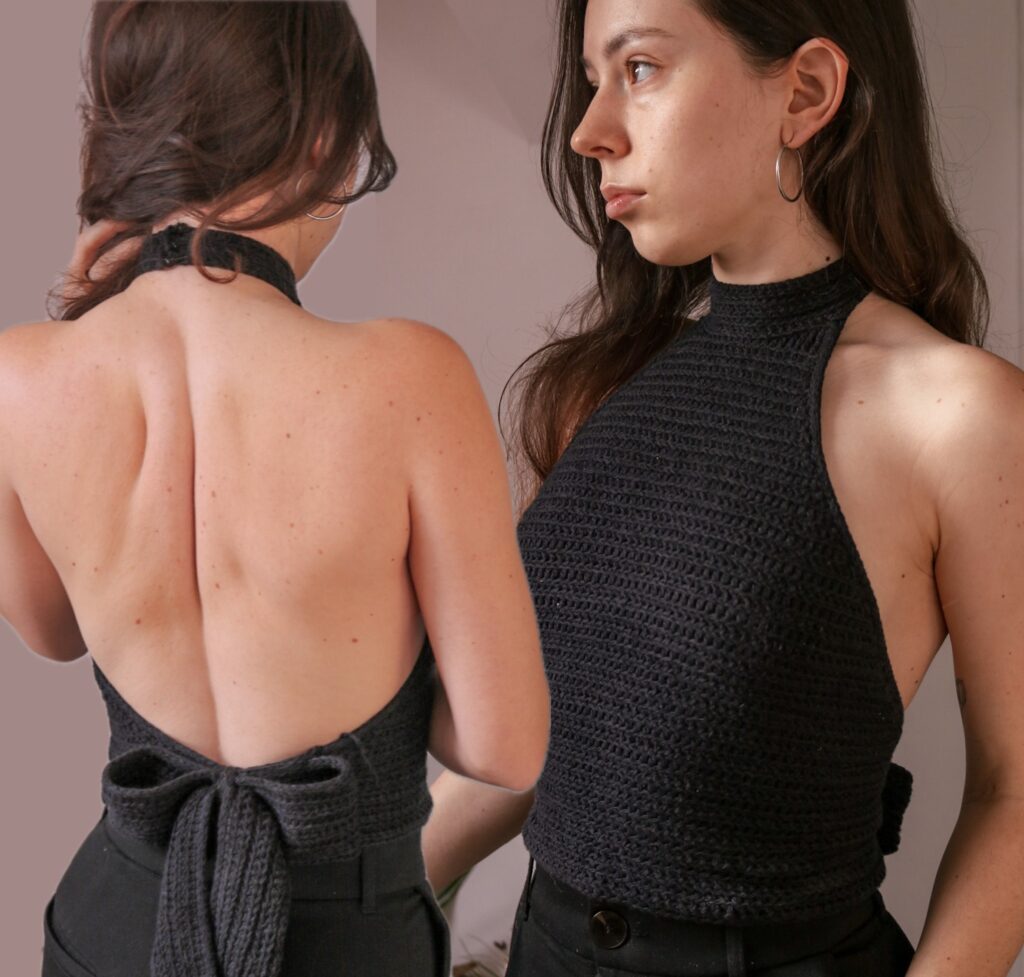
- Claire Halter: high neck at the front, almost no back at all.
- Claire Top: the beginner one, a simple tie back tank.
- Claire Tank and Claire Blouse: two more takes on the same open back.
If you want to know when the next one lands, the newsletter sign-up is at the bottom of this page. Tester calls always go out on Instagram first.
Questions I get asked
Is this a pattern or a finished sweater?
A pattern, which is a PDF you download and make yourself. Nothing physical is shipped. The download link arrives straight after checkout.
Will the open back stay put, or does it gape?
It ties, so you set the tension yourself. Pulled in it sits close to the body; left looser it drapes. That adjustability is the reason it works across eight sizes.
Can I make it longer, so it is not cropped?
Yes, and the pattern tells you how. Because it is worked top down you simply keep going before the final edging. Allow extra yarn if you add much length.
Do I have to use alpaca?
No, but it changes the garment. Alpaca gives the soft halo and the light drape in the photos. A wool or cotton aran will give you something sturdier and warmer, which some people prefer.
Is there a knitting version?
Not at the moment. Join the newsletter and you will hear about it first if there is.
Can I sell what I make from it?
Yes, finished items are yours to sell. Please credit Artsy Maki as the designer, and never resell, copy or share the pattern file itself.
What if I get stuck?
Email me at artsymaki@gmail.com with a photo of where you are. I answer every message, usually within a day or two.
Ready to make one?
The full pattern, all eight sizes, photos and video links for every technique. Instant download.