Get the pattern
Instant PDF download
One size, adjustable
13 x 15 cm · English · US terms
Craft
Crochet · US terms
Skill level
Beginner friendly
Yarn & hook
40 g sport weight · 3.5 mm
Sizes
One size · 13 x 15 cm + instructions for custom size
About this classic crochet bow pattern
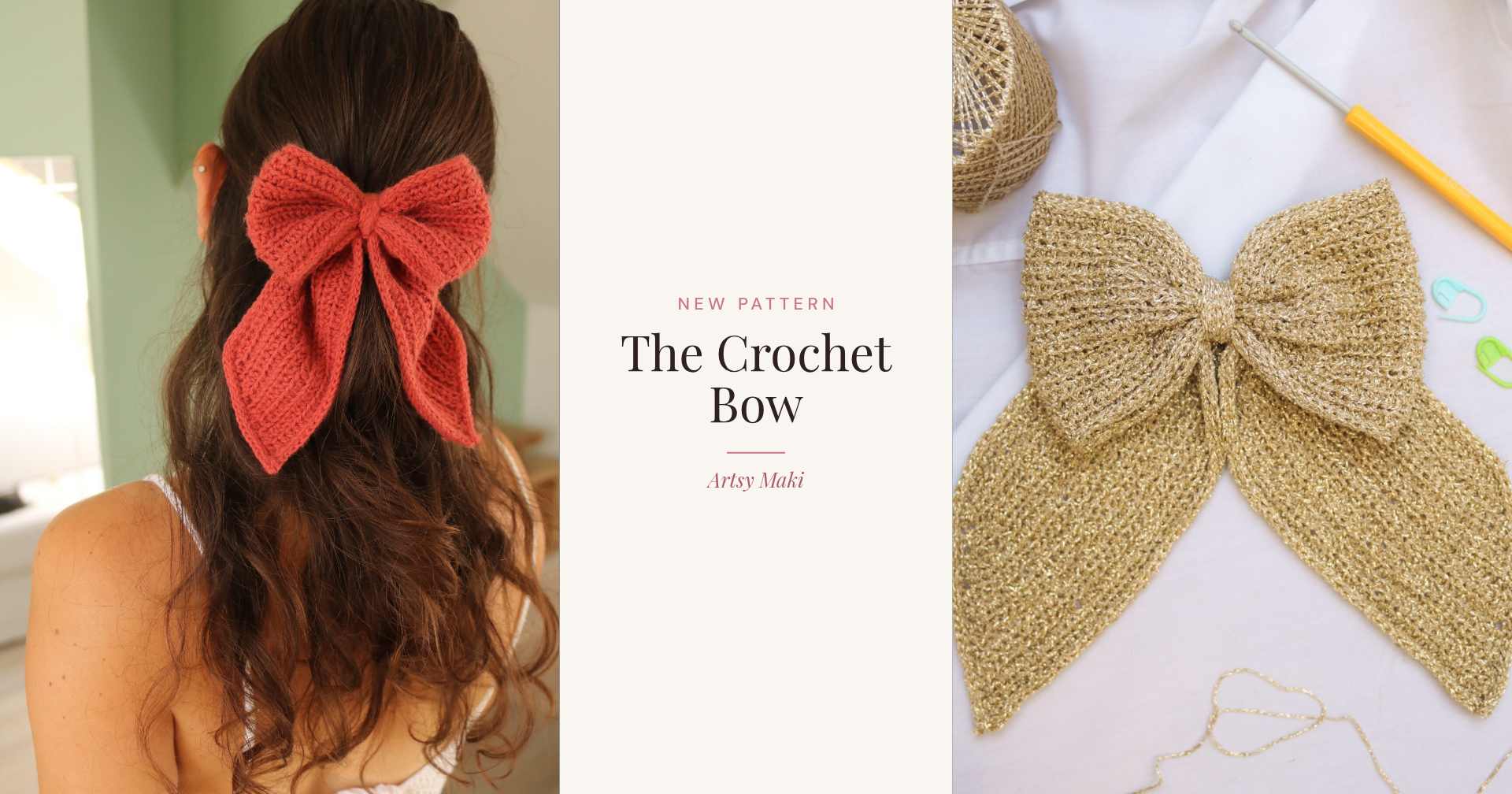
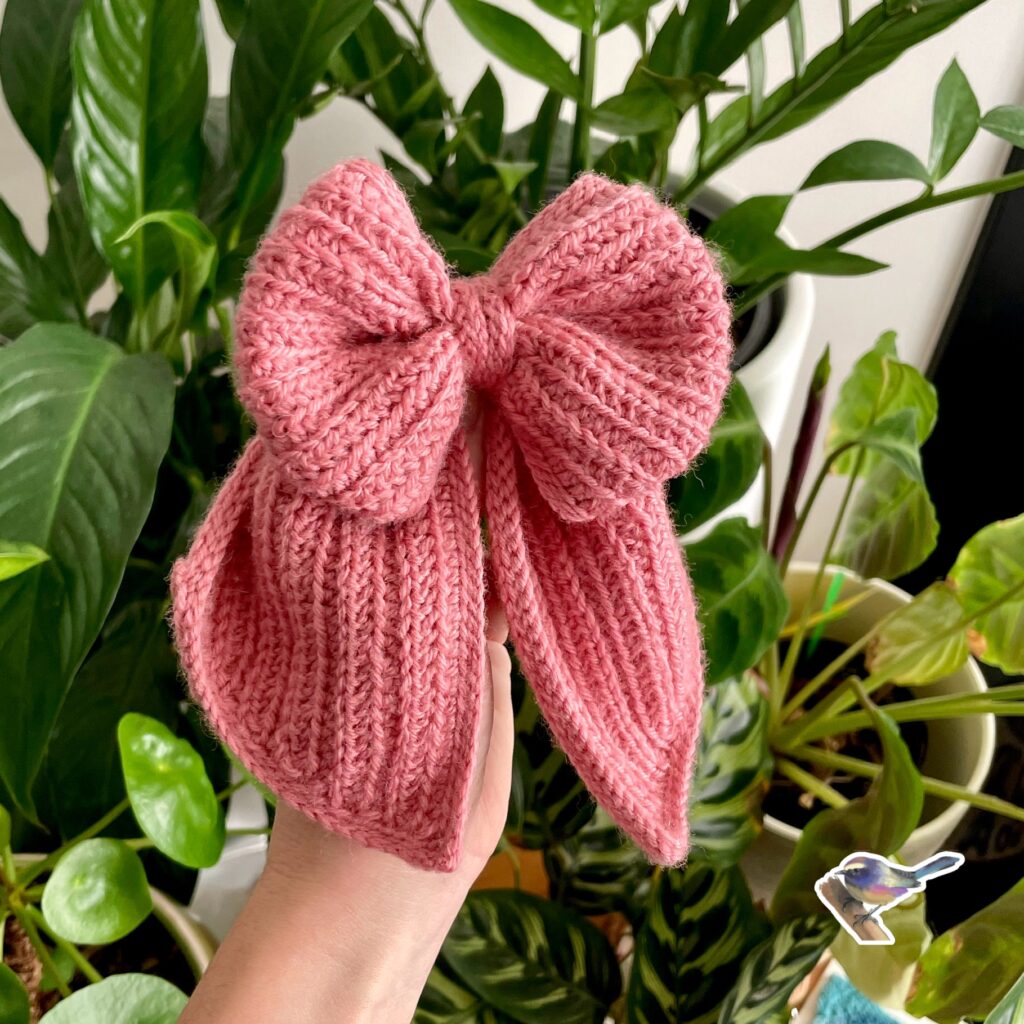
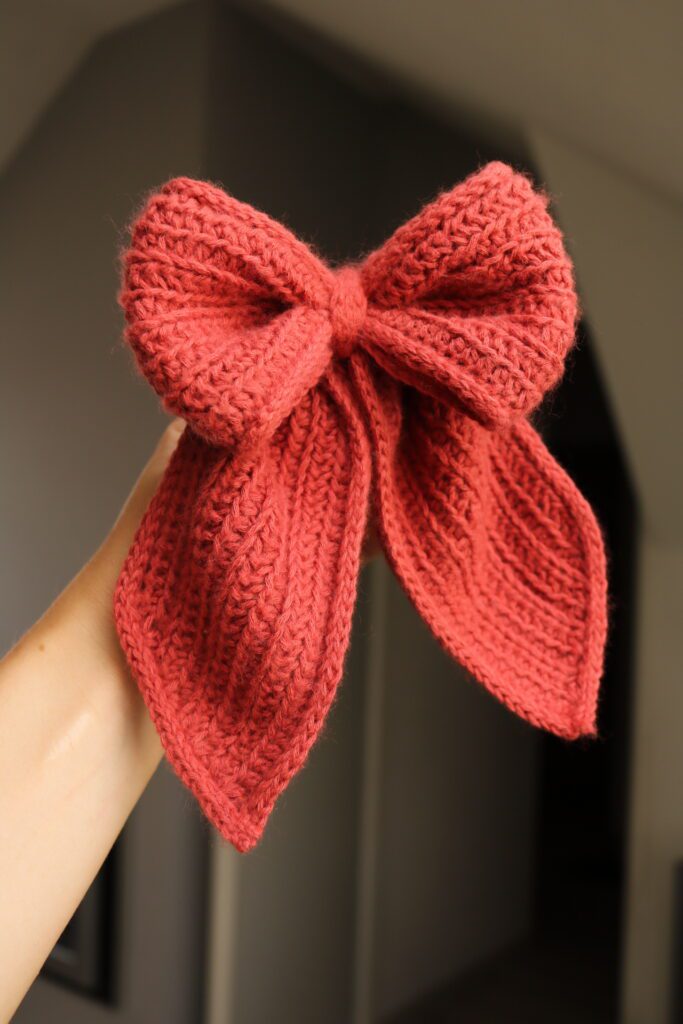
The Crochet Bow is the classic one: two full loops, a neat wrapped centre and two long pointed tails. It is a hair bow, and it also works as a bow tie, a headband detail, a keychain, something to sew onto a bag, a Christmas ornament and the nicest possible thing to tie onto a present. Make one and decide afterwards what it is for.
It measures 13 cm wide and 15 cm long (5 x 6 in) as written, which is big enough to read as a proper statement bow in your hair rather than a small decoration. That is one size, but not a fixed one: the pattern gives the exact stitch count for the bow at those measurements, and separate instructions for making it bigger or smaller, and for working it in thinner or chunkier yarn.
The fabric is where this one earns its keep. It is half double crochet worked alternately into the front loop and the back loop, one row each, which pulls the stitches into fine vertical ribs that look far more knitted than crocheted. If you have not met front loop only and back loop only before: every crochet stitch sits under two loops at the top, and working into only one of them leaves the other sitting proud on the surface. Alternate which loop you use and those unworked loops stack into ridges.
It is beginner friendly: the stitches are all basic ones and there is no shaping to keep track of. At 40 g (1.4 oz) of sport weight yarn it is also a small project, which is part of why it is such a good one to make in a colour you are not sure about.
In the download
What’s inside the PDF
- Detailed instructions for the four stages: the base, the border, the folding and the centre.
- The exact stitch count for the medium bow shown here.
- Instructions for a bigger or a smaller bow, and for working it in thinner or chunkier yarn.
- Notes, tips and photos throughout, plus video tutorials.
- Written in English, in US crochet terms.
Materials
- Yarn: 40 g (1.4 oz) of sport weight yarn. I used Concept by Katia Ultrasoft, a 100% organic cotton at 190 m / 205 yd per 50 g, so 40 g is roughly 152 m (166 yd).
- Hook: 3.5 mm, or whichever hook gets you the gauge below.
- Notions: a yarn needle and stitch markers.
Gauge
With a 3.5 mm hook, 24 hdc and 14 rows in alternating front loop and back loop half double crochet = 10 x 10 cm (4 x 4 in).
That is a firm fabric on purpose. That density is the whole reason the bow stands up rather than flops. A loose gauge here gives you a bow you have to keep re-fluffing. If you are between hooks, go down.
Size chart
This bow is one size as written, so instead of a grading table here is every bow I have designed, with its finished measurements and the yarn it takes.
| Bow | Finished size | Yarn weight | Yarn needed |
|---|---|---|---|
| Classic Bow (this one) | 13 x 15 cm / 5 x 6 in | Sport | 40 g (1.4 oz), about 152 m / 166 yd |
| Double Bow | 16 x 22 cm / 6 x 9 in | Fingering to DK | about 100 m / 109 yd |
| Mesh Bow | 10 (13) x 12 (16) cm / 4 (5) x 4.7 (6.3) in | Sport | 15 (20) g, about 48 (64) m / 53 (70) yd |
| Fishnet Bow | 10 (13) x 12 (16) cm / 4 (5) x 4.7 (6.3) in | Sport | 15 (20) g, about 48 (64) m / 53 (70) yd |
| Mohair Bow | 10 x 13 cm / 4 x 5 in | Mohair | 10 g (0.35 oz) |


Yarn substitutions for Concept Ultrasoft
I have made this bow in a lot of different yarns by now, wool and cotton and one or two things that had no business working. The honest headline is that this pattern is not fussy about what you feed it.
There is one rule, though, and it is about size rather than fibre. A yarn with really lovely drape makes a really lovely small bow. Scale the same yarn up to a big bow and the loops droop, because a loop only holds its curve while the fabric is stiffer than the weight hanging off it. Double the width and you have roughly quadrupled the fabric asking to be held up by the same fibre. Drapey yarn, small bow. Big bow, something with body.
Most tutorials answer a floppy bow with fabric stiffener spray, and that does work. I would rather choose a yarn that does not need it, because a bow you can crush into a bag and shake back out is worth more than a bow that has been painted into position once.
These are matched on weight, fibre and gauge rather than by an algorithm. Concept Ultrasoft is listed on YarnSub if you want to run their comparison yourself.
Scheepjes Catona
100% mercerised cotton · fingering · 50 g / 125 m (138 yd)
Thinner than Ultrasoft, so the same stitch count gives a smaller bow. Mercerised cotton is crisp and has real stitch definition, which suits this ribbed fabric. Use the pattern’s thinner yarn instructions if you want to stay at 13 cm (5 in).
Paintbox Yarns Cotton DK
100% cotton · DK · 50 g / 125 m (137 yd)
A step up in thickness, so the same stitch count gives a bigger bow. Plain cotton has plenty of body, which is exactly what a bigger bow needs. Budget friendly and available in a lot of colours.
Metallic and lurex blends
Match the thickness, ignore the fibre list
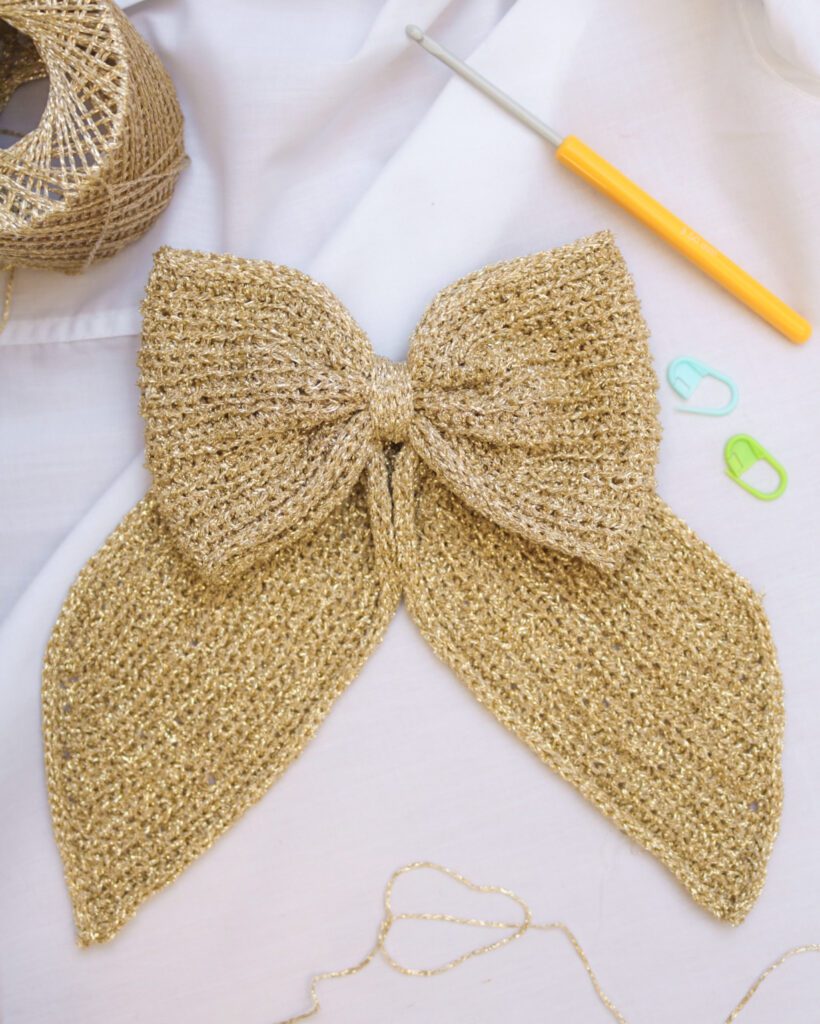
The gold bow in the photo at the top of this post is one of these. I expected it to be scratchy and shapeless and it was neither: the stiffness of the thread actually helps the loops stand. If you want a Christmas bow, start here.
Viscose, bamboo and silk blends
Beautiful, but keep the bow small
These are the yarns the droop rule is about. The sheen is gorgeous and the fabric hangs, which is lovely on a garment and works against you on a loop. At 10 cm (4 in) they look expensive. At 16 cm (6 in) they wilt.
Any sport weight you already own
Look for roughly 160 to 190 m (175 to 208 yd) per 50 g
This is a 40 g (1.4 oz) project. It is one of the very few things where raiding the leftovers basket is genuinely the right answer rather than a compromise.
Skills you’ll need
- Half double crochet, worked into the front loop on one row and the back loop on the next.
- Working flat in rows and turning at the end of each one.
- Working a border around a finished piece.
- Folding and wrapping the centre, and sewing the ends in with a yarn needle.
Nothing here is hard. The one thing to keep an eye on is remembering which loop you are meant to be in on any given row, which is probably what the stitch markers in the materials list are there for. The PDF walks the loop alternation through with photos and video if it is new to you.
The design process
This bow went up in September 2024, and it is older than almost everything else on the site that uses the same fabric. The alternating front loop and back loop half double crochet that runs through the whole Claire collection started here, on something the size of my hand. The Claire Halter, which uses exactly the same stitch at a looser gauge, did not arrive until May 2026.
I went looking for that fabric because I wanted a crochet bow that did not look crocheted. Crochet has a specific texture and on a bow it can read as homemade. Working alternate rows into alternate loops gives you fine vertical ribs and hides the horizontal rows, and suddenly the thing in your hand looks knitted, or even like ribbon.
Then I made it in everything I had. Cotton, wool, and a sparkly gold metallic that I picked up half as a joke and that turned out to be one of the best of them. That is also where the size rule came from, and I found it the way you always find these things, by making a big bow in a yarn with really good drape and watching the loops sag.
It is also why the pattern has the customising instructions rather than a fixed set of graded sizes. The right size for a bow is not a body measurement, it is a function of what your yarn can hold up, and you are the one holding the yarn.
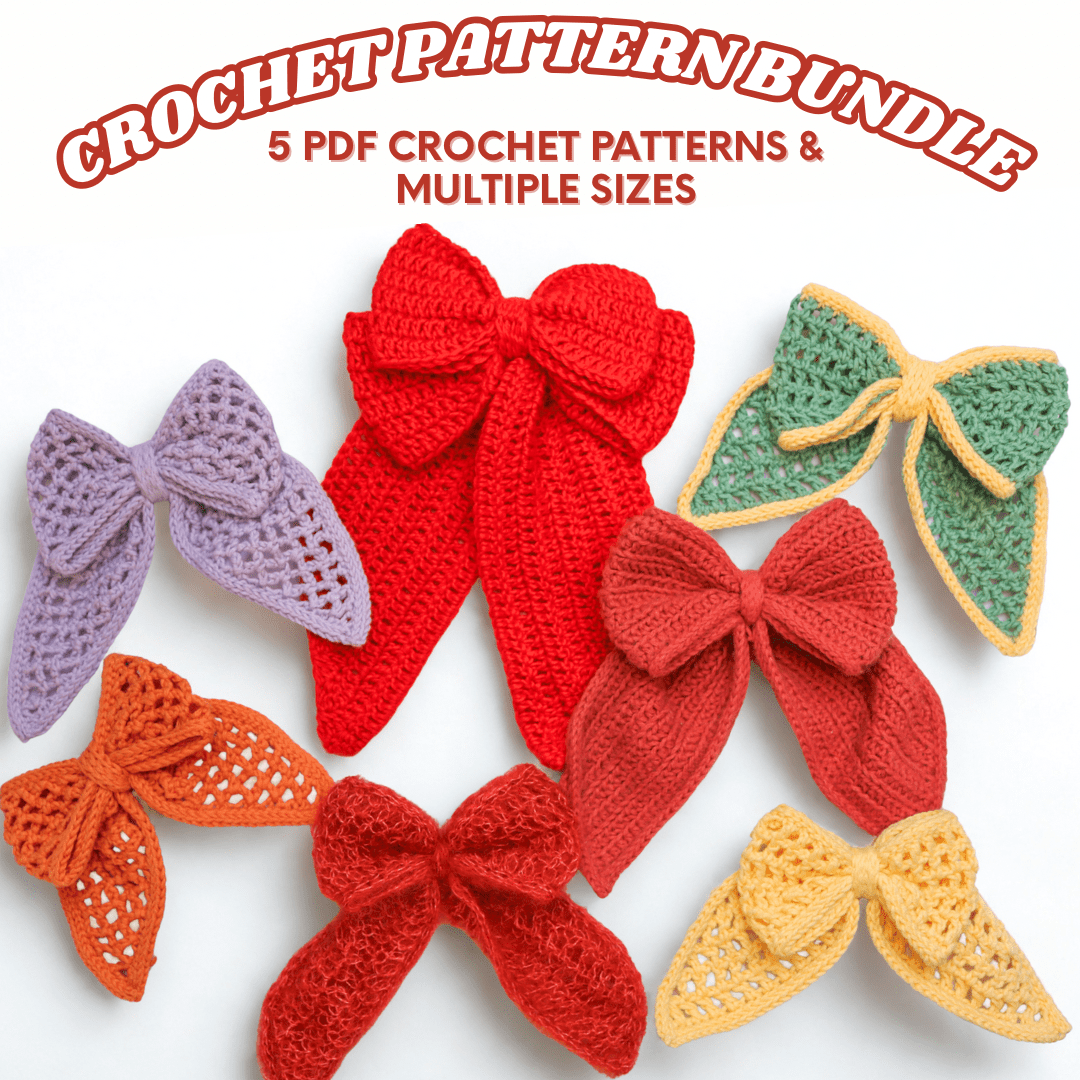
The bow collection
There are five of these now, and they are genuinely different objects rather than the same bow in five sizes. Pick by how much yarn you want to spend and how solid you want the result.
- Classic Bow: this one. Solid ribbed fabric, the most substantial of the five.
- Double Bow: the biggest, at 16 x 22 cm (6 x 9 in), built from four separate pieces and assembled.
- Mesh Bow and Fishnet Bow: a crisp filet grid and a softer diamond mesh, both in two sizes and both on about half the yarn.
- Mohair Bow: 10 g of mohair on a 5 mm hook, all halo and no weight.
- All five together as the Crochet Bows bundle.
If you would rather try the idea before buying anything, the Garter Bow is a free knit-look bow written to measurements rather than stitch counts, so it takes any yarn weight you like. And if you want a row of them, the crochet bow garland tutorial strings small bows along an i-cord.
New patterns get announced on Instagram first, tester calls included.
Questions I get asked
Is this a pattern or a finished bow?
A pattern, which is a PDF you download and make yourself. Nothing physical is shipped, and the download link arrives straight after checkout.
My crochet bow is floppy. How do I fix it?
In order of how likely it is to be the actual problem. First, gauge: if you are getting fewer than 24 stitches over 10 cm (4 in), go down a hook size and try again, because a loose fabric cannot hold a loop. Second, yarn: if it has viscose, bamboo or silk in it, or it felt lovely and fluid on the ball, make a smaller bow rather than fighting it. Third, the centre wrap, which needs to be snug enough to pinch the loops into shape.
Fabric stiffener spray is the standard advice elsewhere and it does work, but it is the last resort rather than the first, and it makes the bow permanent in a way you might not want.
Can I use DK or worsted instead of sport weight?
Yes. The pattern includes instructions for working it in thinner or chunkier yarn, because the stitch count for the medium bow is only one of the routes through it. A thicker yarn at the same stitch count simply gives you a bigger bow, which is fine as long as the yarn has enough body to hold it.
How do I attach it to a hair clip or a headband?
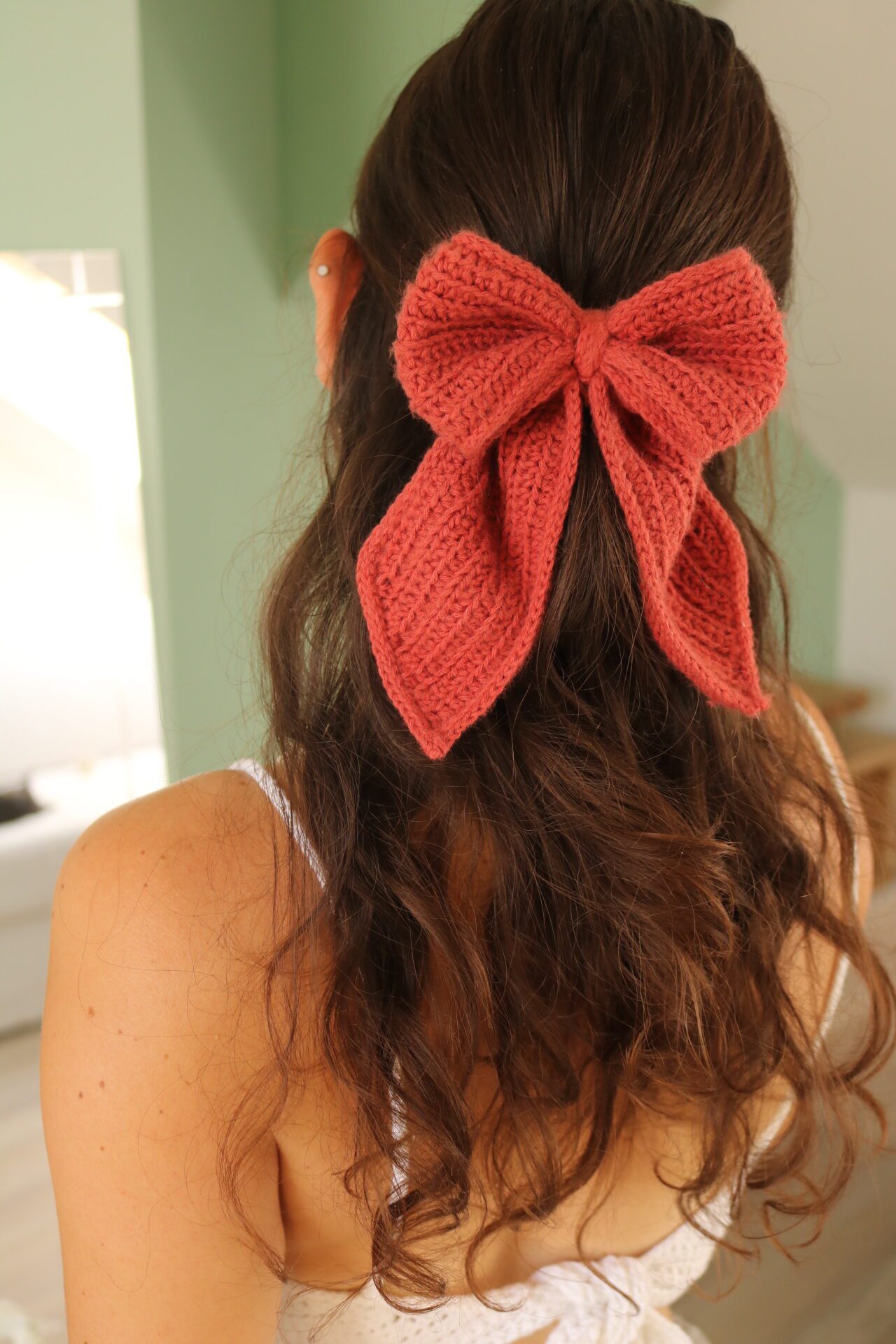
The pattern covers the bow itself, so what you mount it on is your choice. The centre wrap is the natural anchor point for a clip, an elastic or a pin, and because it is a separate stage you can decide at the end rather than committing at the start. The same bow also goes straight onto a gift, a bag or a tree without any hardware at all.
How many bows will one 50 g ball make?
One, at the size written, with about 10 g (0.35 oz) left. If you want several from a single ball, either make them smaller or use one of the mesh bows, which take 15 to 20 g (0.5 to 0.7 oz) each.
Does it need blocking?
Not the way a garment does. The shape comes from the fold and the centre wrap rather than from pinning it out, and flattening a bow under tension is the one thing you do not want. If your tails curl and it bothers you, a light press on the tails alone is plenty. My blocking board post is there if you want the full method for other projects.
Can I sell what I make from it?
Yes, finished bows are yours to sell. Please credit Artsy Maki as the designer, and never resell, copy or share the pattern file itself.
What if I get stuck?
Email me at artsymaki@gmail.com with a photo of where you are. I answer every message, usually within a day or two.
Ready to make one?
Stitch counts for the medium bow, plus instructions for any size and any yarn weight. Photos, notes and video tutorials included. Instant download.