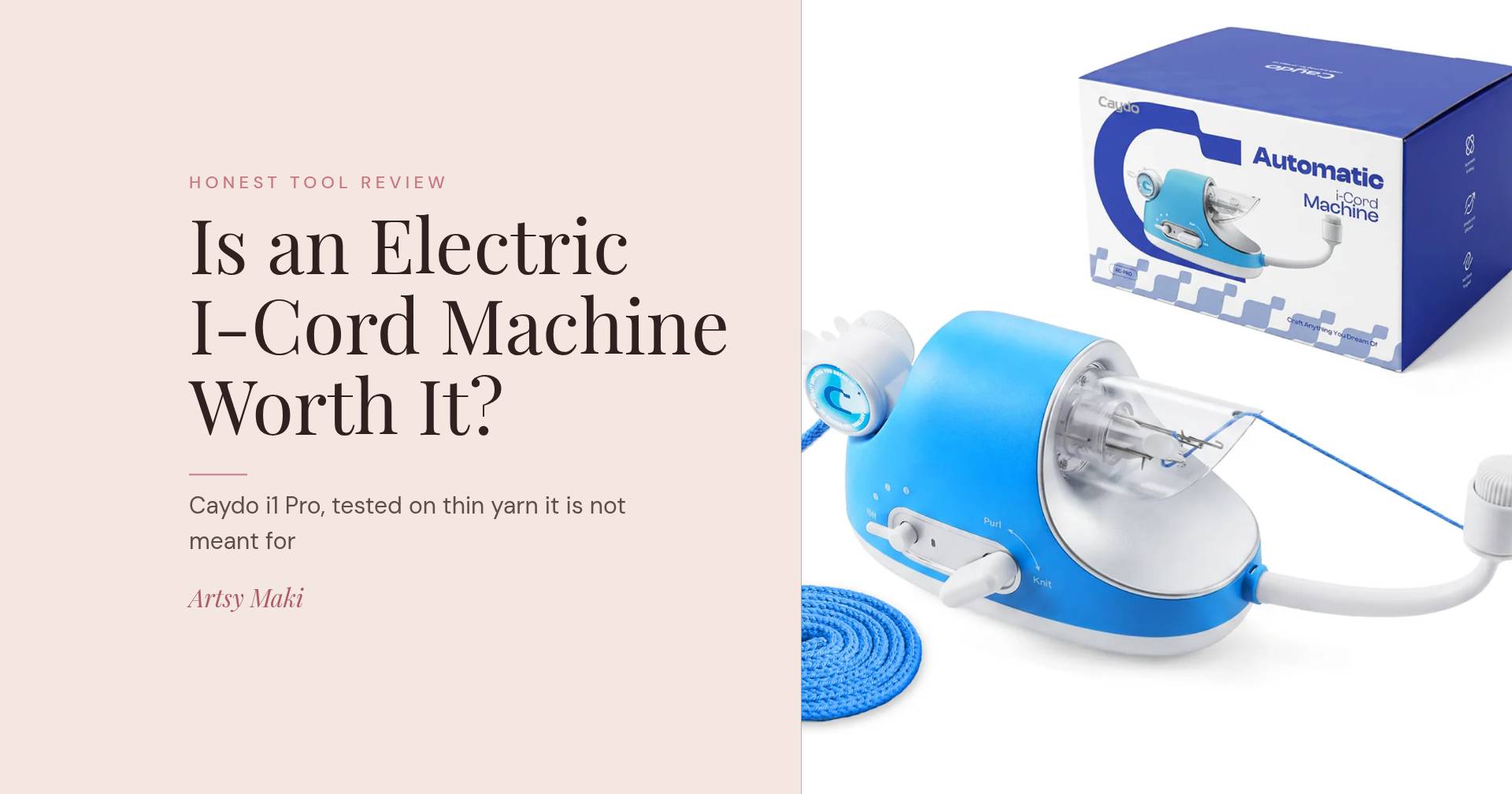
If you make i-cord in metres rather than centimetres, yes, it is worth it. On its fastest setting the Caydo i1 Pro puts out 60 cm a minute, which is 36 m (39 yd) in an hour, against roughly 4 m (4.4 yd) an hour by hand. If you need one drawstring twice a year, no. It’s a lovely mashine but you don’t need it.
Two things you should know before you read my opinion. Caydo sent me this machine in exchange for a reel, so I did not pay for it. The links to it below are affiliate links, which means I earn a small amount if you buy through one, at no extra cost to you. Neither of those buys a good review, and the part I found genuinely annoying is in here along with the part I liked.
If you only read one box
The short version
- It knits a 4 stitch i-cord, at 30, 45 or 60 cm a minute depending on which of the three speeds you set.
- Worth it if you make a lot of cord, or if you want to turn thin stash yarn into chunky chainette yarn. Not worth it for occasional straps and ties.
- Caydo says not to use extremely thin yarn. I did, repeatedly, and it handled it without complaint.
- It ships with 8 spare hooks, we love a thing we can fix ourselfs.
What the machine actually makes
An i-cord is a narrow knitted tube. The name comes from knitting, where Elizabeth Zimmermann called it the Idiot Cord because it is so hard to get wrong, and I have a step by step for making one by hand with a crochet hook if you have never made one. It is what you want for bag handles, drawstrings, ties, straps and trims, because unlike a chain it does not stretch out and go limp.
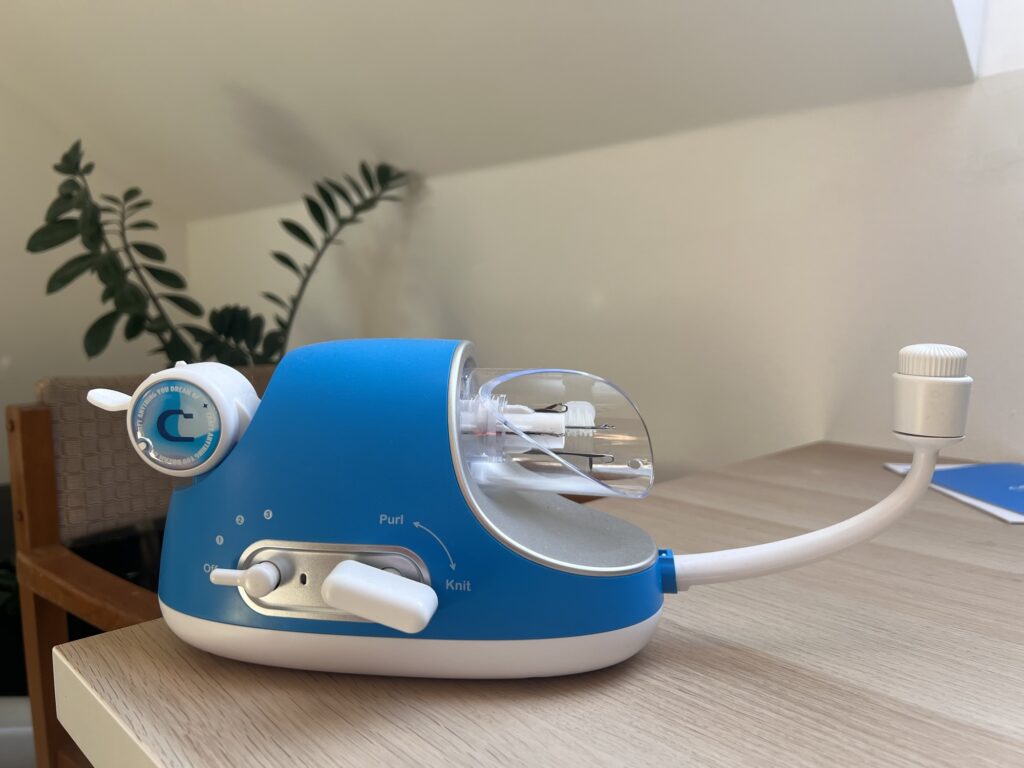
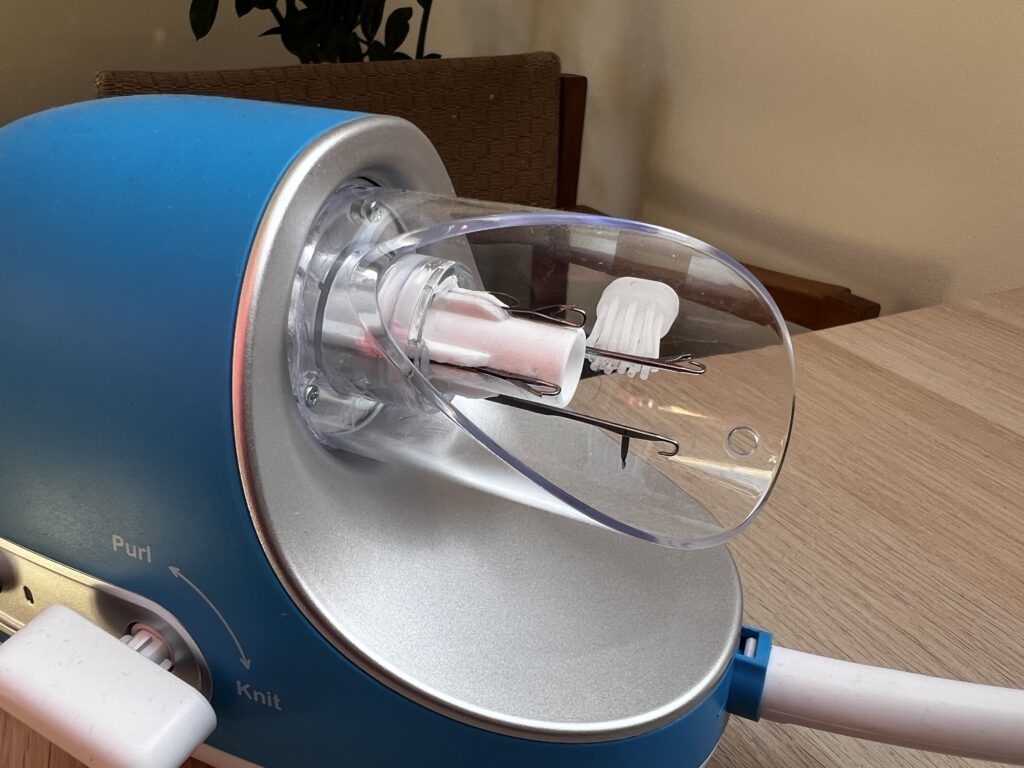
Here is a specific that Caydo does not put on the product page, and it matters if you are choosing between machines: the i1 Pro knits a 4 stitch cord. You can work that out from the manual, which tells you to close the end by pulling the yarn until four loops are left and threading them onto a needle. Four hooks, four stitches, four loops.
Why care? Because needle count is the whole difference between the cords these machines make. More needles gives a denser, rounder cord with more body. Fewer needles with bigger hooks takes thicker and more textured yarn. Caydo’s own manual crank machines come in a 4 needle and a 6 needle version for exactly this reason, and they are explicit about the trade: the 6 needle makes the more substantial cord, the 4 needle copes with the more difficult yarn. The i1 Pro sits on the 4 needle side of that line.
How much faster is it, really
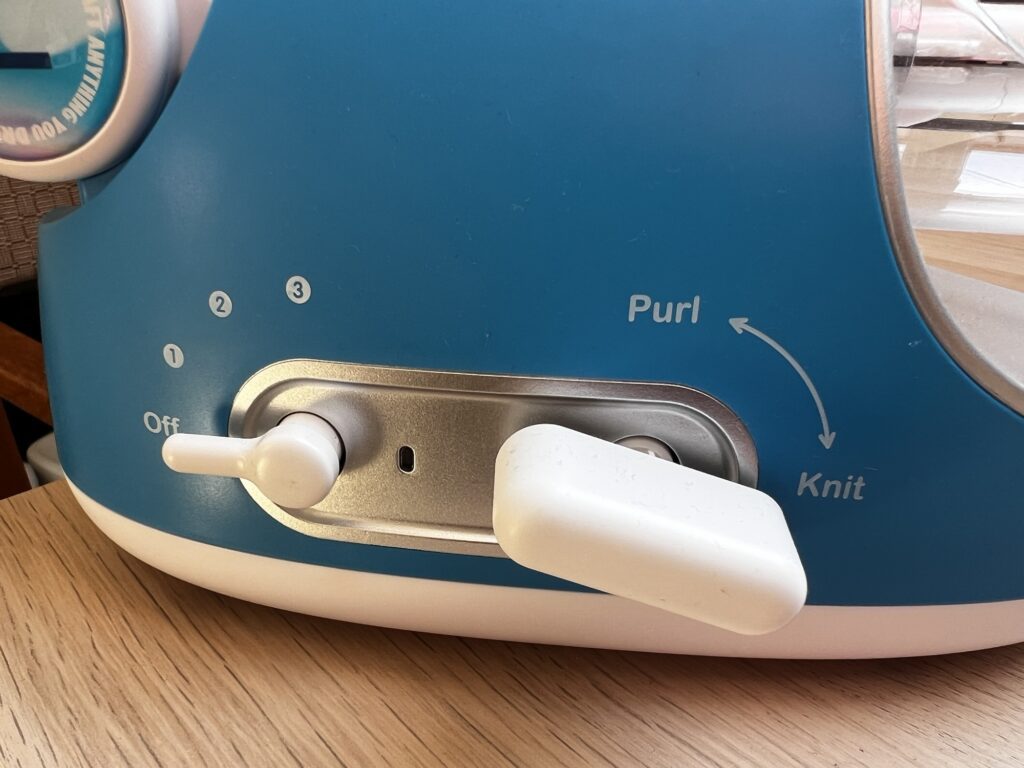
This is the number the decision turns on, so here it is properly. The three speeds are 30, 45 and 60 cm a minute, set with a lever on the side.
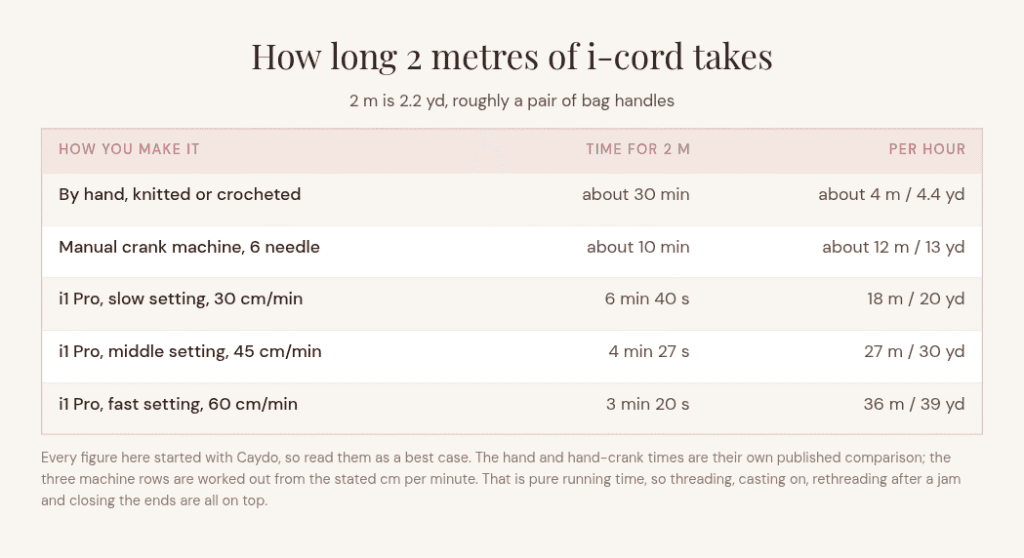
It is not just “nine times faster than by hand” but you can now attempt that you would not have before. Two metres of cord for a pair of bag handles is ten minutes on a hand crank and half an hour by hand, and neither of those is a crisis. Three hundred metres of chainette yarn for a sweater is just over eight hours on the fastest setting, which is a weekend, and is simply not a thing anyone is doing by hand.
That is the honest break-even. The machine does not make small jobs meaningfully better. It makes large jobs possible.
What yarn it takes, and the number only the manual gives you
The product page says it “works with most smooth yarns under 2.8mm”. The manual says: the recommended yarn diameter is 1.3 mm to 2.8 mm, and the machine is “only suitable for yarn weight categories from 2 to 4”.
| Weight category | Common names | Wraps per inch |
|---|---|---|
| 2, fine | Sport, baby | 12 to 18 |
| 3, light | DK, light worsted | 11 to 15 |
| 4, medium | Worsted, afghan, aran | 9 to 12 |
Caydo also lists what to keep away from it: bulky and super bulky, fluffy or fuzzy yarn, hollow or tubular yarn, cotton blends, and extremely thin yarn. Category 5 and 6 are out entirely.
The thin yarn question
Here is where my experience and the official line part company, so I want to be careful about which is which.
Caydo says do not use extremely thin yarn. But I really wanted to try it with the thin yarn in the first place, because feeding thread weight yarn through an i-cord maker is how you turn a cone of unusable laceweight into chunky chainette yarn. It ran fine. No jams I could blame on the yarn being too fine, no dropped stitches, nothing.
What I cannot tell you is whether that generalises. That is one machine, mine, with the specific thin yarns I happened to own, and a manufacturer who writes a limit into a manual usually has a reason even when the reason is only that they got tired of warranty claims. If thin yarn is your main use case, go in knowing you are working outside what is supported. It worked for me. It might not for you, and you would have no complaint if it did not.
Setup is the hardest part
The knitting is genuinely hands off. Thread it, press start, walk away. The reviews saying it is effortless are describing the middle of the job, and they are right about the middle of the job.
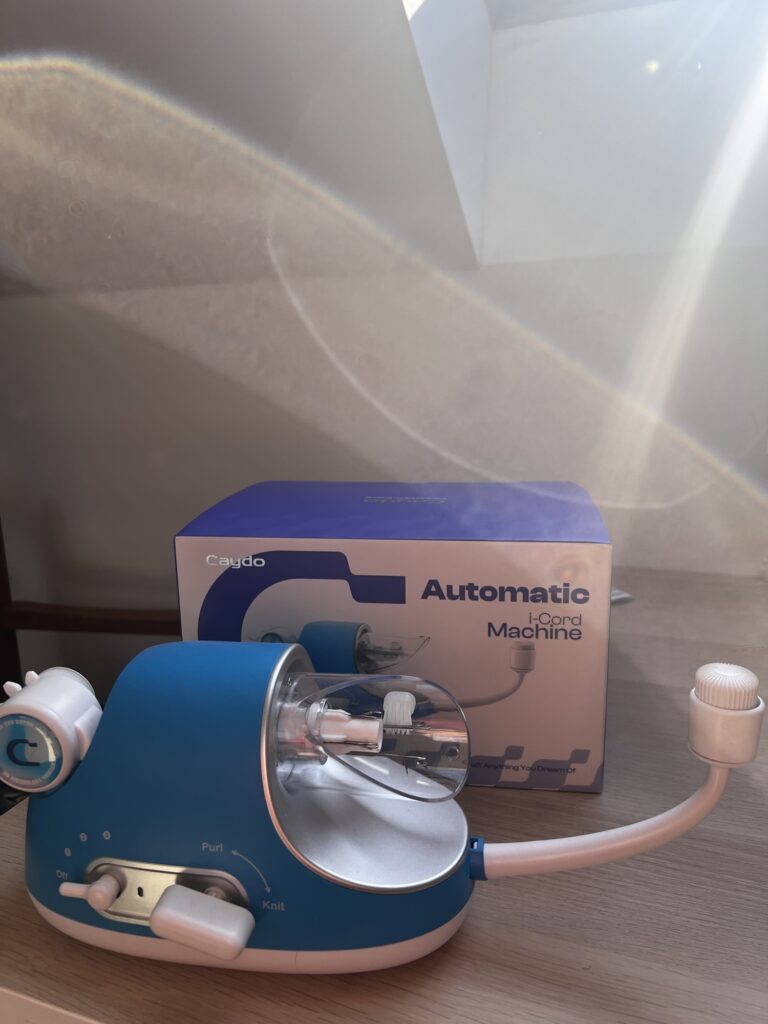
Getting it going was not effortless. It tangled on me a couple of times before I worked out what I was doing wrong, and the fix turned out to be tiny: the second hook I weave the yarn through has to be closed before I start. Once I got that right the tangling stopped and has not come back.
Caydo’s own troubleshooting list agrees about where the problem lives even though it describes the position the other way round, telling you to check the hook latches are fully open before you begin. I am not going to pretend to referee that. The practical lesson holds either way: when it tangles at startup, the answer is almost always the hooks, not the yarn. Look at every latch before you press start.
The other startup causes in the manual, worth knowing because they are quick to check:
- Yarn misrouted. Trace the whole path from ball to hooks rather than assuming.
- Not enough tension on the starting tail. Keep pulling the tail for the first ten seconds or so, until the cord has left the guide wheel, then let go.
- Turning the knob the wrong way. Clockwise only, always.
- Yarn not running free. The ball has to feed without catching on anything. This is the one that will bite you halfway through a long run rather than at the start.
If it starts dropping stitches mid run, the manual’s answer is oil: one or two drops of knitting machine oil, or olive oil, on the hook pivots, then cycle the mechanism by hand ten times and wipe the excess off. It wants that monthly if you use it hard. And if dropped stitches keep happening after oiling, that is a damaged hook, which is what the 8 spares in the box are for.
What is in the box
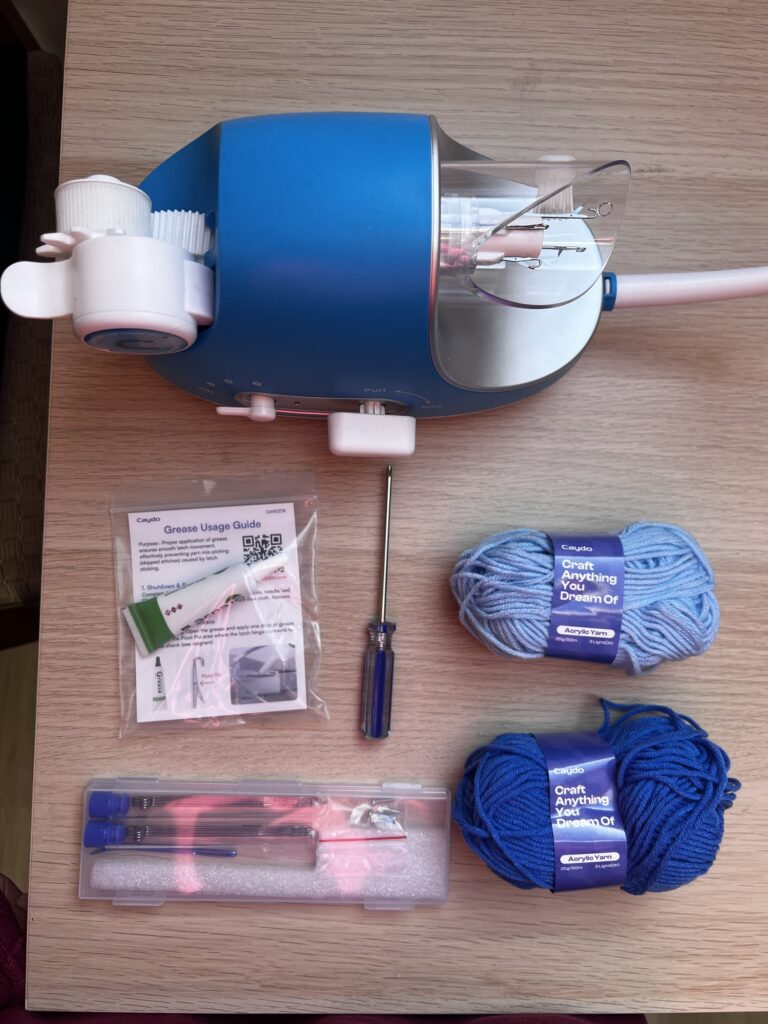
The manual’s component list for the i1 Pro: the machine, a yarn guide and its screws, a foam holder, the power adapter, 8 spare hooks, a plastic crochet hook, a sewing needle and a screwdriver.
Mine also arrived with yarn to practise on, which is not on that list, so treat it as a bonus rather than something to count on. What I did appreciate, and what I want to say plainly because so many companies have quietly stopped doing it, is that the cable was in the box. It runs on 5 V at 3 A, 15 W, so it is a USB-C class power supply and not some proprietary brick you have to chase down. Everything I needed to start was in there.
The spare hooks deserve their own sentence. Eight of them, included, with the replacement procedure in the manual, is a company telling you that hooks are a consumable part on this machine. I would rather know that up front than find out in a year and I am glad I can repare it myself.
What I have genuinely used it for
Chainette yarn from thin stash yarn. Knit the thin yarn into i-cord, block it flat, and you have a lightweight chunky yarn that will not split, with the crisp stitch definition you get from a tube rather than loose plies. Commercial chunky yarns are frequently made this way. This is the use case where the speed stops being a convenience and becomes the only thing making the project possible, and the full method including the blocking is here.
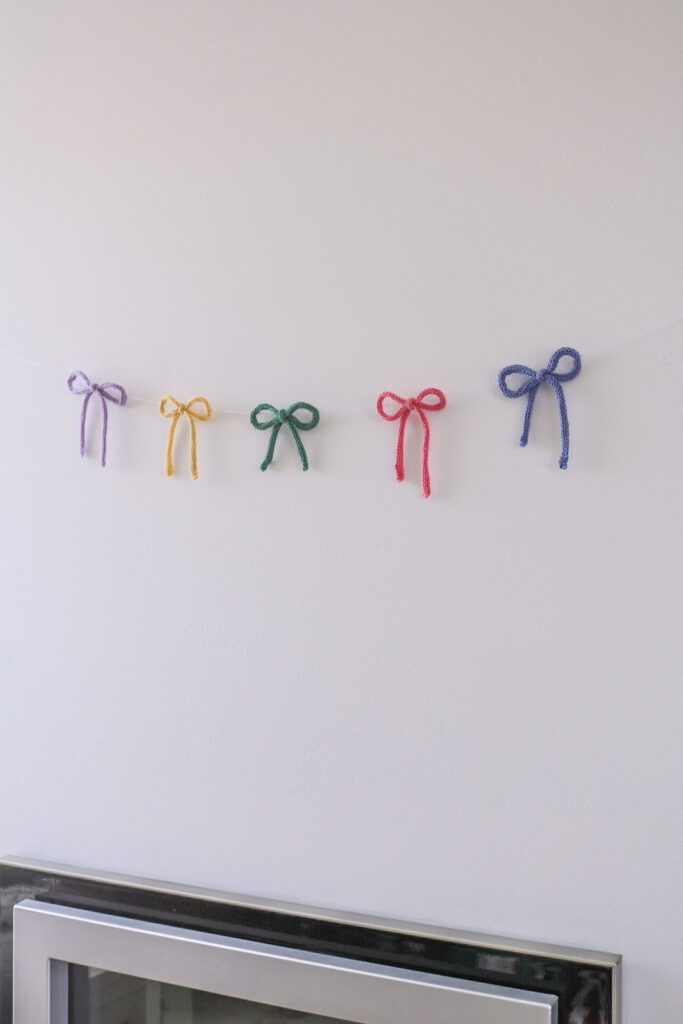
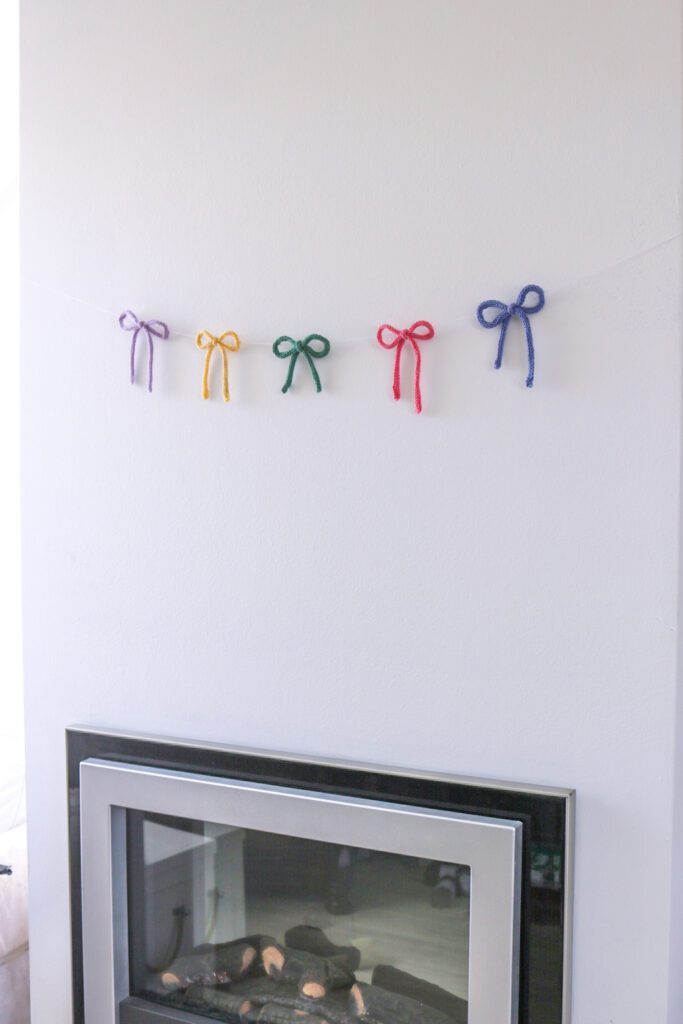
Cord for small projects. The crochet bow garland is bows tied on a length of cord, and a machine that produces metres of even cord in minutes is a nice thing to have pointed at a job like that. Bag handles, drawstrings, hanging loops and trims all qualify. None of them individually justify the machine.
Who should not buy this
I would rather talk you out of it than have you resent it, so:
- You need cord occasionally. A few straps a year is a hand crank machine’s job, or an evening with a hook. The electric one is solving a problem you do not have.
- Your stash is chunky. Categories 5 and 6 are out, and no amount of persuasion changes that. This is a machine for fine, light and medium yarn.
- You mostly work in cotton or textured yarn. Cotton blends are on Caydo’s avoid list, and their own 4 needle manual machine exists specifically because textured and thicker yarns need bigger hooks. If that is your stash, the manual machine is the better tool, not the cheaper compromise.
- You want silence. I have not measured it, but reviewers who have used one consistently describe it as noisy without being unbearable. It is a motor. Do not expect to run it during a film.
Questions I get asked
How many stitches is the cord?
Four. The manual gives it away in the finishing instructions, where you pull the working yarn until four loops are left and thread them onto a sewing needle to close the end. If you want a denser, rounder cord than four stitches gives, a 6 needle machine is the thing to look at, and Caydo sell a hand cranked one.
Can it really handle thin yarn?
Officially no. The manual puts the recommended diameter at 1.3 mm to 2.8 mm and lists extremely thin yarn as something to avoid. In practice mine has run thread weight yarn without trouble, which is the main thing I use it for. I am reporting that as my experience with one machine, not as advice that it will work with yours, and you are outside the supported range if you try it.
How long would a sweater’s worth of chainette yarn take?
Take the metres you need and divide by 36 for hours on the fast setting. A sweater wanting 300 m (330 yd) of finished chunky yarn is just over eight hours of running time. That is a weekend with the machine working while you do other things, and it is not something you would attempt by hand. Add time for threading and for closing the ends, and remember the cord shortens when you block it flat, so make more than you think you need.
What is the difference between the i1 and the i1 Pro?
Caydo’s own answer is that the Pro is the truly hands off one, built to run continuously without you adding counterweights or adjusting tension, while the i1 is the entry model that needs more attention while it knits. If you are making short cords, that supervision costs you nothing. If you are making a few hundred metres, it is the entire point of buying the Pro.
What do I do if it drops a stitch halfway through?
For the cord you have already made, the manual’s answer is to trim back and reclose the end, then increase the working yarn tension to stop it happening again. For the machine, put one or two drops of knitting machine oil or olive oil on the hook pivots, cycle it by hand ten times and wipe off the excess. If it keeps dropping after that, a hook is damaged and you swap in one of the spares.
Do I still need to know how to make an i-cord by hand?
It helps more than you would expect, because you still finish every cord by hand. Closing the end means threading four live loops onto a needle and drawing them tight like the top of a hat, and joining two cords means grafting them with a 20 cm tail at each end. If that is unfamiliar, my 2 stitch i-cord tutorial covers the structure, and there is a Czech version here.
Would I buy one
For what I use it for, yes, and I say that as someone who expected to be unimpressed. The build quality is better than I assumed it would be, the box had everything in it, and once I understood the hooks it has been reliable.
But the recommendation only works with its conditions attached. This is a machine for people with a thin yarn problem or a lot of cord to make. If you have neither, a hand crank machine does the same job slower for a fraction of the outlay, and your hook does it slower still for nothing at all. Buy it for the weekend project you cannot currently attempt, not for the straps.
The machine, and what to make with it
The first link is an affiliate link, so I earn a small amount if you buy through it, at no extra cost to you. The second is the technique that made it worth having.