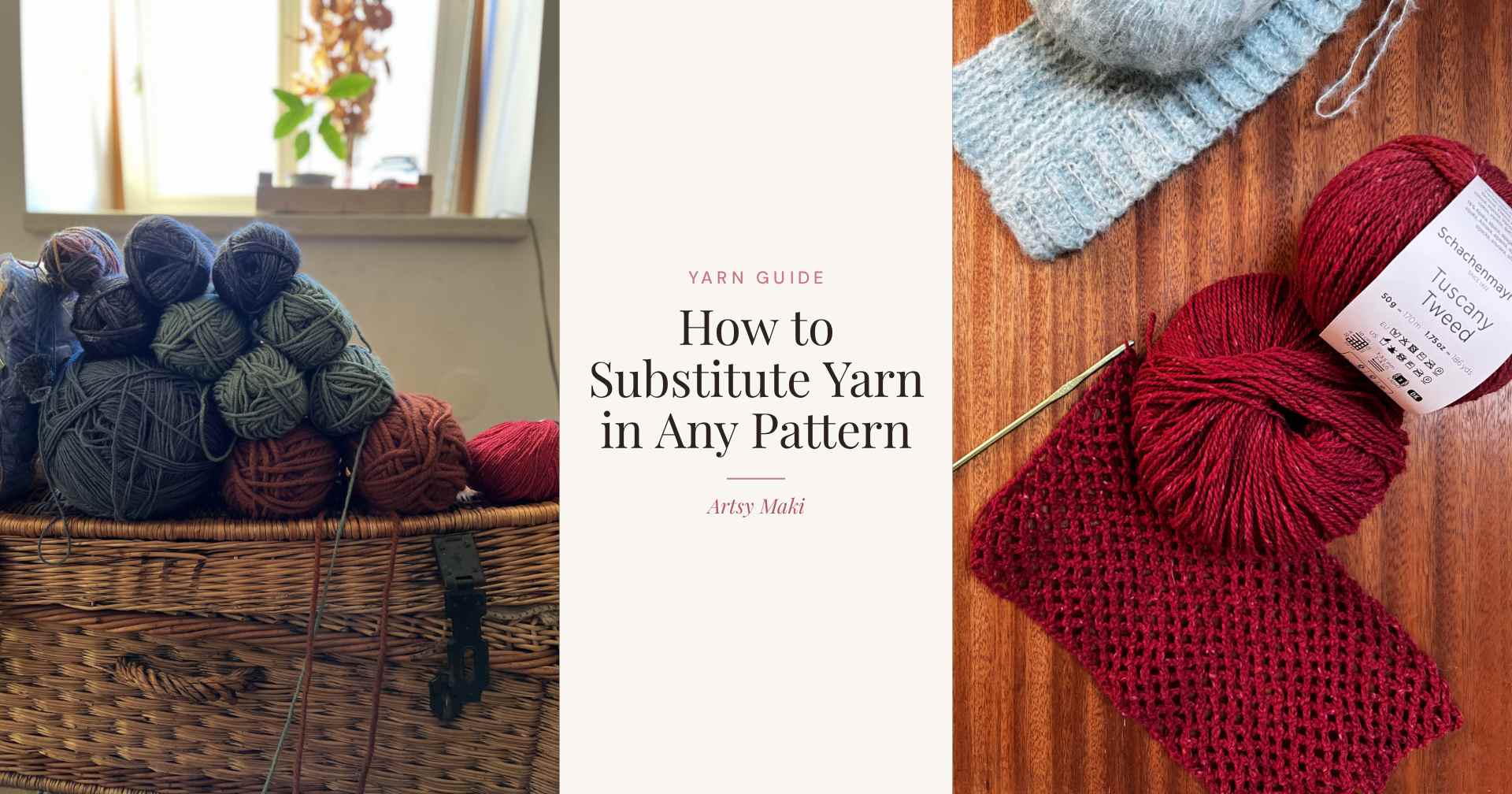
The pattern names a yarn. You cannot get it, or you already own something you would rather use, so you start looking for a match.
Almost every guide to this says the same three words: match the weight. That advice is too thin to act on, because a yarn substitution is three separate questions and the weight category only partly answers one of them.
- Will it come out the right size? That is gauge, and nothing else decides it.
- How much do I buy? That is metres per 100 g, and it can vary by a factor of two inside one weight category.
- Will I like the fabric? That is fibre, and it barely affects the size at all.
Keep them apart and substituting gets much easier. Two of the three have a number you can check before you buy anything.
If you only read one box
The short version
- Match the pattern’s stitches per 10 cm (4 in), not the word on the band. Five yarns sold as aran or worsted, compared below, run from 150 to 300 metres per 100 g.
- Swatch, then wash and dry the swatch, then measure. In one test of eleven swatches, every one grew between 2 and 7% after a wet block.
- Buy in metres or yards. Never in balls, and never in grams unless the two yarns have the same metres per 100 g.
- Fibre does not change the size much. It changes everything else: drape, stitch definition, warmth, and whether the garment still fits in a year.
- Look at other people’s projects of the same pattern on Ravelry first. It takes two minutes and tells you what has already worked.
Can you use a different yarn than the pattern calls for?
Yes, for most patterns, as long as you can get the pattern’s gauge with the new yarn. Gauge is the number of stitches and rows in a measured square, usually 10 x 10 cm (4 x 4 in), and every size in the pattern is built from it. Hit the gauge and the numbers still work.
There are four cases where a swap is a bad idea, and it is worth knowing them before you spend anything.
- The design is about the yarn. A pattern built around a mohair halo, a bouclé texture or a self striping colourway does not survive being made in something plain. The stitches will be the right size and the piece will look like a different design.
- The fabric has to hold its shape. Ribbed cuffs, hat brims and fitted waistbands rely on the yarn springing back. Cotton and linen do not spring back, so a ribbed wool hat made in cotton comes out as a tube that slides off.
- The pattern gives no gauge. Some accessory patterns skip it. Then you have nothing to match and you are designing, not following, so expect to adjust stitch counts.
- You cannot get the gauge. If you are already two hook sizes away from the pattern’s hook and still off, the yarn is the wrong thickness. Changing hook further will fix the measurement and wreck the fabric.
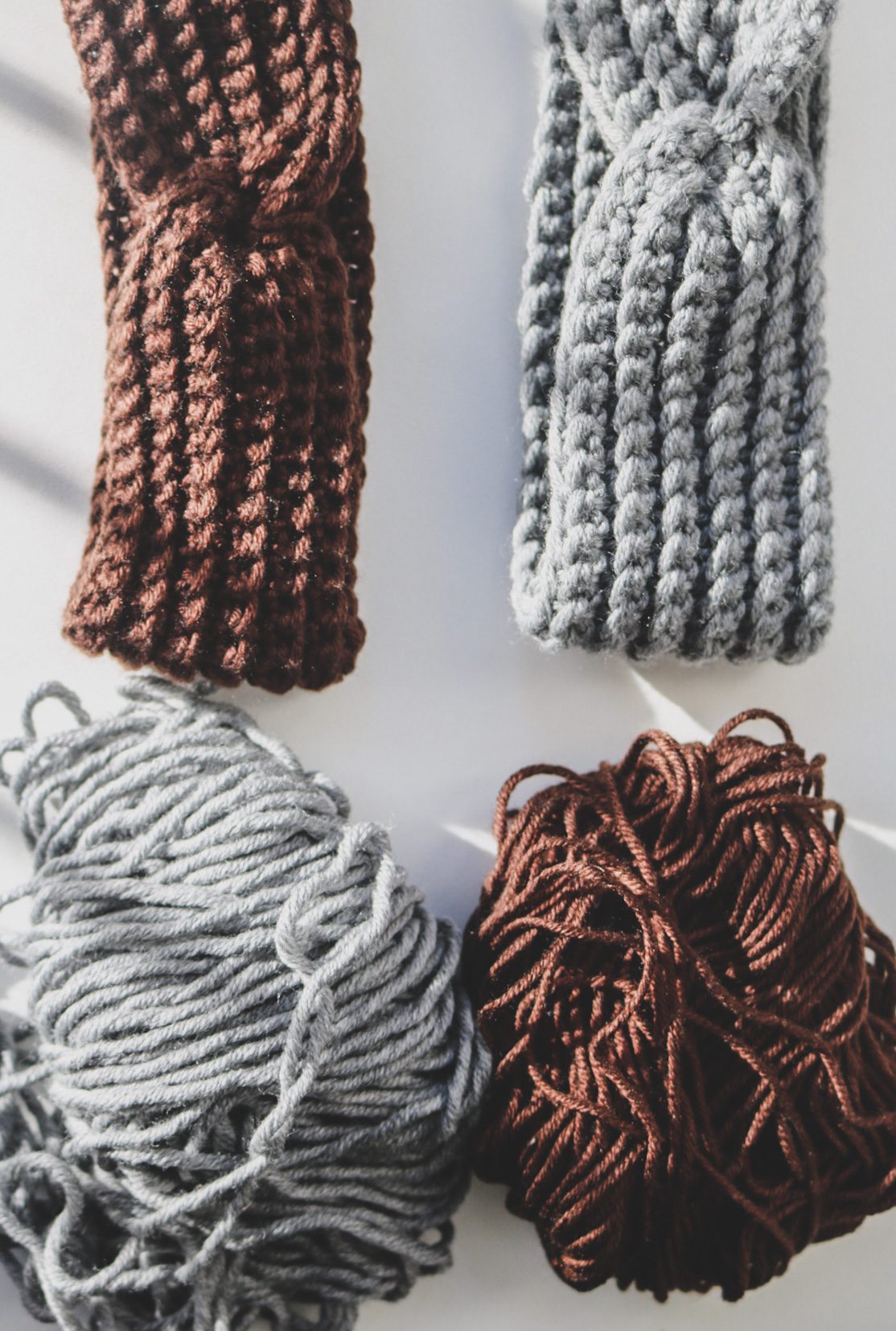
How to substitute yarn in a crochet pattern, step by step
Seven steps. The first four cost nothing and happen before you buy, which is the point of doing them in this order.
- Write down four numbers from the pattern. The gauge, in stitches and rows per 10 cm (4 in). The hook size. The stitch the gauge is measured in, which matters because a gauge in double crochet is not a gauge in half double. And the total metres or yards for your size.
- Look up the original yarn’s ball band figures. Grams per ball, metres per ball, fibre content, and the tension the maker prints. Ravelry’s yarn database has almost everything, including discontinued yarns, and it is quicker than hunting for a manufacturer page.
- Work out the original yarn’s metres per 100 g. Divide the metres per ball by the grams per ball, then multiply by 100. A 50 g ball with 150 m in it is 300 m per 100 g. This number is called grist, and it is what tells you how much yarn you are actually buying.
- Shortlist candidates by tension first, grist second, fibre third. Anything whose printed tension is within about one stitch per 10 cm of the original is worth a swatch. YarnSub does this search for you across about 11,000 yarns and gives each result a match percentage.
- Buy one ball and swatch it. One ball, not the sweater’s worth. Make the square at least 15 cm (6 in) across, in the stitch the pattern measures, on the pattern’s hook.
- Wash the swatch the way you will wash the garment, dry it flat, then measure. This is the step that gets skipped and it is the one that changes the number. More on it below.
- Convert the quantity and buy in metres. Divide the pattern’s total metres by the metres per ball of your yarn, round up, add one ball.
If the swatch misses the gauge, change hook rather than yarn. Multiply the hook you used by your stitches divided by the pattern’s stitches and that lands you close in one go, which beats swatching your way up a size at a time. I set the formula out with its limits in why your gauge swatch never matches the pattern.
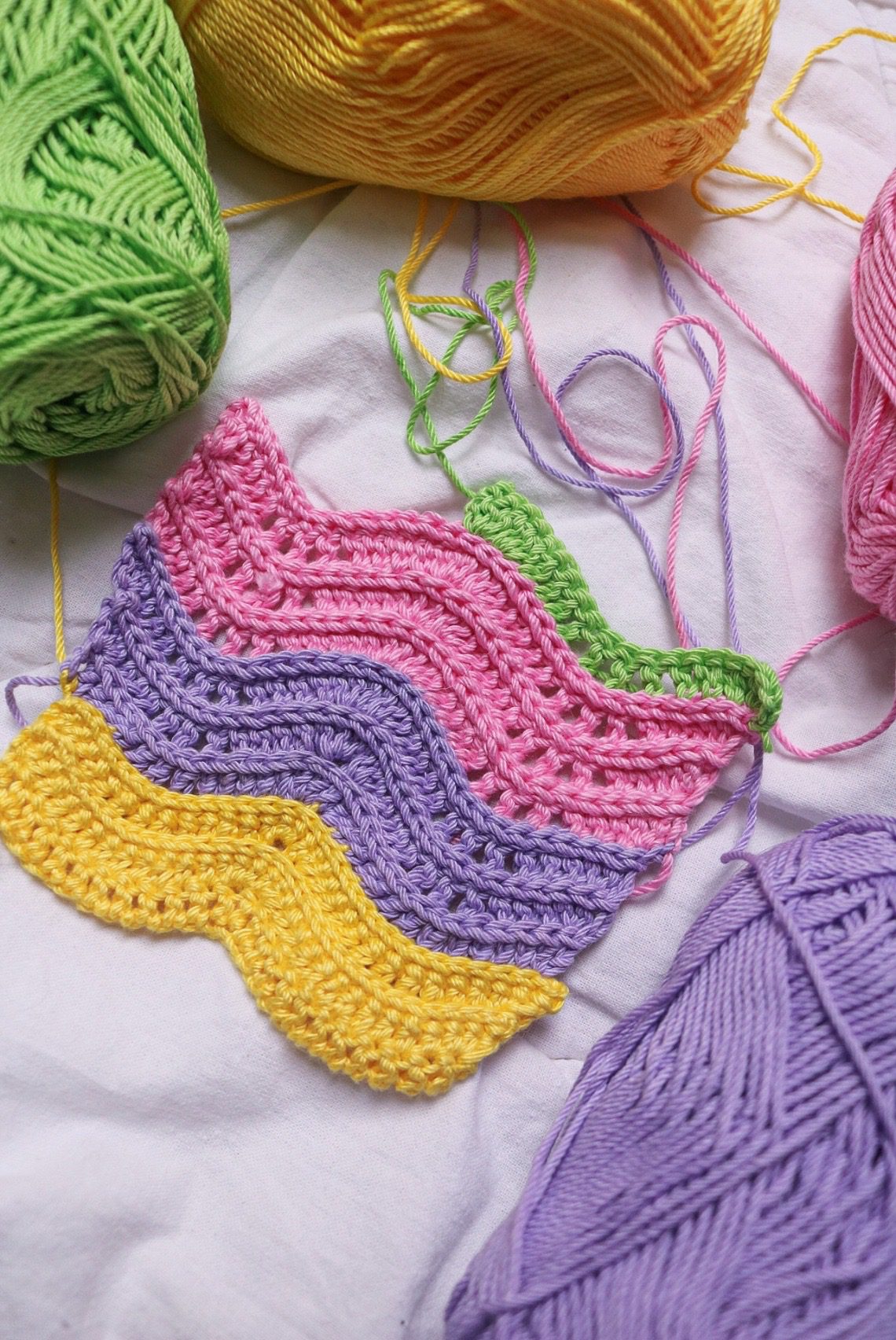
How to match yarn weight when the label is not enough
Match the printed tension rather than the category name. The category name is a marketing word with no enforcement behind it, and yarns sold under the same word are often nowhere near each other.
Here are five yarns, all sold as aran or worsted, which is category 4 on the Craft Yarn Council’s scale. Figures as Ravelry’s database lists them, cross checked against retailer listings.
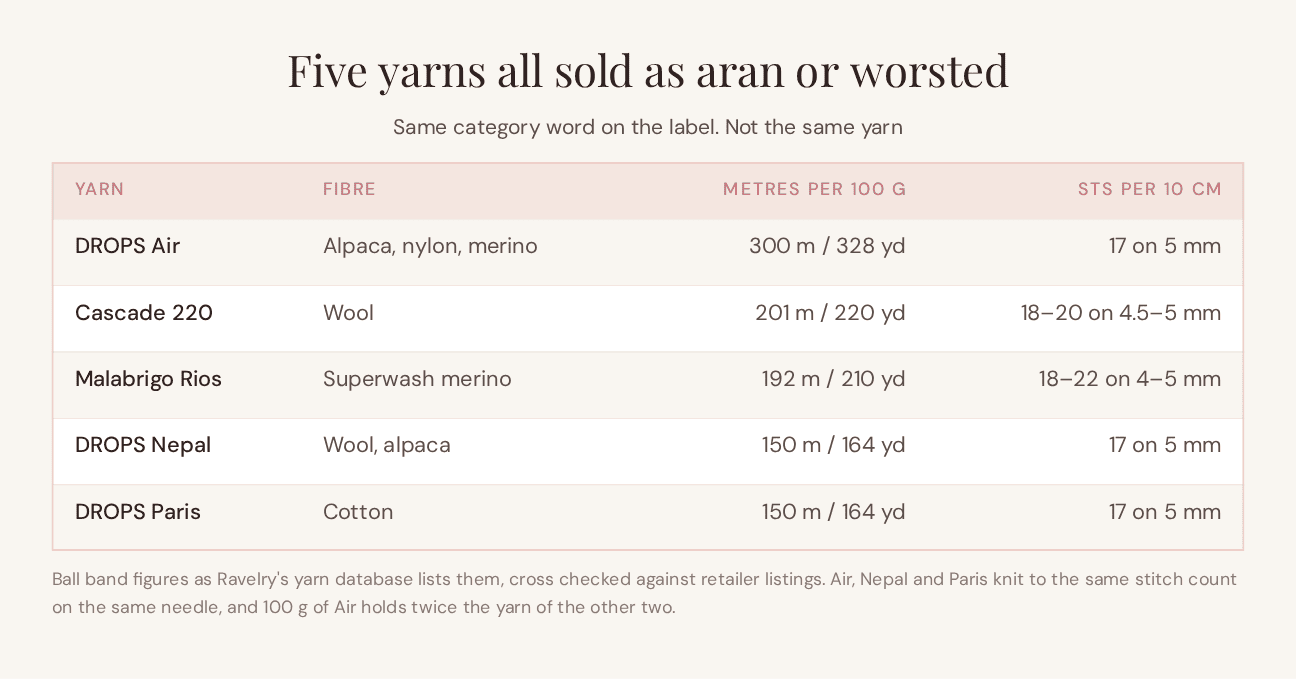
| Yarn | Fibre | Metres per 100 g | Sts per 10 cm |
|---|---|---|---|
| DROPS Air | Alpaca, nylon, merino | 300 m / 328 yd | 17 on 5 mm |
| Cascade 220 | Wool | 201 m / 220 yd | 18 to 20 on 4.5 to 5 mm |
| Malabrigo Rios | Superwash merino | 192 m / 210 yd | 18 to 22 on 4 to 5 mm |
| DROPS Nepal | Wool, alpaca | 150 m / 164 yd | 17 on 5 mm |
| DROPS Paris | Cotton | 150 m / 164 yd | 17 on 5 mm |
Three of them, Air, Nepal and Paris, all knit to 17 stitches over 10 cm on a 5 mm needle. By the only measurement that decides fit, they are interchangeable. And 100 g of Air holds twice as much yarn as 100 g of Nepal.
The reason is that Air is a blown yarn, a hollow tube of fibre with air inside it rather than a spun strand. DROPS say garments in it come out 30 to 35% lighter than conventional yarns of the same thickness. Against Nepal the gap is bigger than that, closer to 50%, so treat their figure as a general claim rather than a number that holds for every comparison.
Chainette and bouclé yarns do the same thing for the same reason. If you want that in more detail, I pulled it apart in what weight bouclé yarn actually is, where the two usual shortcuts for identifying a yarn both give wrong answers.
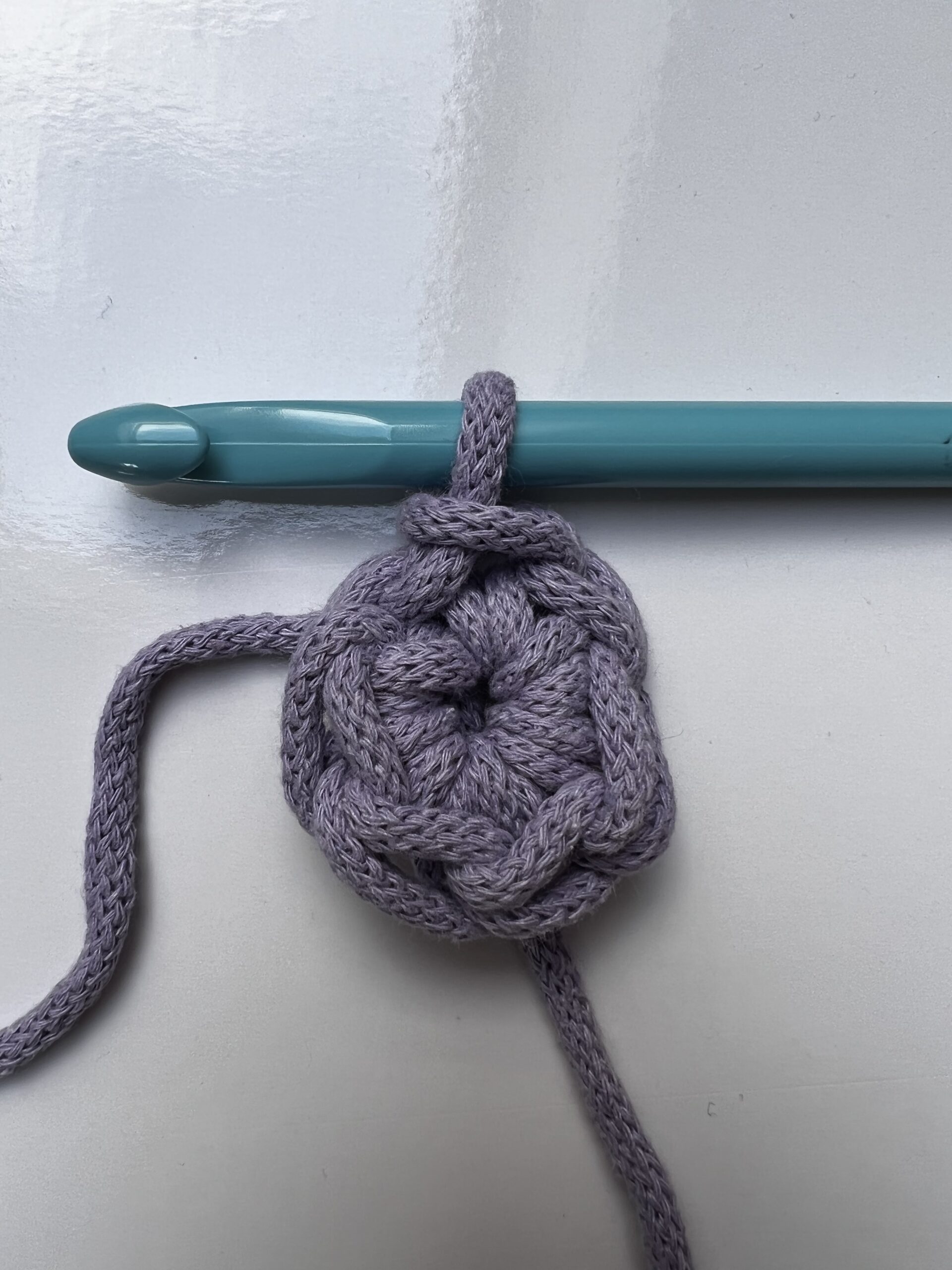
If the band gives no tension
Use the Craft Yarn Council’s crochet bands, which are given in single crochet to 10 cm (4 in) and are much less well known than the knitting ones:
- Super fine (1): 21 to 32 stitches, 2.25 to 3.5 mm hook
- Fine (2): 16 to 20 stitches, 3.5 to 4.5 mm hook
- Light (3): 12 to 17 stitches, 4.5 to 5.5 mm hook
- Medium (4): 11 to 14 stitches, 5.5 to 6.5 mm hook
- Bulky (5): 8 to 11 stitches, 6.5 to 9 mm hook
- Super bulky (6): 7 to 9 stitches, 9 to 15 mm hook
Notice how much those overlap. A fabric at 12 stitches per 10 cm could be light or medium, and 11 could be medium or bulky. The Council label the whole table “guidelines only” for exactly this reason. They are a starting hook, not an identification.
If you have no band at all, weigh the ball and measure it, then put the grams and metres into my yarn weight calculator, which returns a category and a hook range to start swatching from.
How much of the substitute yarn do you need?
Take the metres the pattern asks for, divide by the metres per ball of your yarn, round up, add one ball. Ignore the pattern’s ball count and ignore its gram figure, because both of those belong to a yarn you are not using.
balls to buy = pattern's total metres ÷ metres per ball, rounded up, plus one
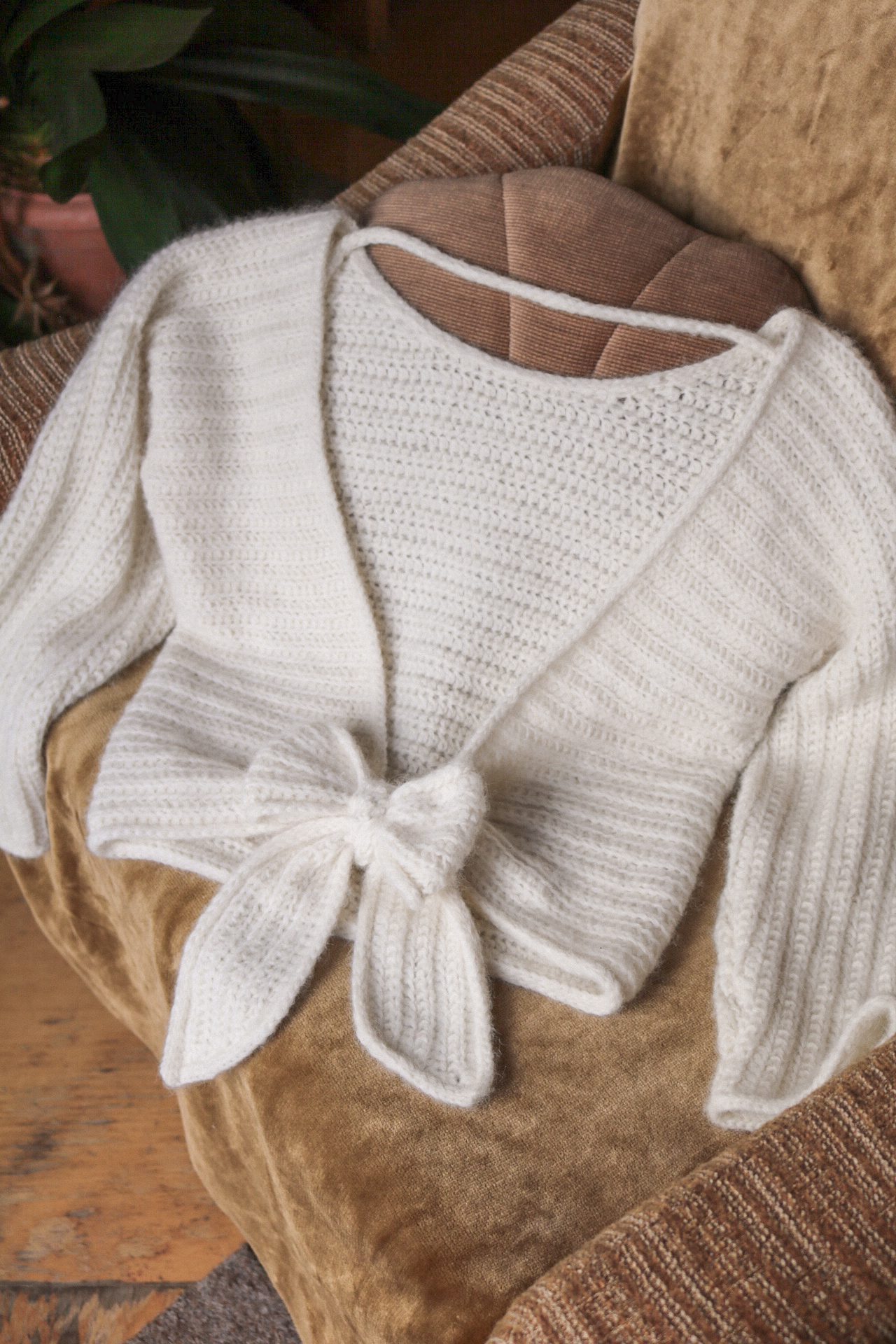
Here is what that looks like on a real pattern. My Claire Sweater asks for 1050 m (1148 yd) in a size M, which is 7 balls of DROPS Air.
- In DROPS Air, 150 m per 50 g ball: 7 balls, so 350 g (12¼ oz) of yarn.
- In DROPS Nepal, 75 m per 50 g ball: 14 balls, so 700 g (24½ oz).
Same gauge, same hook, same finished measurements, twice the balls. Someone buying by ball count would come home with half the yarn they need, and someone buying 350 g of Nepal would run out around the second sleeve.
The arithmetic also tells you the finished weight, which the pattern does not. The Nepal version is a sweater weighing 700 g. That is heavy to wear all day, and it is why I wrote the pattern in a blown yarn.
When the pattern only gives balls or grams
Convert before you buy. Multiply the ball count by the metres per ball of the original yarn to get the total metres, then divide by the metres per ball of yours.
If the pattern names a yarn that no longer exists and you cannot find its ball band figures anywhere, weigh your swatch instead. Make a 15 cm (6 in) square, weigh it in grams, work out how many of those squares would cover the finished garment, and multiply. It is rough, and it uses your own tension and your own yarn, which no chart does. I set the method out properly in how much yarn a crochet sweater takes.
The 20% yardage rule
A rule you will meet often is to stay within about 20% of the original yarn’s yards per ball. TL Yarn Crafts puts it at plus or minus 20%, which for a 220 yd ball is a window of about 44 yd.
It is a decent filter for ordinary spun yarns. It fails on lofty ones. DROPS Nepal is 100% away from DROPS Air on that measure, so the rule rejects it, and the two make the same fabric on the same hook. Use the 20% window to sanity check your shopping list, not to decide whether a yarn will fit.
Does the fibre matter if the gauge matches?
It hardly changes the measurements. It changes how the fabric moves, how long it holds its shape and what it does in the wash.
Take the last two rows of the table. DROPS Nepal is 65% wool and 35% alpaca. DROPS Paris is 100% cotton. They have the same ball weight, the same length, the same needle and the same tension. Every number a substitution chart looks at says they are the same yarn.
Crochet a ribbed hat in each and you get two different objects. The wool one grips and springs back. The cotton one is a cylinder that slides off, because cotton has very little elastic recovery and stays where you stretch it. Wool recovers because of crimp, the natural waviness in the fibre. Merino has up to 40 crimps per centimetre, roughly 100 per inch, while a coarse wool like karakul may have one or two per inch. That waviness is a built in spring, and cotton has none of it.
| Fibre | What it does to the fabric | After a wash | Swap it in for |
|---|---|---|---|
| Untreated wool | Springy, holds ribbing and shaping, fills in gaps as it blooms | Stable to slightly tighter | Fitted garments, hats, cuffs, anything ribbed |
| Superwash wool | Softer and noticeably less springy than untreated | Grew the most of any fibre in YarnSub’s blocking test | Things that must go in a machine, if you swatch washed |
| Alpaca | Heavy, fluid drape, very warm, little crimp in the smoother grades | Changed the least in that same test, but pure alpaca is widely reported to grow lengthways with wear | Drapey shapes, cropped pieces, scarves |
| Cotton | No spring at all. Stitches stay exactly where you put them, and the fabric is dense | Can grow and will not pull back | Summer tops, bags, market bags, flat structured pieces |
| Acrylic | Consistent, less warm, less elastic than wool, and it can go shiny | Water does little. Heat changes it permanently | Blankets, children’s clothes, anything washed constantly |
| Mohair and brushed yarns | A halo that softens or hides the stitch pattern | Blooms further, so the halo grows | Holding double with something else, or where softness beats definition |
Worth saying plainly where this comes from. I have crocheted and knitted in wool, alpaca blends, cotton and mohair, and the rows for those are what I have watched happen to my own pieces. I have not designed anything in acrylic, so that row is what other makers report rather than something I have tested.
One nuance on alpaca, because the two sources disagree in an interesting way. Crocheters say pure alpaca grows. YarnSub’s blocking test found alpaca changed the least of all the fibres tested. Both can be true: a flat wet block is not the same as a garment hanging on a body for a day, and alpaca’s growth tends to come from gravity rather than from water. If you are substituting into a long cardigan, hang the washed swatch up with a weight on it overnight before you trust it.
How to see what yarn other people used for the same pattern
Go to the pattern’s page on Ravelry and open its projects tab. Every finished project logs the yarn used, the hook, the size made and usually the yardage, which means you are reading what actually worked rather than what a chart predicts.
Most substitution guides leave this out. It is the quickest research available and it uses real finished garments. Three things to look for:
- Which yarns come up more than once. If four people made the same sweater in the same substitute, that substitute works. You can filter the project list by yarn name to see them together.
- What hook they used. If everyone who used your yarn went up half a millimetre from the pattern’s hook, start your swatch there and save yourself a round.
- What they wrote in the notes. This is where people say the thing the pattern does not: that it grew, that they made the next size down, that the neckline gapes in a heavier yarn.
Ravelry also has a yarn ideas tab on every pattern page. Their help pages describe it like this: “When you are looking at a pattern you like, you might want to see what yarns you have from your stash that would work for that pattern.” It matches against the stash you have logged, so it is only as useful as your stash records, but if you keep them it answers the question without any arithmetic.
Two limits to know. Newer and smaller patterns may have only a handful of projects, mine included, so there is not always data to read. And project pages need a Ravelry login, which is free.
What YarnSub is good at
YarnSub holds around 11,000 yarns and returns ranked alternatives with a match percentage, comparing weight, gauge, fibre and ball size. It is the fastest way to turn one discontinued yarn into a list of ten current ones.
What it cannot tell you is whether the match suits the design. Their own guidance is blunt about it: “Successful yarn substitution is not just a matter of matching gauge”, and they list appearance, drape, how the fibre handles texture and colourwork, softness against skin and durability as things you have to judge yourself. Use the percentage to build a shortlist, then decide between the shortlisted yarns on fibre.
What goes wrong when you substitute yarn
Five failure modes, in the order they tend to happen.
The garment grows on its first wash
This is why the swatch gets washed. YarnSub tested it properly and published the numbers: two thirds of their swatches got bigger after washing, by up to 5%. In a separate run of eleven swatches across different fibres, every one grew after a wet block, between 2 and 7%. One example went from 22 stitches per 10 cm before blocking to 20 after.
Two stitches per 10 cm is a large miss. Stitches worked at 20 per 10 cm that end up at 18 are 11% wider each, so a sweater drafted to a 100 cm (39 in) chest comes out at about 111 cm (44 in). On most size charts that is a whole size. The author also notes their own knitting can grow up to 10% on a first wash.
So wash the swatch the way you will wash the garment, dry it flat without pinning it out tight, and measure it then. Check what the pattern means by its gauge first. Most patterns that measure after blocking say so. If yours measured unwashed, compare your unwashed swatch with it, because washed against unwashed is not a comparison.
The stitch pattern disappears
Textured stitches need a smooth, fairly tightly spun yarn to show. Post stitches, cables, bobbles and the alternating front loop and back loop ribbing the whole Claire collection is built on all read clearly in a plied wool and vanish under a halo.
Mohair, brushed alpaca and bouclé are the three that erase texture most. If the design’s whole appeal is the stitch, substitute within smooth yarns. If you want the fluffy yarn, pick a pattern in plain rows and let the yarn do the work.
You run out of yarn
Almost always because the ball count or the gram figure was copied across from the original yarn. The Air to Nepal example above is a 100% miss and it comes from a single skipped division.
It also happens when the substitute is a slightly thicker yarn worked on a bigger hook to hit gauge, which eats more metres per stitch. If your swatch needed a hook half a millimetre above the pattern’s, add a second spare ball rather than one, and buy it in the same dye lot at the start.
The colour pools or flashes
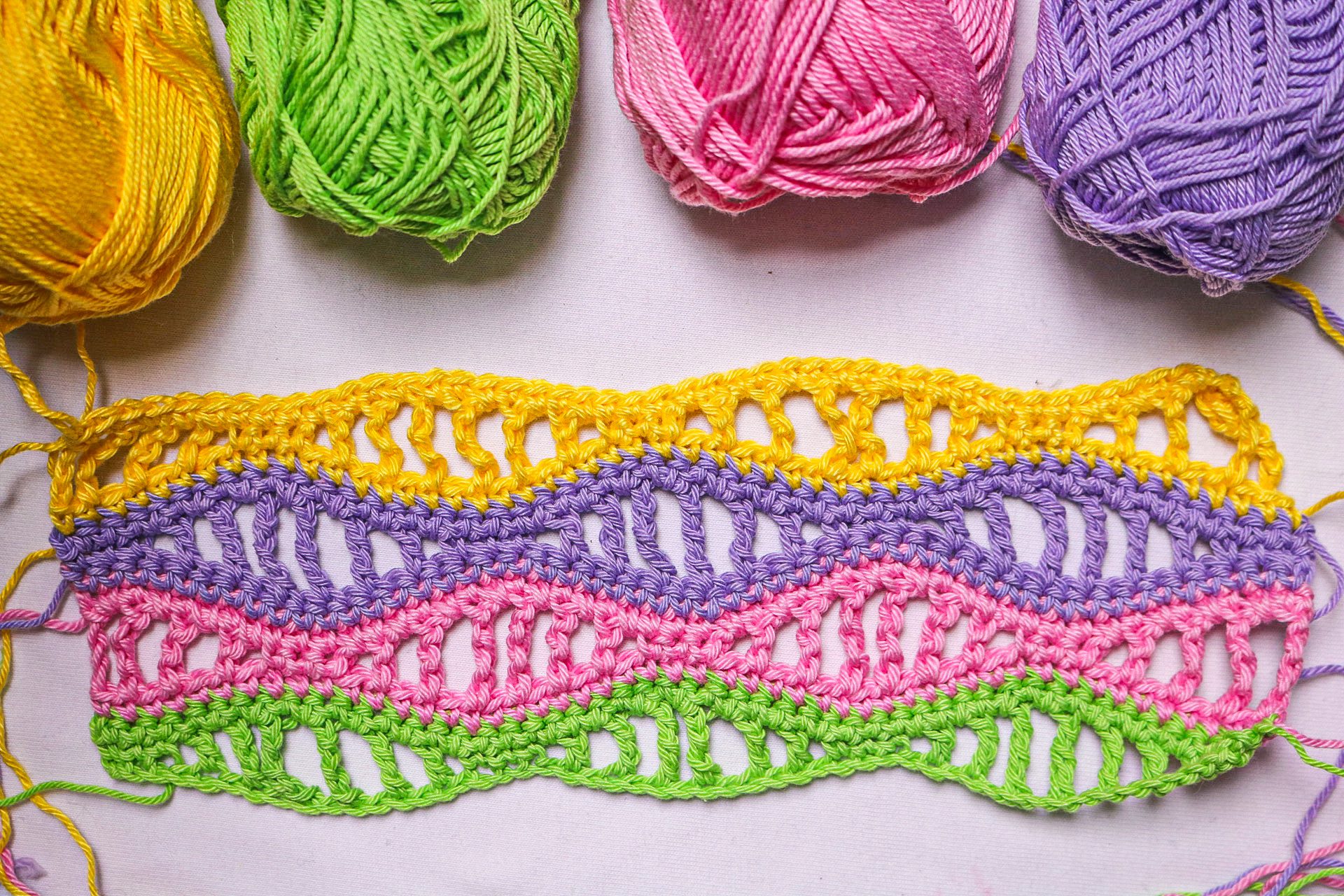
Swapping a solid for a hand dyed or variegated yarn changes the look of a design a great deal. Short colour repeats stack into diagonal blotches, called pooling, and long repeats produce visible stripes across a row, called flashing. Neither is a mistake in the yarn and neither is predictable from the skein.
Your swatch will not show it, because pooling depends on how many stitches are in a row and a swatch has far fewer than a garment. If you want to check before committing, work a piece at the actual width of the widest part for about 10 cm (4 in). If you then dislike it, alternating two skeins every two rows breaks the repeat up.
The fabric is right and the garment is wrong
The gauge matched, the swatch was lovely, and the finished piece hangs badly. This is nearly always weight or drape. A dense cotton version of a light alpaca sweater is heavier, so it pulls down at the shoulders and the body lengthens. A fluid alpaca version of a crisp cotton top loses the shape the design was cut for.
The check is cheap: after washing the swatch, hold it up by one corner and see whether it hangs or holds. Then ask whether that is what the design wants. A cropped boxy piece can carry a heavy fabric. A long cardigan cannot.
Maki’s tip
Keep the swatch and pin the ball band to it. I write the yarn, the hook, the stitch, and the measurement before and after washing on a paper tag and put the whole thing in a box. After a couple of years that box answers most substitution questions faster than any website, because it is full of yarns I have actually used at tensions I actually crochet at. It is also the only record of what a yarn did after washing, which is the thing nobody remembers a year later.
When the substitution does not have to be exact
Gauge only matters when a finished measurement matters. For quite a lot of crochet it does not, and you can swap freely.
- Blankets, scarves and shawls. Nothing has to fit. A different yarn gives you a different size, and you add or drop repeats until it is the size you want. Just recalculate the metres.
- Bags and baskets. Size is flexible, but stiffness is not. Keep to a yarn with similar body, and cotton for cotton rather than cotton for wool.
- Amigurumi. The finished toy just comes out bigger or smaller. What does matter is that the fabric stays tight enough that stuffing does not show through, so go down a hook size or two from the band whatever yarn you pick.
- Scrunchies, bows and small accessories. Swap anything. On small pieces, a yarn with good drape makes loops droop, so for bows I prefer something with a bit of body.
Garments, hats and anything worn close to the body are the opposite case. There the gauge has to match.
Questions I get asked
How do I know if a yarn is a good substitute?
Compare three things in this order. First the tension printed on the band, which should be within about one stitch per 10 cm (4 in) of the original. Second the metres per 100 g, which tells you how many balls to buy rather than whether it will fit. Third the fibre, which decides drape and whether the fabric holds its shape. A yarn that passes the first test is worth a swatch. Only the washed swatch settles it.
Can I substitute acrylic for wool in a crochet pattern?
Yes, for the size. Match the tension, swatch it and the measurements will work. Expect three differences in the finished piece: it will be less warm, it will have less spring so ribbing and cuffs hold less well, and it will not block the same way, because acrylic barely responds to water and responds permanently to heat. For a blanket or a child’s jumper those are fine trades. For a fitted ribbed garment, the lost spring is the part you will notice.
How many balls of the new yarn do I need?
Divide the pattern’s total metres for your size by the metres per ball of your yarn, round up and add one. Do not reuse the pattern’s ball count. As an example, 1050 m (1148 yd) is 7 balls of DROPS Air at 150 m per 50 g, and 14 balls of DROPS Nepal at 75 m per 50 g, and those two yarns crochet to the same gauge on the same hook.
What if the pattern’s yarn is discontinued?
Ravelry’s yarn database keeps discontinued yarns with their full ball band details, so start there to get the tension and the metres per ball. Then run the name through YarnSub for current alternatives. If the yarn is old enough that neither has it, look at the pattern’s finished projects instead and use what other people made it in.
Can I use two thinner yarns instead of one thicker one?
Yes, and it is a good way to use up a stash or to hit a weight you cannot buy. Two strands do not simply add up, though. The combined yarn is thicker than either but less than double, and the exact answer depends on both yarns. I went through what actually happens in holding yarn strands together, and the calculator works it out for any pair you own. Swatch it as you would any other substitution.
Do I have to wash the swatch every time?
For anything that has to fit, yes. Two thirds of the swatches in YarnSub’s test changed size after washing, and superwash wool changed the most. For a blanket, a bag or a toy you can skip it. The compromise if you hate waiting: make the swatch on day one, wash it that evening and measure in the morning, so the drying happens while you sleep.
The gauge is given in a stitch I do not recognise. What do I measure?
Work the swatch in whatever stitch the pattern names, even if it looks odd out of context, because different stitches give very different gauges in the same yarn. A gauge given over half double crochet cannot be checked with a double crochet swatch. If the pattern gives gauge over a repeating pattern, work enough repeats to measure across the middle rather than near an edge.
Can I substitute a bulky yarn for a DK one and just use a bigger hook?
Not for a garment. You would need roughly half as many stitches to cover the same width, and every stitch count, shaping row and armhole depth in the pattern is written for the original gauge. Two weight categories apart is a redesign, not a substitution. One category apart is sometimes rescuable on a simple shape by making the next size down or up, but check the finished measurements against your own before you start.
The short rule to keep
Gauge decides whether it fits. Metres decide how much you buy. Fibre decides whether you want to wear it. Check the three separately and you can work out most of a substitution before you spend anything.
Work out what your yarn actually is
Put in the grams and metres from your ball band, on its own or held with another yarn, and it gives you the weight category, a hook range and a gauge estimate. Grams or ounces, metres or yards. Free, and it runs entirely in your browser.